Understanding distribution channels is crucial for any enterprise aiming to successfully ship services and products to clients. This text explores the several types of distribution channels, their roles within the advertising combine and the way companies can select the best strategy to maximise attain and income.
Digitization has dramatically altered the advertising panorama, however some issues by no means change. At this time’s marketer should perceive distribution fashions for each direct and oblique channels in the event that they need to information merchandise from producer to shopper with most effectivity.
Working example: The advertising combine — also called the “4 P’s of promoting” — stays as related at this time because it did again when it first got here to prominence within the Fifties and ’60s. The core concepts contained inside that mannequin — particularly, that profitable advertising is pushed by product, value, promotion and placement — nonetheless maintain up. They’re, primarily, the elementary constructing blocks of excellent advertising, and so they assist outline the degrees distribution channels should fulfill to get items the place clients need them.

The character of the 4 P’s has developed considerably in response to digitization (software program and subscription-based providers standing alongside or changing bodily merchandise, as an example), however none have been impacted to the diploma that placement has.
Entrepreneurs have extra distribution channels than ever to contemplate, with their goal audiences unfold out throughout varied digital platforms. To not point out, bodily distribution channels haven’t gone wherever, both. Each must be accounted for in enterprise fashions and advertising methods to achieve audiences and drive income within the digital age, notably when deciding between a direct distribution channel, an oblique distribution channel or a blended strategy.
What Is a Distribution Channel, Anyway?
Creating a distribution channel technique that successfully brings your merchandise to your closing buyer includes:
- Understanding the distinction between a direct channel and oblique channel.
- Realizing the advantages and disadvantages of the varied kinds of distribution channels.
- Deciding on those that resonate finest along with your model.
Distribution channels are the strategies by which corporations ship services and products to clients and finish customers. Put merely, a distribution channel is the trail a product follows from producer to shopper, and that path can embody a number of intermediaries or none in any respect. Some companies promote on to their clients, whereas others may use a retailer or wholesaler to function an middleman. Firms may additionally use brokers or brokers to facilitate the motion of merchandise to distributors that promote these wares to the shopper. These intermediaries kind the essential hyperlinks that hold the distribution chain shifting.
Deciding on the best distribution methodology can scale back friction, management prices and align completely with how your goal market prefers to purchase. However why so many decisions? Contemplate a clothes producer: It might need its personal model shops, however increasing them to attain optimum market penetration could be costly. Promoting by means of stores will increase the model’s presence and visibility, reaching extra clients in additional diversified places. On this method, the corporate can maximize its income potential with out overextending sources by solely sustaining its personal storefronts.
Subscribe to
The Content material Marketer
Get weekly insights, recommendation and opinions about all issues digital advertising.
Thanks for subscribing! Maintain a watch out for a Welcome electronic mail from us shortly. In case you don’t see it come by means of, examine your spam folder and mark the e-mail as “not spam.”
How Vital Is Distribution to the Advertising and marketing Combine?
Entrepreneurs will argue about which “P” within the advertising combine is probably the most important, however there’s no denying that every one is vital in its personal method. In case you’re attempting to promote an inferior or inherently flawed product, as an example, you’re already coming at your rivals from a drawback, whatever the channel distribution technique you select.
Place, or distribution, is a vital consideration for entrepreneurs, whether or not you’re promoting a bodily product, software program utility or digital service. The place are individuals going to search out your services and products? The place can they buy them? The place are they going to make use of them? How are you going to handle stock? These questions all level to the core features distribution channels carry out: shifting stock, offering info, matching provide with demand and facilitating transactions.
E-commerce, digital distribution and different internet-age developments have made these questions way more difficult. Companies may function brick-and-mortar outlets in addition to on-line shops. Digital-only providers could also be downloaded straight from the supplier or distributed by means of a value-added reseller, making a multi-level channel construction that blends direct and oblique approaches.
Case Research: “Place” within the Gaming Business
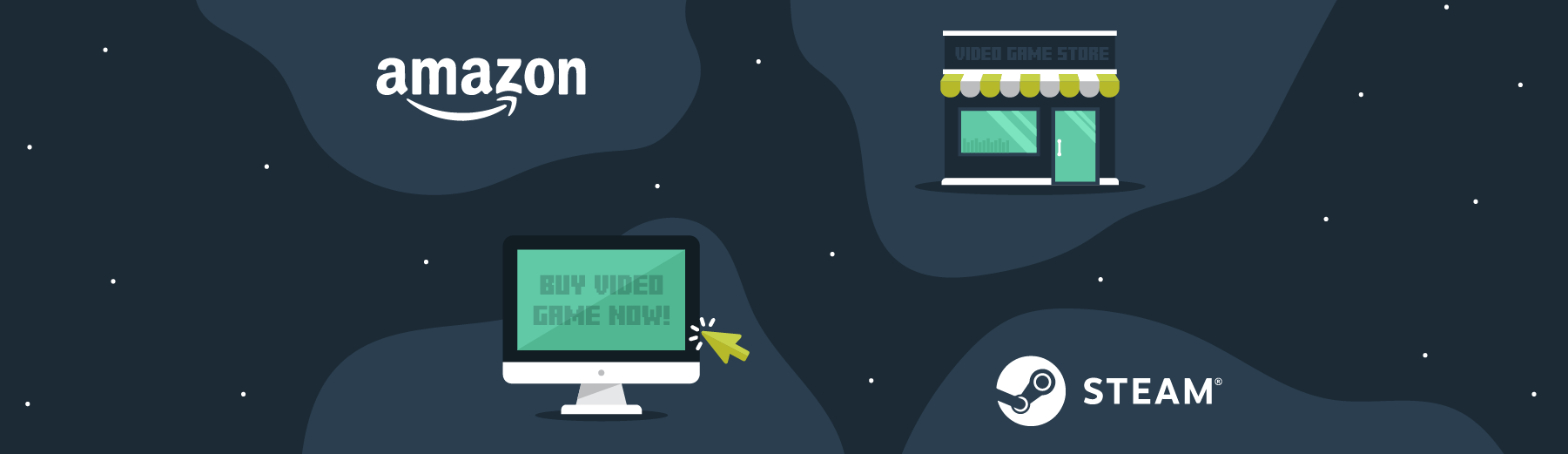
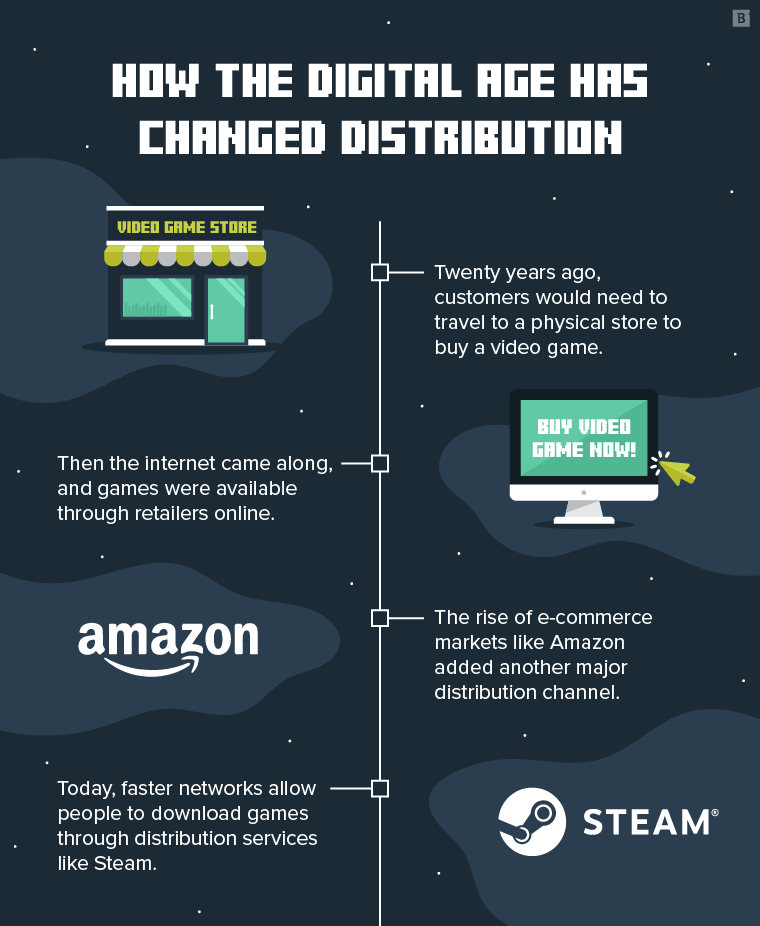
To get an thought of how complicated “place” has turn into, contemplate the large shift in distribution strategies within the online game business over the previous 20 years. Twenty years in the past, clients would wish to journey to a bodily retailer to purchase video games or use a mail-order service. That single-level channel has now fractured into multiple-level distribution channels, every optimized for velocity and buyer comfort.
Then the web got here alongside, and retailers began promoting these merchandise on-line. This growth highlighted how retailers promote not simply in individual but additionally by means of digital storefronts that allow them to promote merchandise 24/7.
The rise of e-commerce markets like Amazon added one other main distribution channel to account for. With sooner networks, avid gamers can reduce out the intermediary — and bodily media completely — by downloading video video games by means of distribution providers like Steam. Brick-and-mortar shops, e-commerce retailers and on-line outlets stay viable distribution channels, and online game corporations have to consider all of them to achieve the widest viewers — a textbook instance of direct and oblique distribution working in concord.
How Is Placement Vital in a Distribution Channel?
Placement is a elementary aspect within the distribution channel as a result of it determines the place and the way clients can entry your services or products. The suitable placement technique ensures that your choices can be found to your goal market on the proper time and place, rising the probabilities of buy and buyer satisfaction. In some ways, placement is the sensible utility of the channel distribution definition: It places technique into motion.
A well-chosen distribution channel will help a enterprise attain a broader viewers, streamline the distribution course of and scale back prices related to logistics and stock administration. For instance, deciding on a direct distribution channel permits a producer to promote merchandise on to customers, sustaining higher management over the shopper expertise, model messaging and pricing. Against this, leveraging an oblique distribution channel — maybe by partnering with intermediaries, wholesalers or retailers — will help companies scale shortly and faucet into established buyer bases, shortening the time it takes to promote product in new territories.
Placement additionally impacts the perceived worth of your merchandise. Luxurious manufacturers usually use selective or unique distribution channels to take care of a way of shortage and status, whereas mass-market merchandise depend on intensive distribution to maximise visibility and comfort. These completely different distribution approaches present how the variety of channel intermediaries concerned straight impacts each model fairness and income potential.
In the end, placement inside the distribution channel ought to align along with your general advertising technique, enterprise objectives and the wants of your goal market. By fastidiously evaluating the obtainable distribution channels, the required intermediaries and the distinctive features every middleman performs, you possibly can optimize placement to drive gross sales, improve model repute and assist long-term progress.
What Are the Totally different Channels of Distribution?
There are a number of approaches manufacturers can take to distribute their items, services and products — particularly now that digital channels stand shoulder to shoulder with conventional, bodily retailers. Every distribution methodology presents distinct benefits, prices and ranges of management, so understanding the choices is step one towards a profitable distribution technique.
These are the 8 most vital distribution channels to know:
1. Direct Gross sales
A direct gross sales enterprise mannequin eliminates any middleman within the distribution course of, leaving the model to promote merchandise to clients by itself. Meaning there’s no retailer or third-party outlet to inventory stock and promote merchandise. In a zero-level channel, the producer sells merchandise straight to the buyer, making this the purest instance of a direct channel
To see this in motion, look no additional than Apple. In lots of instances, clients have to undergo the model itself to purchase software program, gadgets and different merchandise. Apple manages its personal bodily outlets and digital shops the place it prefers to promote its wares. It does have a presence in third-party brick-and-mortar stores, however the firm tries to direct potential and returning clients to its branded shops, reinforcing the advantages of direct distribution channels for premium experiences.
A extra inflexible instance of direct gross sales could be a enterprise that creates merchandise and items on-site and sells to the shoppers in the identical location. As an illustration, bakeries make use of a strict, direct gross sales enterprise mannequin, assuming their items can solely be discovered of their shops. Right here, the manufacturer-consumer relationship is speedy and clear.
2. Retailer
Retail is the most typical distribution channel for shopper manufacturers, utilizing third-party retailers to carry merchandise to market. Supermarkets, big-box shops, comfort shops and department shops all act as channel intermediaries that function the purpose of contact for purchasers. You don’t go to the Jif retailer to purchase peanut butter, in spite of everything — you go to a retailer that sells merchandise from dozens of producers.
Not all retail distribution methods take the identical strategy, nonetheless. Relying on the model, product and viewers, they might intention for the widest market penetration potential, whereas others concentrate on establishing exclusivity by limiting availability. Retailer partnerships are a primary illustration of a one-level channel the place the retailer bridges the hole between producer and shopper.
3. Intensive Distribution
Customers are in all probability most accustomed to this type of retail distribution, the place merchandise are offered by means of as many retailers as potential. Take Jif, as an example. Yow will discover the model in nearly any grocery retailer and comfort retailer in america, whatever the market or location. Jif has an unlimited market penetration and is one in all a handful of peanut butter manufacturers which might be ubiquitous throughout the nation — an ideal instance of intensive attain.
This model of retail distribution is best-suited for items and merchandise that not often command quite a lot of model loyalty. If a buyer’s most well-liked model is unavailable, they’re completely advantageous shopping for one other product at an identical value level. For many customers, if Skippy’s offered out, Jif’s a suitable various, demonstrating how retailers promote interchangeable gadgets to fulfill speedy demand.
Intensive distribution provides manufacturers the biggest potential presence, reaching extra potential clients throughout disparate markets. Solely a choose few manufacturers can obtain that prime degree of distribution. Stock administration, provide chain logistics and advertising calls for all turn into extremely difficult with an intensive distribution technique, and plenty of corporations merely don’t have the sources or capabilities to make this strategy work.
This strategy is a poor match for area of interest merchandise with restricted attraction. These manufacturers require a extra focused technique that zeroes in on their goal audiences. Luxurious merchandise with excessive value factors may additionally endure with intensive distribution, as lower-quality choices can simply undercut them and higher attraction to much less discerning consumers.
4. Selective Distribution
Not all corporations that promote by means of retailers want to obtain the widest distribution potential. Luxurious manufacturers are sometimes extremely selective about the place their merchandise are positioned and the way they’re represented. You gained’t discover Hermès purses in a big-box retailer, as an example. For these corporations, the in-store expertise is a part of their model, and so they tightly regulate retail shows and even how clerks describe or demo their merchandise. On this two-level channel, the retailer turns into a fastidiously vetted model steward.
Selective distribution is smart when manufacturers and merchandise can’t be swapped out interchangeably. Goal audiences are extraordinarily discriminating and are prepared to journey to particular retailers the place their most well-liked manufacturers can be found. The technique limits the variety of intermediaries concerned, which helps shield margins and the model’s perceived worth.
5. Unique Distribution
Selective distribution methods nonetheless use a wide range of intermediaries and retailers to promote wares, however manufacturers have an much more discerning possibility to contemplate: unique distribution. Underneath this enterprise mannequin, corporations accomplice with a single wholesaler or retailer in a specific market. The thought is to limit availability to guard model fairness and mission a extra selective and unique model picture. That is also known as a three-level channel with very tight management.
Rolex is likely one of the extra well-known examples of unique distribution. The corporate companions with one wholesaler in every market to manage exactly the place its merchandise are offered and the way they’re represented. Regardless that a 3rd get together is the ultimate level of contact with the tip person, Rolex can nonetheless dictate the in-store expertise, creating strict model tips for clerks and brokers to comply with.
Manufacturers additionally are likely to have extra leverage in unique distribution relationships since trend wholesalers, retailers and distributors are depending on the presence of luxurious, high-quality merchandise to attraction to their upscale and discerning clientele. Producers are in a stronger place to barter distribution and advertising prices with their intermediaries as a result of there are few options to take their place on retailer cabinets.
An unique distribution accomplice company can be an enormous asset when increasing into new markets. Distributors have already got a presence in these markets and perceive what motivates native buyer bases. Meaning much less danger for companies that need to attain worldwide audiences, however are involved in regards to the logistics concerned in such a transfer.
Clearly, unique distribution is reserved just for luxurious manufacturers the place product shortage isn’t simply acceptable — it’s anticipated. Thisrelies on a minimal degree channel strategy that’s intentionally restrictive.
6. Twin Distribution
Many companies select to make use of a wide range of distribution channels to promote their merchandise, working with wholesalers and retailers whereas additionally sustaining model storefronts to promote straight. This strategy is called twin distribution, a quintessential hybrid distribution mannequin that blends direct and oblique channels for optimum market protection. The Apple instance we cited earlier is one occasion of twin distribution, though it leans extra towards the direct-to-customer finish of the spectrum.
Smartphones, generally, spotlight this strategy, as producers promote their gadgets by means of big-box shops, telecom companions, e-commerce markets and their very own on-line storefronts. In impact, the manufacturer-consumer pathway will be both direct or routed by means of intermediaries, relying on what the customer finds most handy.
Twin distribution permits manufacturers to achieve a big viewers with diversified buy choices. It makes excellent sense for smartphone producers to accomplice with wi-fi service suppliers as a result of clients can’t use one with out the opposite. Many customers will naturally need to enroll in a wi-fi plan once they purchase a brand new smartphone, so why not make these gadgets obtainable in wi-fi shops? This flexibility showcases how direct and oblique distribution can coexist with out cannibalizing gross sales.
7. Wholesaler
Like retailers, wholesalers act as middlemen that purchase merchandise from producers after which promote these items to finish customers at an elevated value level. The most important variations between these enterprise fashions are scale and viewers, making wholesalers pivotal channel intermediaries concerned in B2B and B2C transactions.
As anybody who’s shopped at Costco or Sam’s Membership can inform you, most individuals buy merchandise in bulk from wholesalers. Prospects wind up spending much less cash per unit whereas shopping for massive portions of a specific product, creating a cheap kind distribution technique for each the customer and the vendor.
Though consumer-facing membership warehouses are probably the most seen examples of wholesale distribution channels, most wholesalers promote to different companies. Eating places, as an example, purchase their tools from wholesale suppliers. Sure retailers could buy merchandise in bulk from a wholesaler after which promote these items to customers individually at the next value level, illustrating how a wholesaler-retailer relationship matches neatly right into a two-level channel.
Manufacturers profit from wholesale distribution by shifting massive volumes of merchandise directly. The trade-off is that wholesalers count on reductions and diminished charges in change for purchasing in bulk. However, this association can dramatically shorten the distribution chain and enhance money stream.
One other issue to contemplate is that producers can keep away from the logistical challenges of promoting on to clients. There’s no retailer to handle, on-site personnel to coach or stock to inventory. As soon as merchandise have modified arms, these points are another person’s concern, liberating up sources for product innovation and advertising.
That additionally means manufacturers have restricted — if any — say about how their merchandise are dealt with and displayed. They will tackle these considerations by creating model tips for distributors to comply with, however there’s some added value to conduct on-site critiques and assess compliance. Understanding which features a distribution channel should uphold helps producers set clearer expectations.
8. Channel Companions or Worth-Added Resellers
Many B2B corporations promote by means of the channel. That’s, they don’t promote straight to finish customers, however work with channel companions that purchase their wares, add worth after which promote to their very own clients. This construction usually encompasses a number of ranges of distribution channels, the place every participant enhances the providing earlier than it reaches the ultimate purchaser.

How is that any completely different from the wholesaler fashions mentioned earlier? Because the identify suggests, value-added resellers (VARs) embody new options and providers to enhance a product and attraction to their audience. The producer supplies a fundamental basis to work with, and the VAR provides the key sauce to tell apart its choices from the competitors’s items. In essence, these intermediaries add experience, integrations and assist, delivering a extra full resolution.
Software program-based B2B merchandise are sometimes offered by means of the channel, with VARs offering assist, coaching, extra options and different choices their goal audiences may want. This multi-step distribution chain permits specialists to tailor merchandise whereas the unique vendor focuses on core growth.
The attraction of working by means of the channel is that corporations can concentrate on making a product that has robust core performance and let one other group fear about refining it to draw particular audiences. An accounting software program producer, as an example, may promote its platform to completely different VARs that function in disparate industries like well being care, schooling and retail. Every channel accomplice can then decide the easiest way to bundle that resolution to attraction to their clients and finish customers, demonstrating how oblique channels can unlock area of interest markets.
Firms can dramatically simplify advertising necessities once they promote by means of the channel fairly than try and create campaigns and techniques that focus on varied industries and audiences. By outsourcing sure features to channel intermediaries, organizations can guarantee their merchandise are offered and supported by consultants already embedded within the buyer’s ecosystem.

What’s the Distinction Between Direct and Oblique Distribution Channels?
Now, of the 8 channels of distribution we lined, solely the primary was direct. The others fall right into a class referred to as oblique distribution channels. This distinction is on the coronary heart of the distribution definition channels students reference when explaining how items transfer by means of markets.
Because the names would indicate, the distinction between the 2 kinds of distribution is pretty self-explanatory. Direct distribution is — watch for it — a direct sale between the enterprise and the tip shopper. However, if you happen to make the most of oblique distribution, meaning a third-party vendor of some form is being launched to the equation. You promote to them, they promote to your buyer, creating a number of extra degree channel intermediaries.
There are many professionals and cons relating to utilizing both methodology of distribution. Let’s go over a few of the most vital points that will help you determine which is the best selection for your enterprise and guarantee your distribution channels, direct or oblique, work in concord.
What Are the Advantages of Direct Gross sales?
As a result of corporations handle distribution with none exterior help, they don’t have to divide their income with third events. By slicing intermediaries out of the equation, manufacturers have the monetary flexibility to set decrease costs to entice clients and achieve a aggressive benefit. Companies which might be capable of adequately management distribution prices and nonetheless attain their audience can discover an optimum degree of profitability. This streamlined mannequin additionally reduces the potential for channel battle as a result of there aren’t any extra channel intermediaries concerned.
Manufacturers may tightly management the shopper expertise once they promote straight. They will construct shops — each bodily and digital — that straight align with their core values and messages. Going again to the Apple instance, each facet of the in-store expertise — from the structure to the lighting to the furnishings to the music — is meticulously designed to make clients really feel a sure method. The shops are extensions of the model, illustrating how direct distribution channels can reinforce model id at each touchpoint.
Managing a direct distribution channel and promoting to finish customers brings manufacturers nearer to their clients. It’s simpler to obtain suggestions concerning providers and merchandise as a result of no filter or intermediary separates the shopper and the model. Firms can then refine and enhance their choices to extra carefully replicate what the shopper desires.
One other profit to the direct gross sales strategy is that companies don’t need to take care of as many communication issues. When merchandise change arms between producers, wholesalers, retailers and different distributors, it dramatically will increase the variety of stakeholders concerned. And extra stakeholders means extra potential for misunderstandings and communication breakdowns. That’s much less of a priority if your entire distribution course of is managed in-house, conserving the distribution chain brief and clear.
What Are the Advantages of Oblique Gross sales?
Once we consider some great benefits of going with oblique, it’s principally the other of all issues direct gross sales. Oblique channels open up attain, sources and relationships {that a} single model may wrestle to domesticate by itself.
- • Present buyer base: While you work with a third-party vendor, you’re hitting the bottom operating. They have already got a longtime relationship with their clients, which means you’re one step nearer to connecting with your individual. A seasoned wholesaler/retailer duo can slot your providing into cabinets or catalogues the place consumers already store.
- Elevated velocity to market: Desirous about venturing into a brand new area or market? In case you don’t have your individual gross sales power able to go, choosing oblique gross sales channels permits you to enter at a decrease value and with much less danger.
- Two heads are higher than one: Your would-be accomplice has already been within the sport. They’ve picked up expertise in logistics, manufacturing and operations which may take you years to build up. Collectively, you possibly can create much more worth with out having to beat that studying curve, particularly when intermediaries share market perception and operational efficiencies.
Keep in mind: There’s nobody “proper” distribution channel. On the finish of the day, the choice to go direct or oblique all comes right down to your audience. For the foreseeable future, on-line gross sales will command the market. For corporations which might be simply getting began, that is nice information. Creating an e-commerce accomplice is unquestionably a smaller carry than establishing a brand-new brick-and-mortar storefront, and it could possibly perform as a cheap oblique distribution methodology.
A phrase of warning: Some specialty gadgets will all the time profit from a extra hands-on strategy. Though luxurious manufacturers are beginning to check the waters with digital twins and immersive on-line procuring experiences, we should be just a few years out from a completely digital market. Manufacturers should weigh the features distribution channels serve — from offering info to facilitating cost — earlier than abandoning conventional touchpoints.
Learn how to Outline Distribution Channels for Your Product
With so many alternative channels obtainable, it may be a problem to choose the best one for your enterprise. As you begin to create your individual distribution technique, contemplate the next ways and control the degrees distribution channels require as your group scales:
- •Have a look round your business: What are your rivals doing? In some instances, your product class may require a sure channel as a result of nature of the products you promote. Nevertheless, you could possibly uncover untapped channels that would enable you fill a niche available in the market or reveal hybrid distribution alternatives.
- Do a value evaluation: In case you’re simply beginning out, value is likely to be some of the vital components in your determination. Determine which channels you’d like to start out with, after which decide that are probably the most possible at the moment whereas maintaining a tally of margin splits with any channel intermediaries.
- Look towards the long run: Simply since you open with a channel doesn’t imply you must solely use that one for years to come back. As a substitute, sit down and plan the place you’d like your enterprise to be in a single 12 months. How about 5 or 10? As you map out your short- and long-term objectives, contemplate how you can use a number of channels to get there and the way including or eradicating degree channel intermediaries could have an effect on profitability, velocity and buyer expertise.
Let Your Distribution Channel Information Your Advertising and marketing Technique
The simplest advertising methods for your enterprise will closely rely on the distribution channels you utilize. Some examples embody, however are usually not restricted to, the next:
- Firms that promote by means of channel companions have to develop messaging that resonates with VARs fairly than finish customers, demonstrating how intermediaries can amplify the provide.
- Luxurious manufacturers utilizing unique distribution methods ought to create product shortage to assist drive demand with upscale audiences, and guarantee each channel middleman echoes the premium narrative.
- Companies that promote on to customers ought to refine each facet of their digital and bodily contact factors to create a holistic model expertise, leveraging direct channels to collect suggestions and foster loyalty.
There’s no denying that the digital revolution has dramatically modified how companies market their merchandise, work together with clients and generate income. Advertising and marketing fundamentals haven’t modified, nonetheless, and types ought to comply with each part of the advertising combine as diligently at this time as they’d have 30 years in the past. By staying conscious of the degrees of distribution channels and the features every middleman supplies, you possibly can guarantee your technique delivers the best product to the best place on the proper time.
Your merchandise’ placement and distribution are a part of your model id, and that may all the time play a central position in your advertising methods, it doesn’t matter what business adjustments come down the pike. In the end, success hinges on selecting the distribution channels that align along with your objectives, accomplice capabilities and the expectations of the customers who can be shopping for and fortunately utilizing your merchandise.
Editor’s Word: Up to date April 2026.