

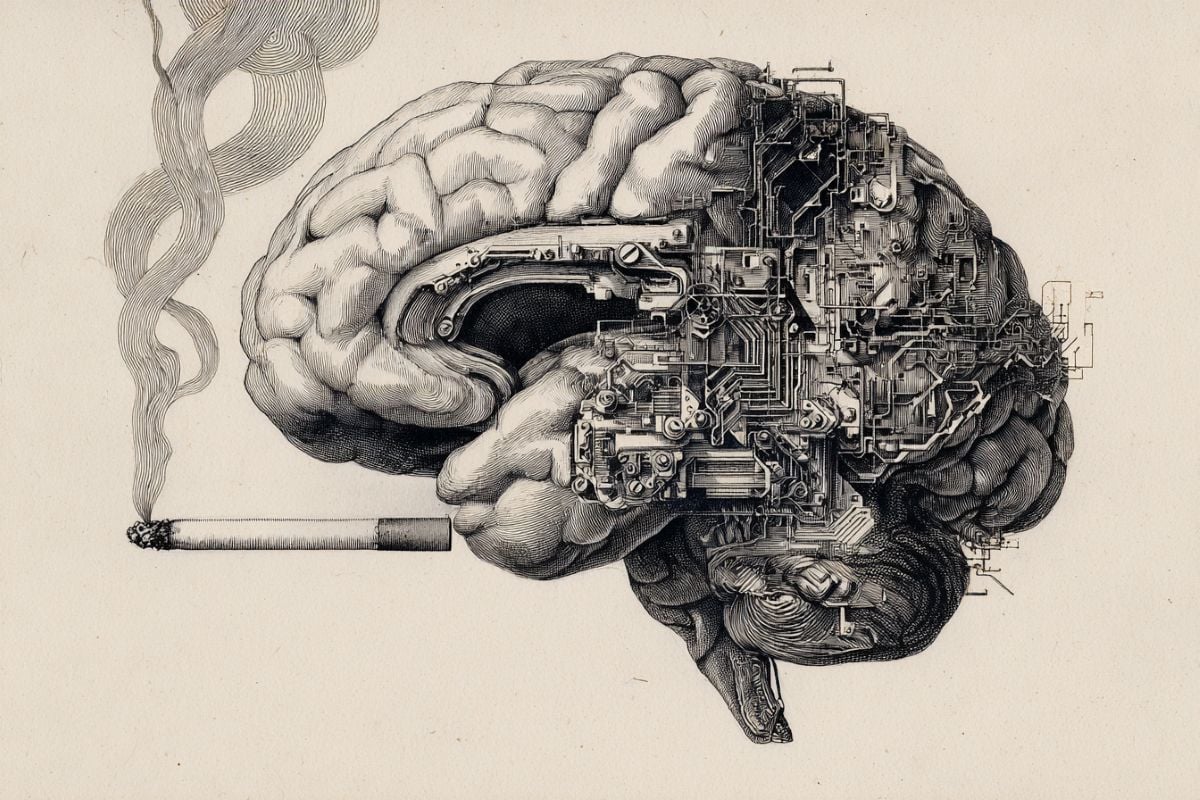
Abstract: New analysis reveals that astrocytes play an energetic function in nicotine-induced mind adjustments, difficult the long-held neuron-centered view of habit. Nicotine stimulates receptors on astrocytes, triggering signaling cascades that enhance glutamine synthetase exercise and amplify glutamate-related pathways.
These molecular shifts strengthen locomotor sensitization, a trademark of addiction-like neural adaptation. By blocking a crucial astrocytic signaling interplay, researchers have been in a position to scale back these behavioral results, pointing towards new long-term instructions for habit remedy.
Key Details
- Astrocyte Activation: Nicotine triggers calcium signaling in astrocytes, resulting in pJNK activation and enhanced glutamine synthetase exercise.
- Glutamate Pathway: These adjustments amplify the glutamate–glutamine cycle, reinforcing addiction-related neural variations.
- Therapeutic Potential: Blocking astrocytic signaling diminished nicotine-induced sensitization in rats, suggesting new intervention targets.
Supply: Pusan Nationwide College
Nicotine habit stays some of the persistent public well being challenges worldwide, pushed by adjustments within the mind that reinforce repeated use and make quitting extraordinarily tough.
For many years, scientists have targeted totally on neurons to elucidate how these adjustments happen. However rising proof means that different mind cells might play a much more energetic function in shaping addictive habits than beforehand thought.
Constructing on this shift in understanding, a staff of researchers led by Professor Eun Sang Choe from the Division of Organic Sciences, Pusan Nationwide College, Republic of Korea, has uncovered how astrocytes actively contribute to nicotine-induced mind adjustments, revealing a beforehand neglected mechanism involving astrocytic glutamine synthetase (GS). GS is a vital enzyme for regulating glutamate, the mind’s main excitatory neurotransmitter.
The examine was printed on-line within the journal of Acta Pharmaceutica Sinica B on 25 September 2025.
“Many of the research on nicotine habit historically deal with neurons, whereas neglecting the function of glial cells. Our revolutionary examine demonstrates that astrocytes work together with neurons inside the mind’s reward system to manage nicotine-dependent habits, advancing the present understanding of nicotine habit,” says Prof. Choe.
On this examine, researchers repeatedly injected rat fashions with nicotine and located that nicotine publicity stimulated α7 nicotinic acetylcholine receptors on astrocytes of the caudate and putamen area of mind, initiating a surge in intracellular calcium.
This rise in calcium led to activation of phosphorylated c-Jun N-terminal kinase (pJNK), a signaling molecule recognized to reply to mobile stress and drug publicity. As soon as activated, JNK additional interacted with the metabotropic glutamate receptor 1a (mGluR1a), boosting GS exercise and activating the glutamate-glutamine pathway, resulting in enhanced locomotor sensitization.
A custom-designed inhibitory peptide was used to dam the interplay between pJNK and mGluR1a. When this peptide was administered straight into the caudate and putamen of rats repeatedly uncovered to nicotine, the same old improve in GS exercise was considerably diminished. Behaviorally, this intervention dampened locomotor sensitization, demonstrating that astrocytic signaling is a key driver of nicotine-induced adjustments within the mind.
These findings open new instructions for habit analysis by highlighting the significance of neuron and glia communication. Though nicotine dependence is widely known as a dysfunction of disrupted glutamate signaling, this examine reveals that astrocytes take part within the molecular processes that reinforce repeated nicotine use. Whereas the work is preclinical, the implications for long-term analysis are important.
“Whereas medical translation of this analysis will take time and direct human utility is unsure, this work deepens our understanding of nicotine habit, paving the way in which for improvement of therapeutic methods in the end supporting smoking-cessation efforts,” concludes Prof. Choe.
Key Questions Answered:
A: Nicotine prompts receptors on astrocytes, triggering signaling pathways that improve glutamine synthetase exercise and strengthen glutamate-driven reinforcement processes.
A: It shifts the main target from neurons alone to neuron–glia communication, revealing astrocytes as energetic members within the mind variations that keep nicotine dependence.
A: Whereas nonetheless preclinical, blocking astrocytic signaling diminished nicotine-induced sensitization in rats, suggesting astrocytic pathways could also be viable long-term therapeutic targets.
Editorial Notes:
- This text was edited by a Neuroscience Information editor.
- Journal paper reviewed in full.
- Further context added by our employees.
About this nicotine habit and neuroscience analysis information
Writer: Goon-Soo Kim
Supply: Pusan Nationwide College
Contact: Goon-Soo Kim – Pusan Nationwide College
Picture: The picture is credited to Neuroscience Information
Authentic Analysis: Open entry.
“Glutamine synthetase in astrocytes of the caudate and putamen is answerable for locomotor sensitization after nicotine publicity” by Eun Sang Choe et al. Acta Pharmaceutica Sinica B
Summary
Glutamine synthetase in astrocytes of the caudate and putamen is answerable for locomotor sensitization after nicotine publicity
Glutamine synthetase (GS) in astrocytes regulates glutamatergic neurotransmission by sustaining glutamate clearance within the mind.
This examine decided that GS in astrocytes of the caudate and putamen (CPu) regulates locomotor sensitization after repeated nicotine publicity.
Nicotine elevated phosphorylated c-Jun N-terminal kinase (pJNK) by stimulating α7 nicotinic acetylcholine receptors in cultured glioma C6 cells and first astrocytes in a Ca2+-dependent method.
Lively JNK phosphorylated metabotropic glutamate receptor 1a (mGluR1a) on the carboxyl terminus of glutathione S-transferase-tagged mGluR1a in vitro. Interference with the pJNK–mGluR1a interplay utilizing the inhibitory peptide, Tat-mGluR1a-i (10 μmol/L), decreased the nicotine-induced improve in GS exercise in glioma C6 cells and first astrocytes.
Comparable outcomes have been obtained by bilateral intra-CPu infusion of the inhibitory peptide (2 nmol/facet). Inhibition of GS exercise by bilateral intra-CPu infusion of methionine sulfoximine (50 nmol/facet) decreased the repeated nicotine-induced improve in locomotor exercise.
These findings counsel that astrocytes within the CPu upregulate locomotor sensitization by activating GS by way of the pJNK–mGluR1a interplay, which is linked to α7 nicotinic acetylcholine receptors in response to nicotine.



