
When a brand new article goes dwell on the Ahrefs weblog, I drop the URL into Claude and run /linkedin-pipeline.
It pulls the article and generates three to 5 distinct LinkedIn posts.
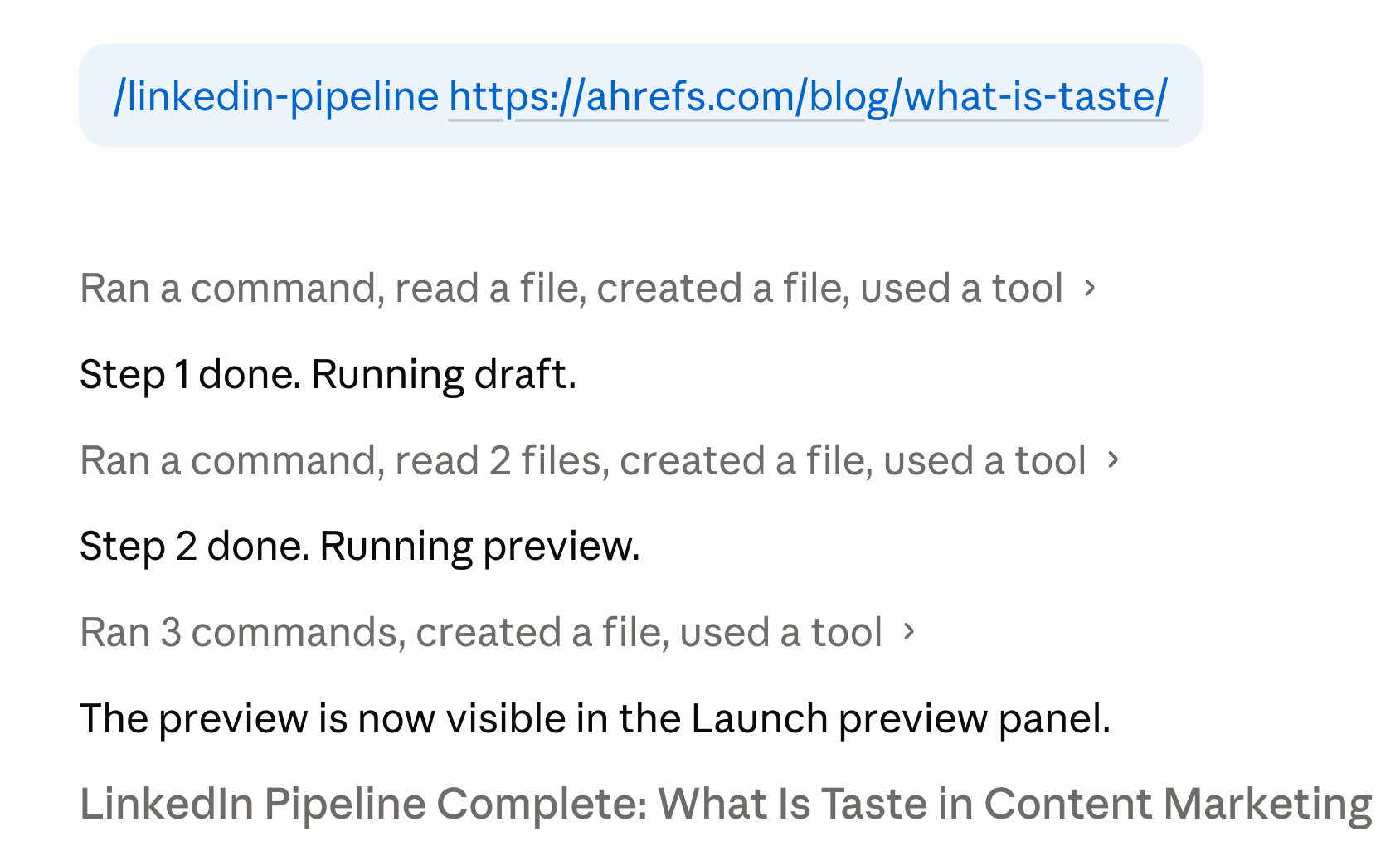
Earlier than that, each LinkedIn submit began the identical method. I’d re-explain the voice guidelines. The fold-line rule. The hook patterns I like, those I don’t. The instance posts to imitate. The CTA type. Barely totally different wording every time, barely totally different output every time.
A talent fixes that. You write the playbook as soon as and Claude fires it everytime you ask. No re-prompting. No drift.
Right here’s what Claude Expertise are, how they work, and construct your personal.
A Claude Ability is a saved, reusable bundle of directions Claude fires mechanically when it acknowledges the process.
A immediate is a one-time instruction. You kind it, Claude responds, the instruction evaporates. Subsequent time, you kind it once more — otherwise you put it aside as a template and paste it once more. Both method, you’re the one remembering it exists, discovering it, and placing it in entrance of Claude.
A talent is the subsequent step. You write the playbook as soon as. Claude reads what you’re asking, decides which talent (if any) applies, and follows it. No menu. No paste. You simply describe the duty in your regular phrases, and the saved playbook fires.
The format is an open commonplace — Anthropic calls it Agent Expertise — and the identical SKILL.md format powers the talents bundled into Claude Code itself. The talent you write at present isn’t tied to Claude. It runs wherever a mannequin and a file system can discuss to every different.
A talent is a folder. Inside, a file known as SKILL.md: markdown with a small block of YAML on the prime, plain-language directions beneath.
—
title: define
description: Generate an article define in my most popular construction. Use at any time when the consumer asks for a top level view, a construction, or part headings for an article or weblog submit.
—
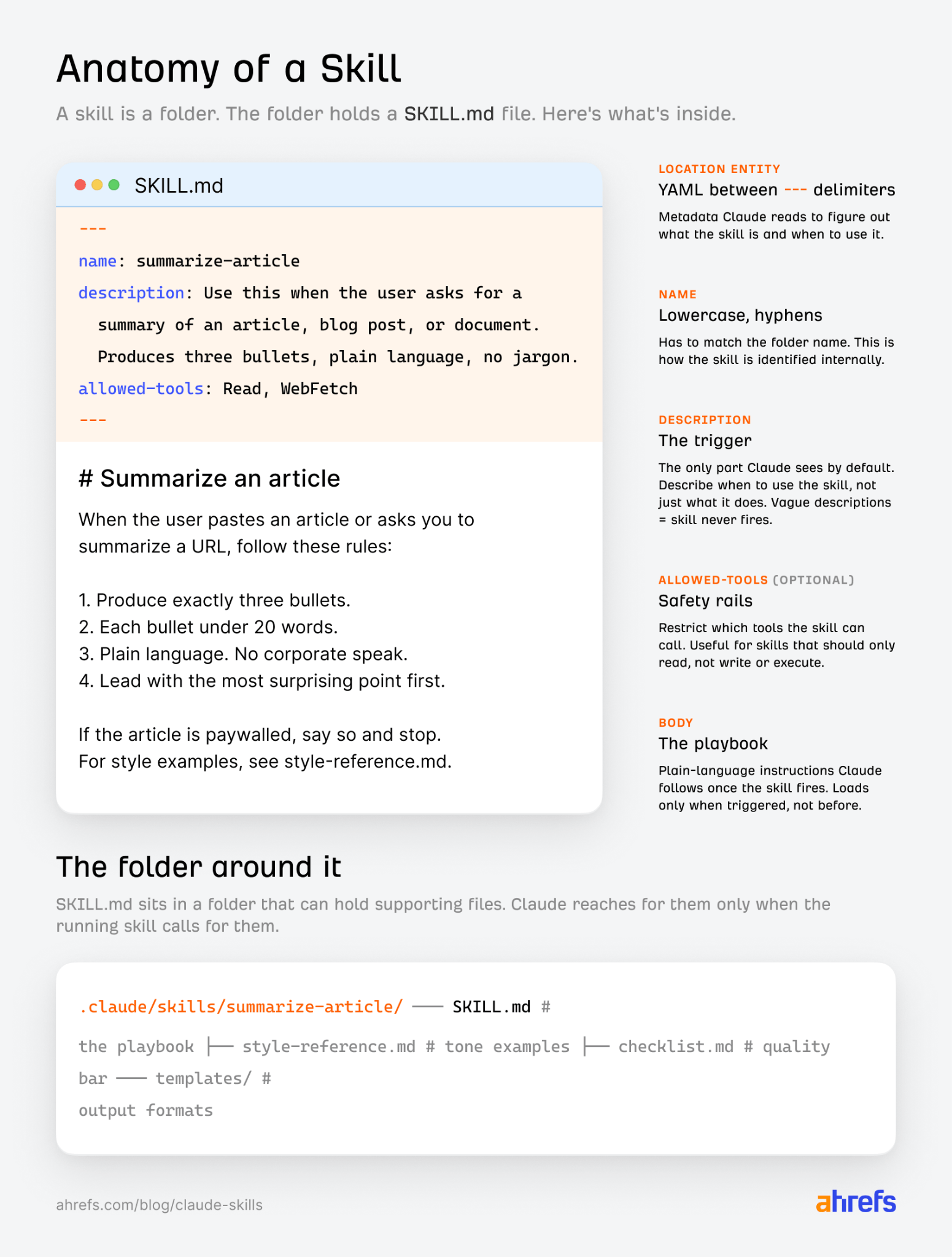
The frontmatter does two jobs. It names the talent, and it provides Claude an outline.
The outline is the set off: it’s what Claude reads to determine whether or not your request matches this talent. It’s additionally the one a part of the talent Claude sees by default, so it has to do actual work in a single or two sentences.
Under the frontmatter, you write the playbook. Steps, examples, guidelines, regardless of the process wants.
The folder can maintain supporting information too, like type references, checklists, or templates. Claude pulls these in solely when the working talent requires them. That is known as progressive disclosure, and it’s the mechanism that retains expertise low cost. Three layers:
- Frontmatter is at all times in context. Description and title. That is what Claude reads when deciding whether or not to fireplace the talent.
- The physique of SKILL.md hundreds when the talent fires. The playbook itself.
- Linked information load solely when the playbook tells Claude to learn them. Lengthy type guides, edge-case libraries, API docs.
You’re not stuffing all the pieces into one large immediate. You’re handing Claude a structured package, so the token value of lengthy reference materials stays at zero till it’s truly wanted.
The folder lives at .claude/expertise/
You don’t must be a developer for any of this. Anthropic publishes a talent known as skill-creator of their public expertise repo.
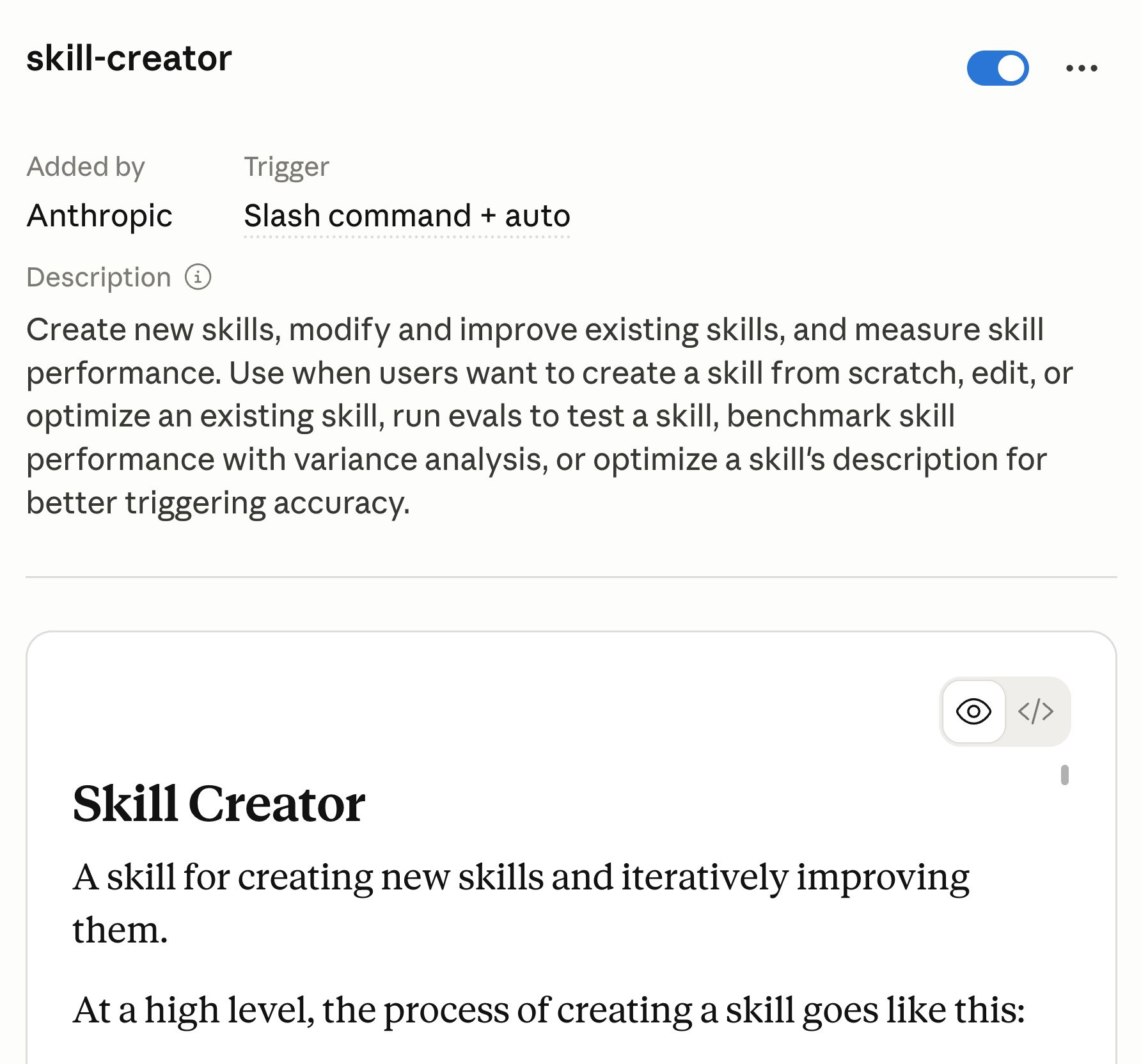
Set up it as soon as and it walks you thru creating new expertise by asking concerning the process, drafting the SKILL.md, and writing the folder construction for you. In Claude.ai, the identical talent is the really useful path underneath Settings → Capabilities. Use it.
However figuring out what’s contained in the file issues, as a result of when the talent misbehaves later, you’re the one enhancing it.
1. Choose a process you already repeat
The quickest method to waste a day is making an attempt to construct a talent for all the pieces without delay. Choose one process that meets two standards: you do it often, and you end up re-explaining the identical context each time you ask for it.
For me it was turning revealed articles into LinkedIn posts. For another person it could be turning a transcript right into a quote financial institution, or rewriting a content material temporary in a selected tone of voice, or QAing an article draft in opposition to an enhancing guidelines. All of them have the identical construction beneath: identical sort of enter, identical judgment calls, identical sort of output, each time.
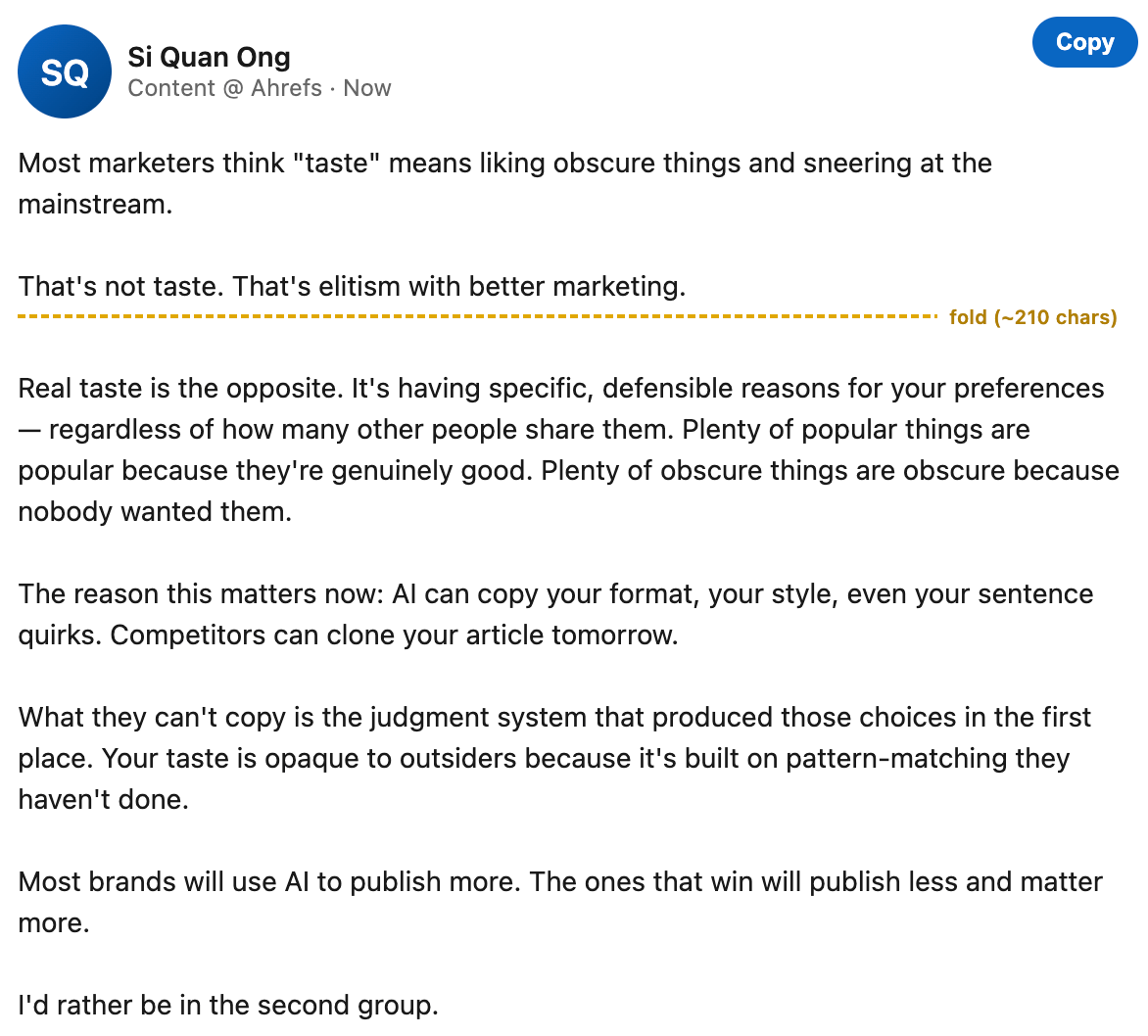
For those who can’t say out loud, in a single sentence, what good output appears like, the talent isn’t prepared. Construct the muscle in dialog first.
2. Write the outline as an actual set off
The outline is the one factor Claude reads when deciding whether or not to fireplace your talent, so it has to do three jobs without delay: say what the talent does, when Claude ought to attain for it, and what set off phrases the consumer would possibly truly say.
| Job | Instance |
|---|---|
| What it does | Generate an article define in my most popular construction |
| When to make use of it | At any time when the consumer asks for a top level view, a construction, or part headings |
| Set off phases | “Define”, “construction for”, “the bones of”, “part headings” |
Write set off phrases the way in which you truly ask for the duty, not the way in which a characteristic web page would describe it. For those who say “give me the bones of a chunk” and the outline solely is aware of the phrase “define”, the talent received’t fireplace.
For instance, have a look at the distinction between an outline that fires and one which doesn’t:
- Helps with writing. By no means fires. No set off. It’s only a class. Claude has nothing to match in opposition to.
- Use when the consumer asks for a abstract, recap, or TL;DR of an article. Fires reliably. Particular process, named set off phrases, clear scope.
3. Present, don’t inform
The physique of the talent is the place most individuals go mistaken. They write “match my voice” and anticipate it to work. It doesn’t. Imprecise directions produce obscure output.
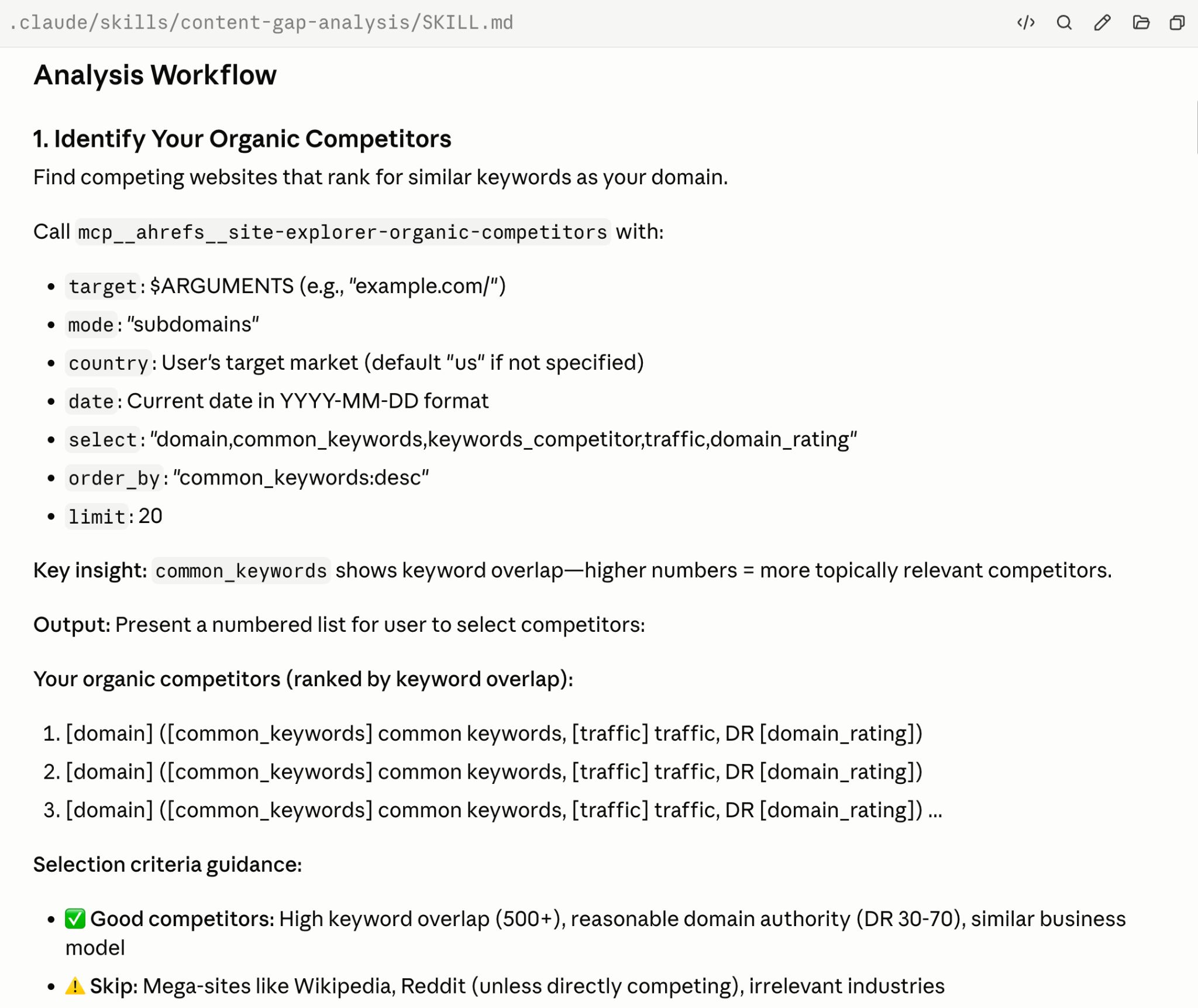
4 issues that do work:
- Labored examples. Paste an actual enter subsequent to the precise output you needed. One good instance beats a paragraph of directions.
- Specific anti-patterns. “By no means use em dashes.” “By no means open with a definition.” “By no means produce greater than three sections.” Write down the failures you’ve already seen, as guidelines.
- A self-check on the finish. A brief guidelines Claude runs by means of earlier than responding catches drift that prose directions miss.
- Brevity. The longer and extra sophisticated the talent, the much less doubtless Claude is to comply with all of it. If a piece isn’t incomes its place, minimize it. Anthropic’s personal skill-authoring steerage is to maintain SKILL.md underneath 500 strains. The mannequin doesn’t know what your good output appears like, and that’s the one factor the physique ought to encode.
4. Transfer lengthy content material into separate information
Something that bloats the principle playbook, like lengthy type references, instance libraries, lists of competitor URLs, API docs, lives in a separate file within the talent folder. They’re referenced from SKILL.md however not pasted into it.
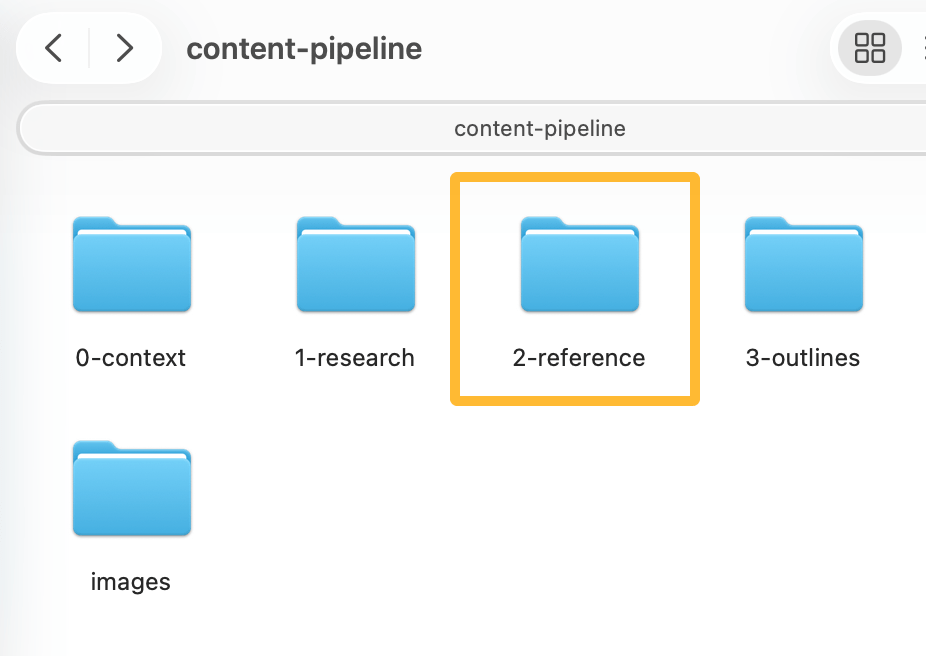
Progressive disclosure does the remainder: the linked file solely hundreds when the working talent reaches for it, so the token value stays at zero till it’s truly wanted.
5. Lock down expertise with unwanted side effects
If a talent retains firing for requests it shouldn’t, or if working it has penalties you need full management over, set disable-model-invocation: true within the frontmatter. Claude received’t auto-fire it.
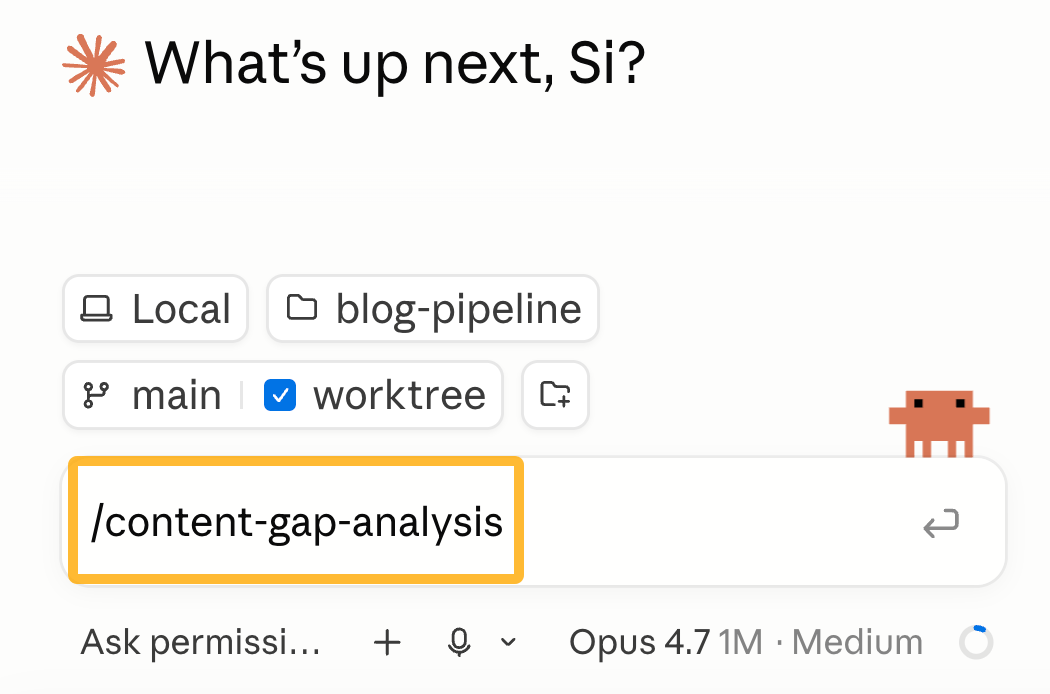
You set off it manually with /skill-name. Helpful for a deploy talent, a publish-to-CMS talent, a talent that sends a Slack message — something you don’t desire a mannequin deciding to run on its personal.
A talent is 2 issues glued collectively: the experience you’ve encoded into the playbook, and the information the playbook can attain. Most individuals underestimate each.
The markdown takes ten minutes. Articulating what you truly do whenever you construct a content material temporary — the judgment calls, the principles you’ve by no means written down, the belongings you reject with out considering — takes the remainder of your profession. Wiring it to dwell SERP information, your CMS, and your type information is a separate undertaking on prime of that.
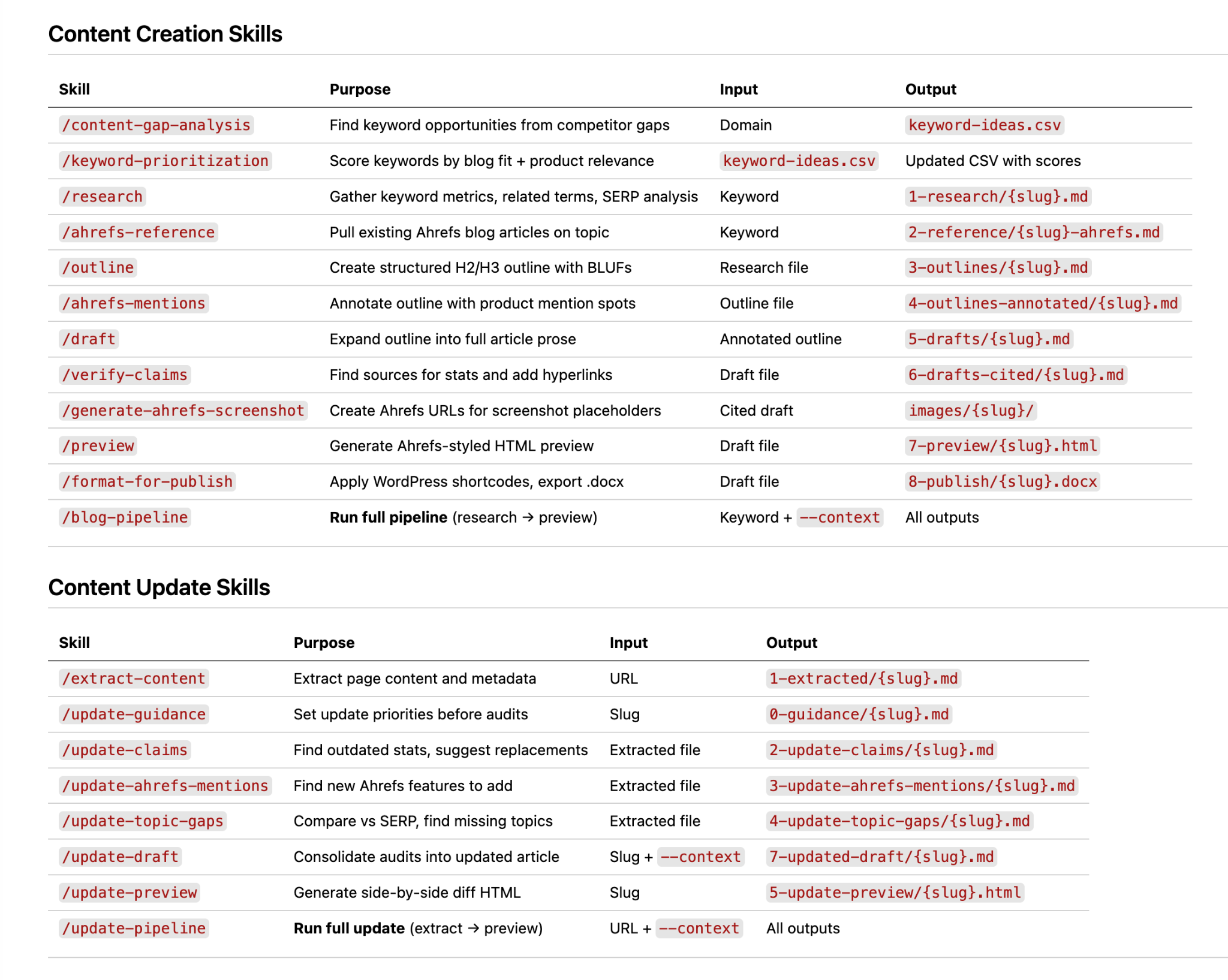
Take Ryan Legislation, our Director of Content material Advertising. He lately revealed a submit on how he constructed a 23-skill content material engineering pipeline in Claude Code, chained behind a principal blog-pipeline talent that generates publish-ready articles in six to 12 minutes.
What’s price noticing is the place the work truly went. A LinkedIn commenter put it finest:
Ryan’s SKILL information are good as a result of Ryan already knew what to place in them. Most individuals utilizing blank-slate instruments don’t have 13 years of editorial expertise to construct from. The hole isn’t simply within the software. It’s within the particular person behind it too.
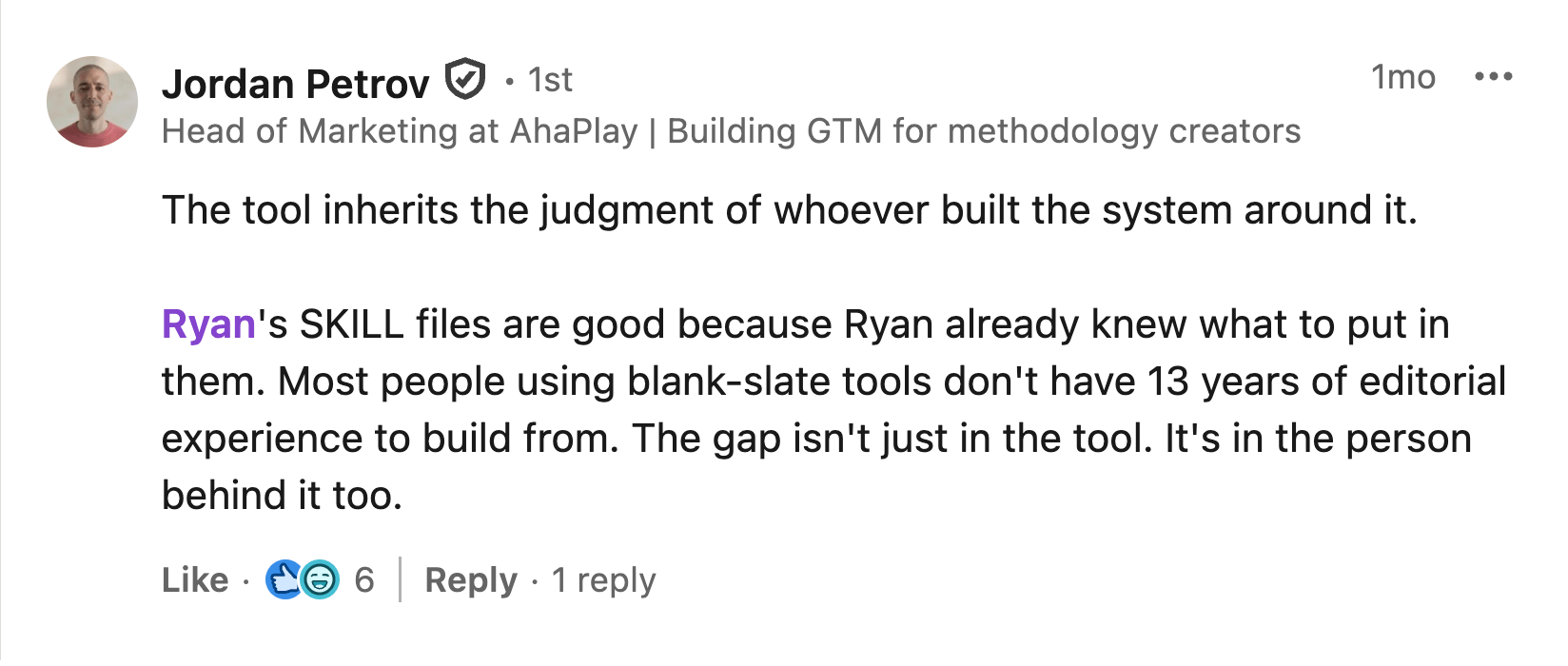
13 years of editorial experience on one facet. The Ahrefs MCP wired up on the opposite so the talents may pull actual information as an alternative of hallucinating it. The markdown within the center was the straightforward half.
You possibly can construct all of this your self if in case you have the talents (heh) and expertise. In any other case, you possibly can lean on others.
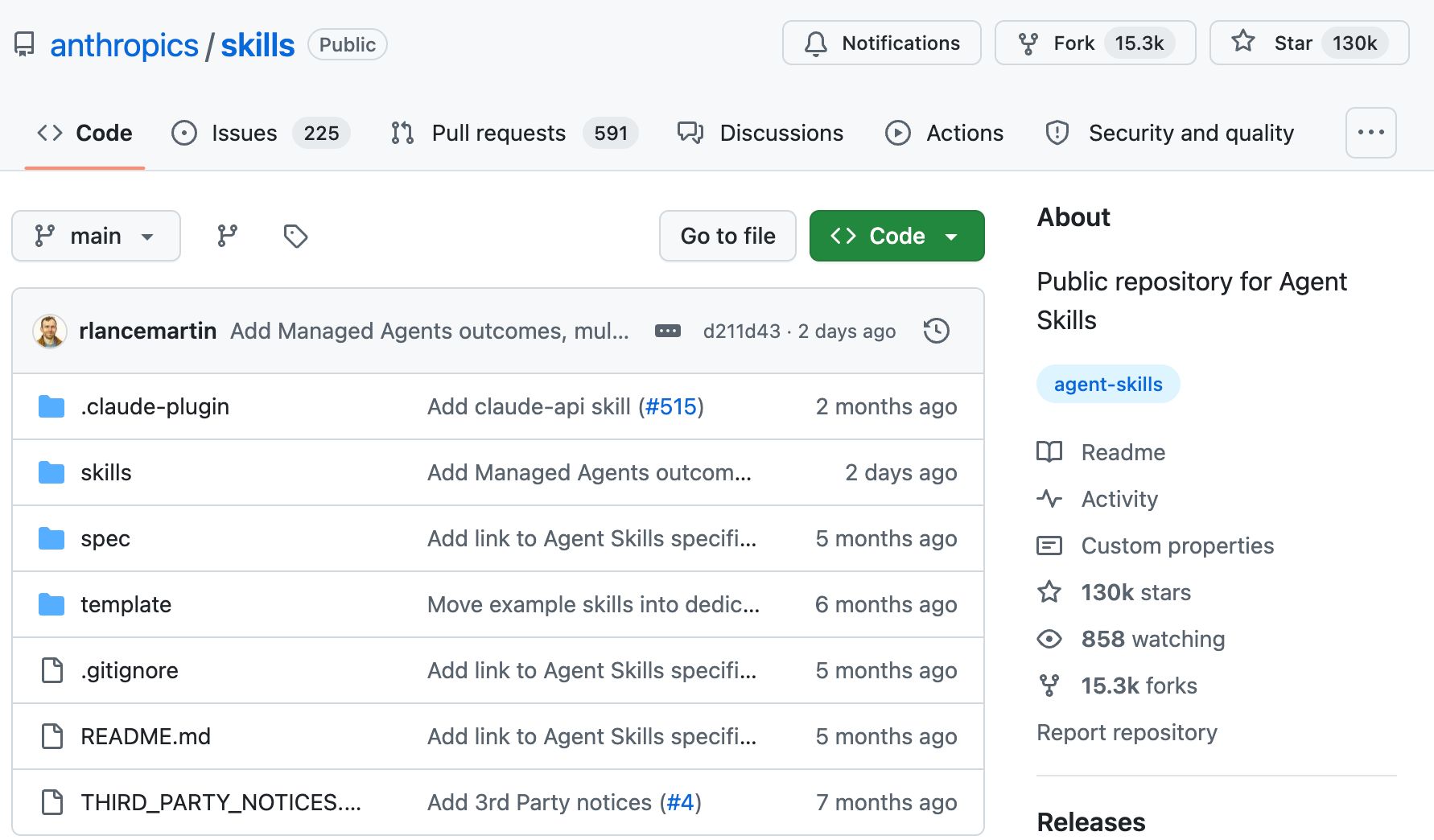
Claude Code ships with bundled expertise out there in each session: /batch, /claude-api, /debug, /loop, and /simplify. They work the second you put in Claude Code. Anthropic additionally publishes a public expertise repository you possibly can fork, copy, and modify, and neighborhood directories are beginning to seem.
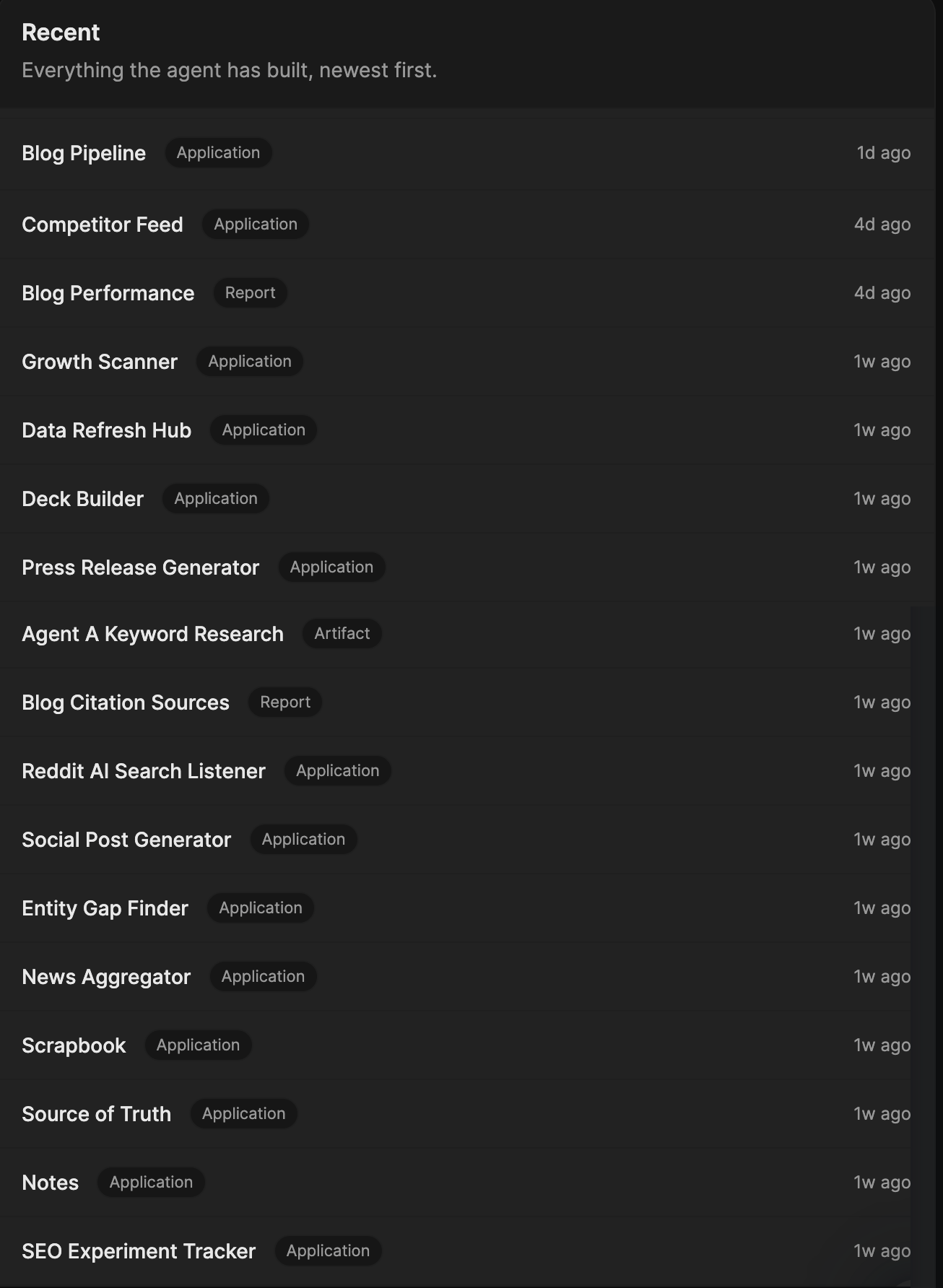
For search engine optimisation and advertising particularly, you have got Agent A. It’s an AI agent with unrestricted entry to Ahrefs information, plus integrations with main instruments like Notion, HubSpot, WordPress, Slack, and Google Search Console.
Describe what you need — instruments, studies, apps, dashboards, and sure, expertise — and Agent A will design, write, and deploy them. It lives in your workspace, remembers the choices you’ve made collectively, and is scoped to your information and your instruments.
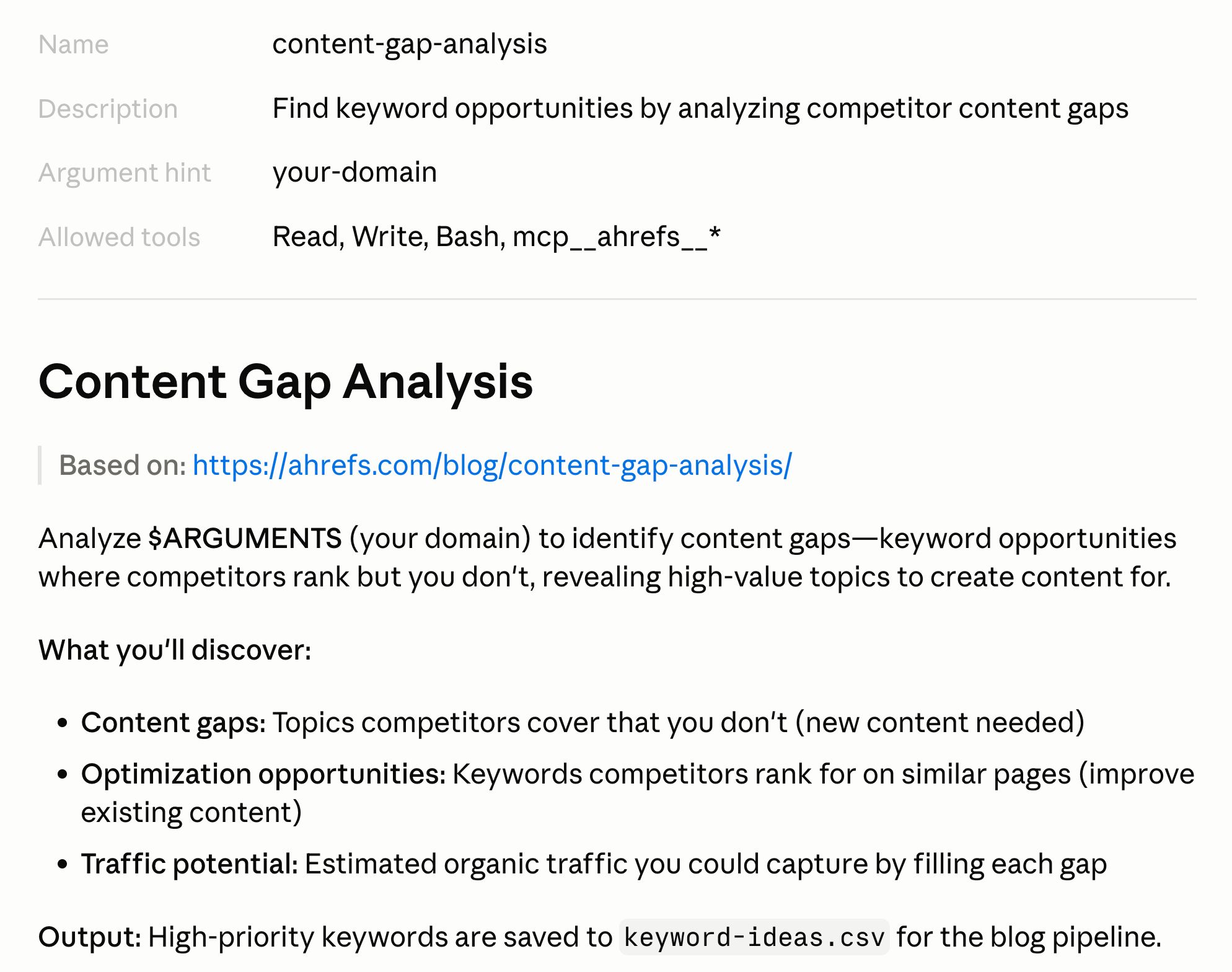
We’ve additionally pre-built a advertising talent library, curated by our in-house knowledgeable workforce and tuned on actual advertising work. For instance, you possibly can mechanically launch expertise to run an AI model sentiment evaluation, run a content material hole evaluation, detect content material that’s declining in visitors, discover linkbait alternatives, and extra.
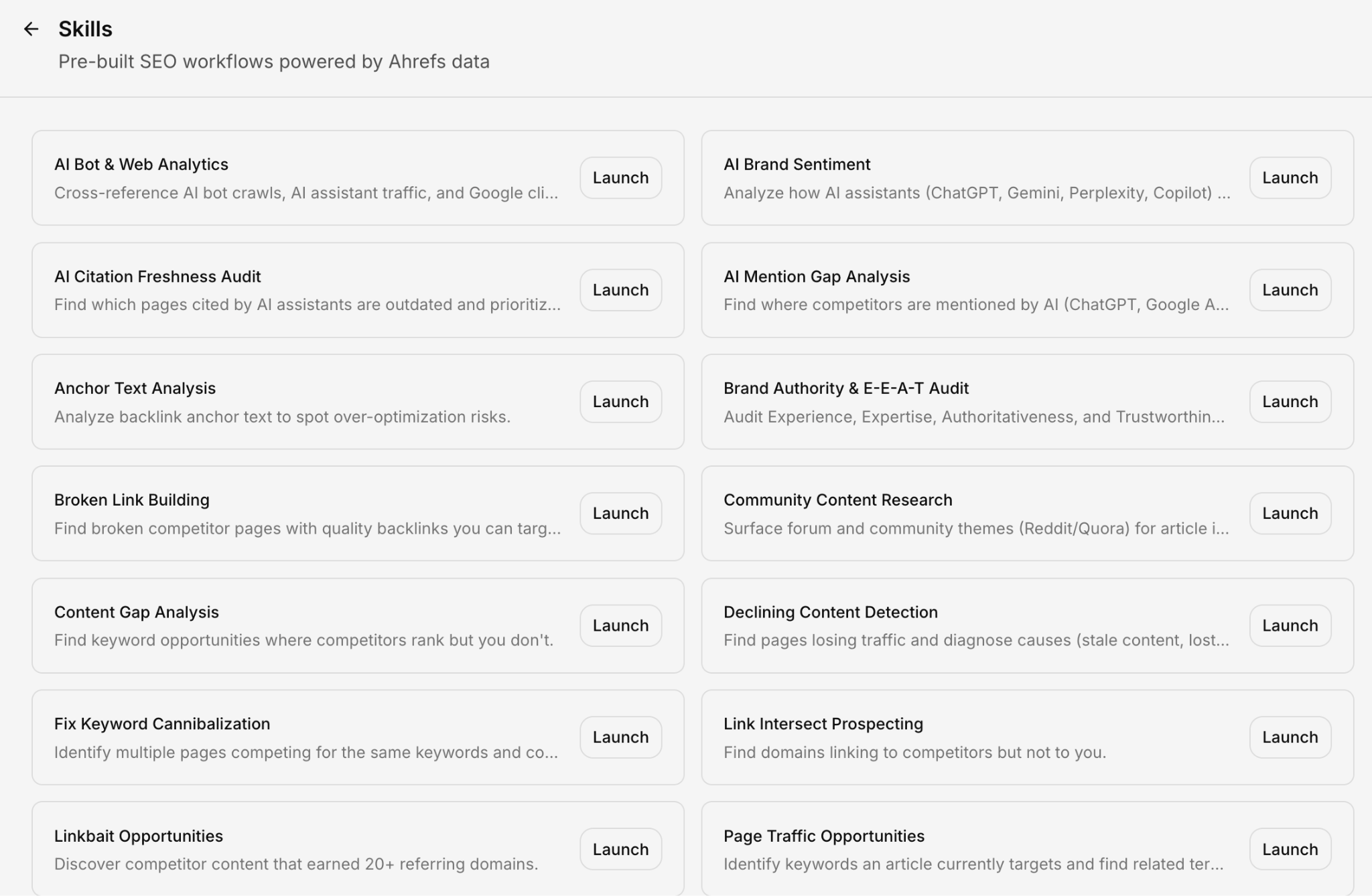
Agent A runs on the identical SKILL.md format as Claude Code. So, even if in case you have a library of expertise constructed on Claude Code, you possibly can simply transfer them into Agent A.
Closing ideas
The talent format is a much bigger deal than it appears. It’s the mechanism that turns Claude from a chat window you retain re-explaining your self to, into one thing you practice. When you’ve constructed three or 4 expertise you truly use, you cease typing directions and begin triggering techniques.
Write a small one this week. Choose a process you do each Tuesday and neglect precisely the way you do it. Run skill-creator, or describe it to Agent A and let it draft, set up, and check the talent for you. Fifteen minutes both method.
The following time the duty comes round, you’ll know whether or not you’ve truly constructed one thing — or simply made a fancier immediate. Cross that check as soon as, and also you’ll hold constructing expertise eternally.