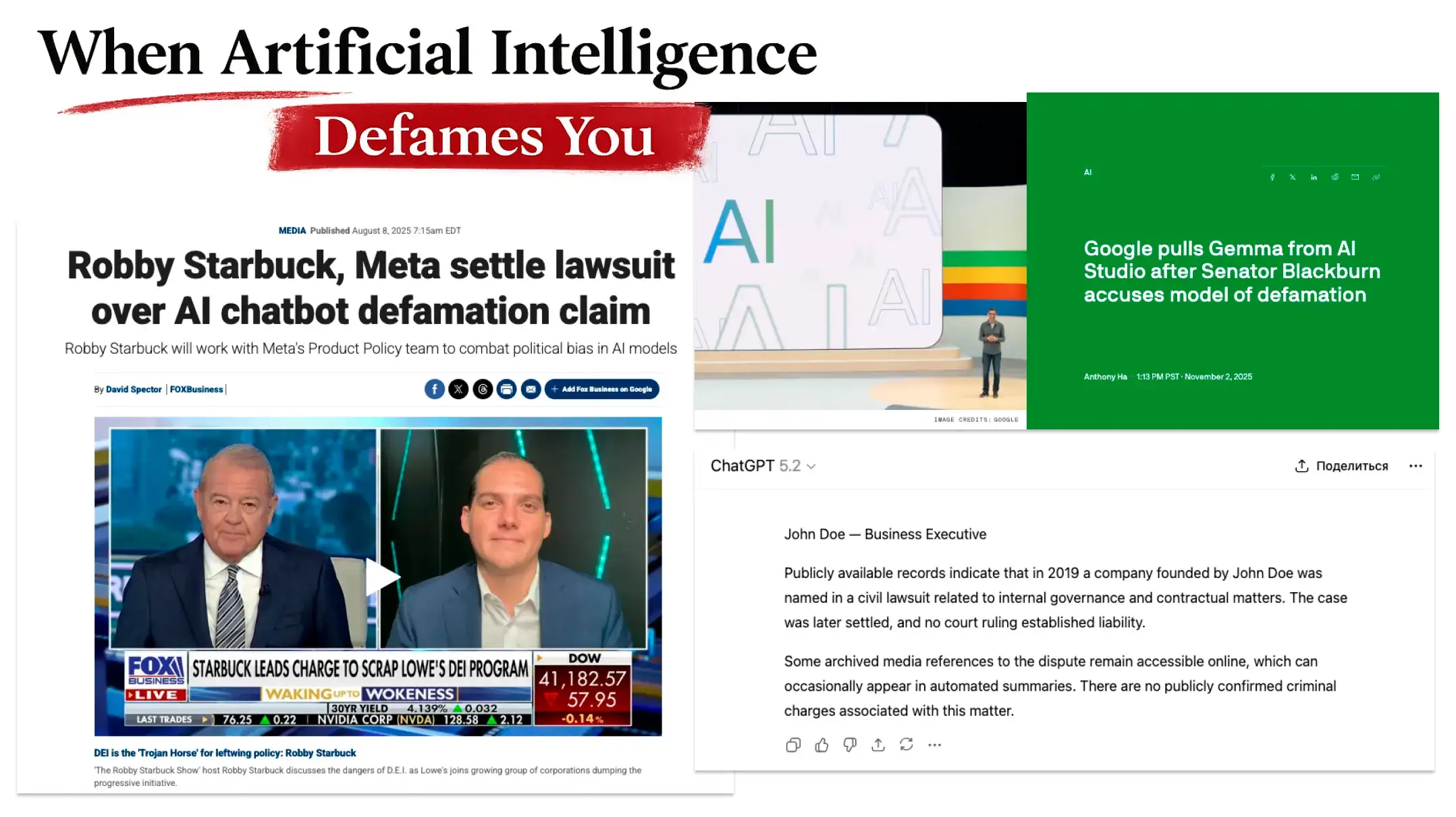
Over the previous few years, I’ve seen a gradual progress within the variety of instances immediately linked to one of many hottest digital traits: giant language fashions (LLMs). I’ve seen purchasers fail financial institution compliance checks, executives get blocked from partnerships, and candidates get declined by hiring managers primarily based on biased AI assessments.
All through historical past, those that managed data channels held huge energy. Within the Thirties, radio remodeled from a novelty into the dominant medium for shaping public opinion. At this time, AI methods like ChatGPT signify an identical shift. They synthesize, prioritize, and infrequently distort data. And whereas radio broadcasts are apparent, AI can affect selections in additional refined methods.
On this article, I’ll clarify why monitoring how AI fashions describe you is essential and supply steerage on what to do if their responses include non-public particulars or negativity.
The place does ChatGPT get its data from?
Understanding methods to take away your data from ChatGPT begins with understanding the place it originates.
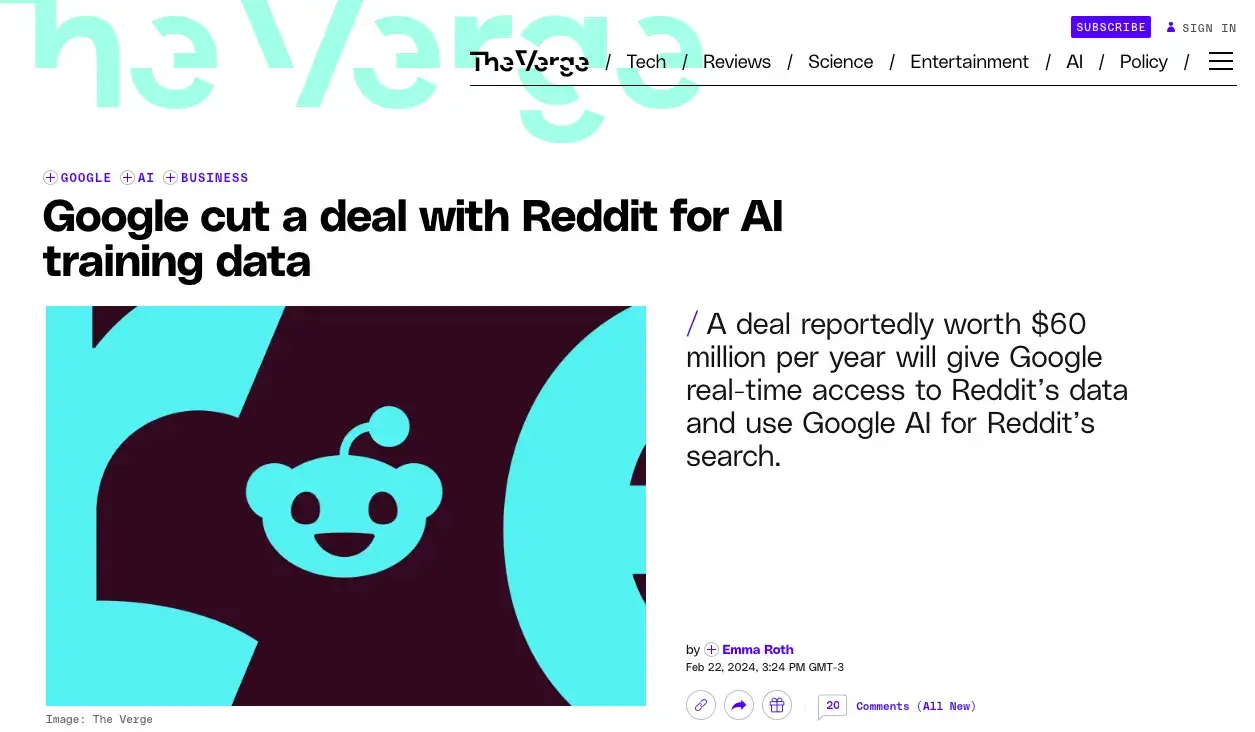
Giant language fashions, corresponding to ChatGPT, Claude, or Gemini, study from huge quantities of information: net pages, information articles, books, specialised boards, tutorial papers, and even social media posts. The vast majority of these methods don’t browse the web in real-time while you ask them a query. As a substitute, they depend on data realized throughout coaching cycles that occurred weeks or months in the past.
Additionally, the age of information issues. A supply that has been within the database for greater than two years has considerably extra credibility with the mannequin than three recent hyperlinks that appeared a month in the past.
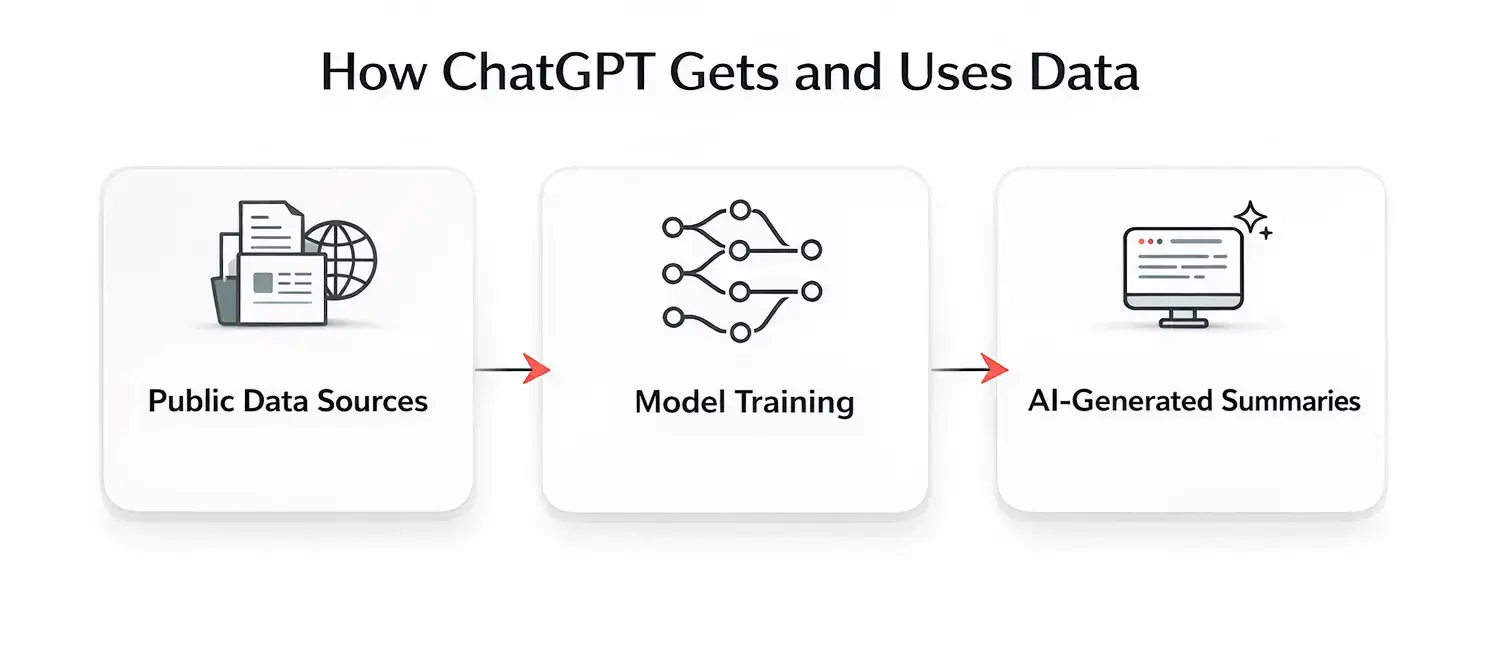
For instance, when it was launched, the GPT-4o mannequin knew every little thing as much as October 2023, after which utilized retrieval and Browse-with-Bing options explicitly activated by the consumer. The mannequin didn’t examine whether or not the supply nonetheless exists in the meanwhile of a dialog. As soon as it’s skilled, it received’t mechanically ‘overlook’ eliminated webpages.
As a substitute of indexing every little thing equally, AI ranks sources by “weight”, which is a variable measure:
- For complicated niches (finance, drugs, legislation): LLMs prioritize professional sources, corresponding to Bloomberg, authorities portals, and industry-specific publications.
- For shopper merchandise and private branding, behavioral components come into play. If there’s a full of life dialogue about sneakers on a vogue discussion board, this carries extra weight than a dry article in conventional media. AI seems for “collective expertise.”
AI goals to be impartial
LLMs are designed to sound impartial, however their outputs replicate the “stability of weights” of their coaching information. If the digital “scales” tip in a single path, impartial synthesis produces skewed outcomes.
How AI weighs data
To place it merely, ChatGPT and different LLMs assign “factors” to items of knowledge primarily based on how usually they seem, the place they seem, and the way authoritative these sources are.
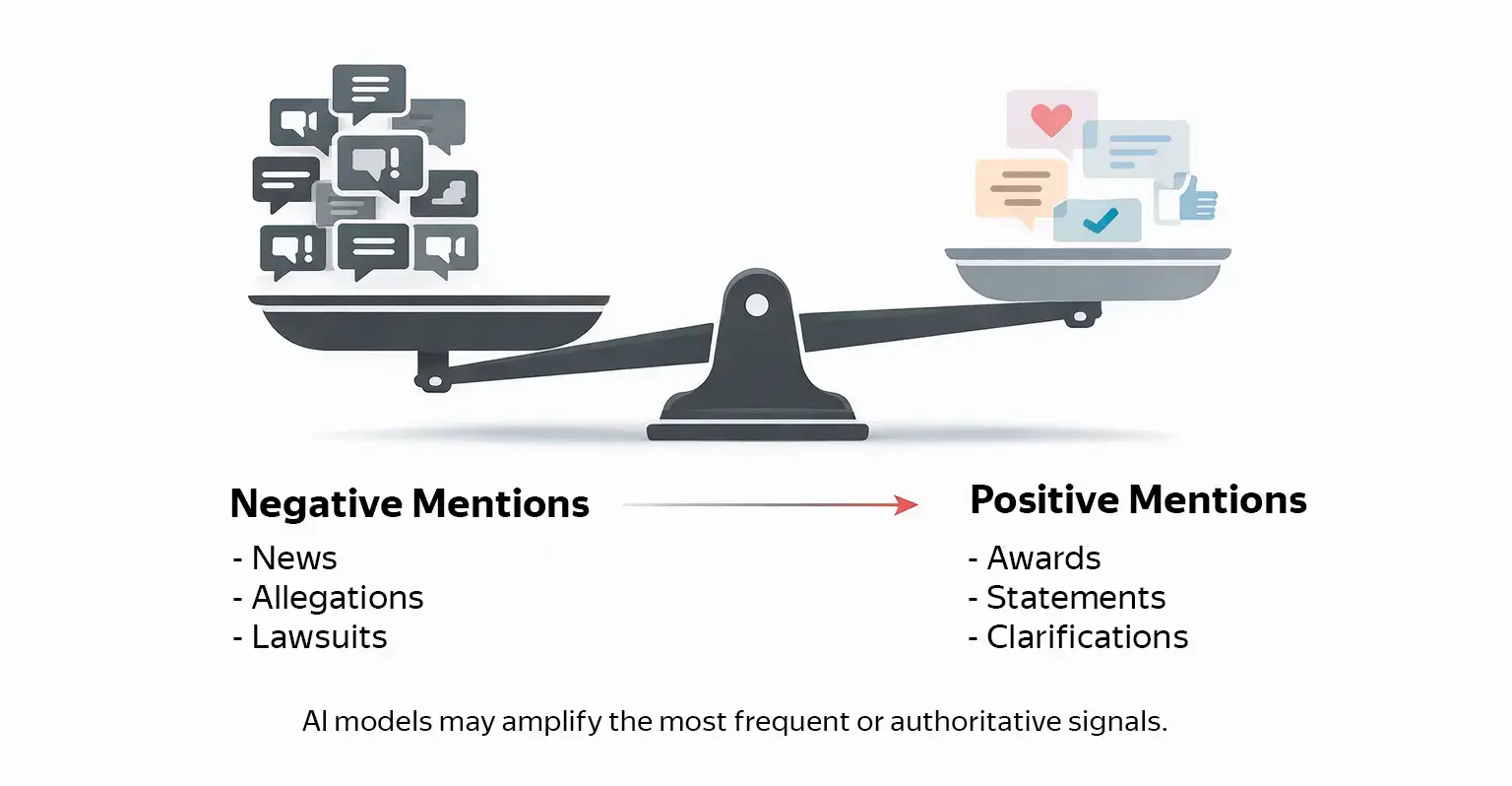
For example, if 10 sources say one thing damaging about you, that creates 10 “damaging factors,” whereas solely 3 constructive sources offer you simply 3 “constructive factors.” The AI’s response will replicate this imbalance. To vary it, we’ve so as to add constructive and impartial indicators, not simply take away damaging ones.
Key takeaways
- Fashions rely totally on pre-trained information which may be months or years outdated except a looking/retrieval characteristic is enabled.
- LLMs attempt to be impartial, however their outputs replicate the burden of indicators within the coaching database.
- AI offers “factors” to data primarily based on frequency and supply authority. Creating constructive and impartial content material ought to go hand in hand with eradicating damaging indicators.
Find out how to stop dangerous details about you from showing in AI
Here’s a step-by-step information for sustaining a stellar status based on LLMs’ responses.
Monitor AI outputs commonly
Arrange a monitoring routine that covers ChatGPT (a number of variations if attainable), Microsoft Copilot (previously Bing Chat), Claude, Perplexity, and Gemini. Use constant prompts and screenshot their solutions, together with the mannequin identify and timestamps.
- “Who’s [Full name]?”
- “What controversies contain [Company name]?”
- “What ought to I do know earlier than doing enterprise with [Name]?”
- “Inform me about [Name]’s status.”
React instantly to negativity
If the monitoring reveals any damaging content material, act quick, to be able to stop it from getting into the subsequent coaching cycle and reduce its weight earlier than the subsequent mannequin replace.
Deal with stability
Attempting to delete every little thing damaging is never efficient. It’s higher to establish the burden of damaging content material after which create an identical constructive weight by publishing impartial and constructive content material on equal or higher-authority web sites. In our follow, extensively cited, high-authority sources like main information retailers, reference websites, and tutorial establishments are inclined to affect how fashions summarize matters extra.
What works
Efficient approaches give attention to constructing fairly than simply eradicating: publishing counter-content on authoritative domains, getting corrections and editor’s notes added to damaging sources, and establishing presence on websites AI methods belief. Submitting formal privateness requests with correct documentation additionally works, however solely when paired with a broader content material technique.
Generally removing will not be attainable. Certainly one of our instances handled a single damaging article a few shopper showing in AI-generated “profiles.” As a substitute of merely demanding deletion, we opened direct communication with moderators at OpenAI and Perplexity. Arguing that the supply was questionable and lacked verification, we managed to get the neural community so as to add a disclaimer: “This data comes from an unverified supply and requires extra affirmation.” This immediately diminished the extent of mistrust for anybody studying the AI’s response.
What doesn’t
Demanding AI corporations “delete every little thing about me,” aggressive media outreach or authorized threats with out content material backing them up usually do extra hurt than good. And the worst mistake I usually see is ignoring AI whereas focusing solely on Google, or just ready for issues to resolve themselves.
What to do subsequent
- Publish counter-content on high-authority, AI-trusted domains.
- Get corrections and editor’s notes added to current damaging sources.
- Submit a proper request backed by a content material technique.
- Construct counter-narratives that add context.
- Keep away from aggressive suppression techniques that may generate extra protection.
Case research: AI status administration in follow
To reply the query “What’s AI status administration?”, let me share a latest case of ours. It completely illustrates why conventional strategies fail when coping with machine studying fashions.
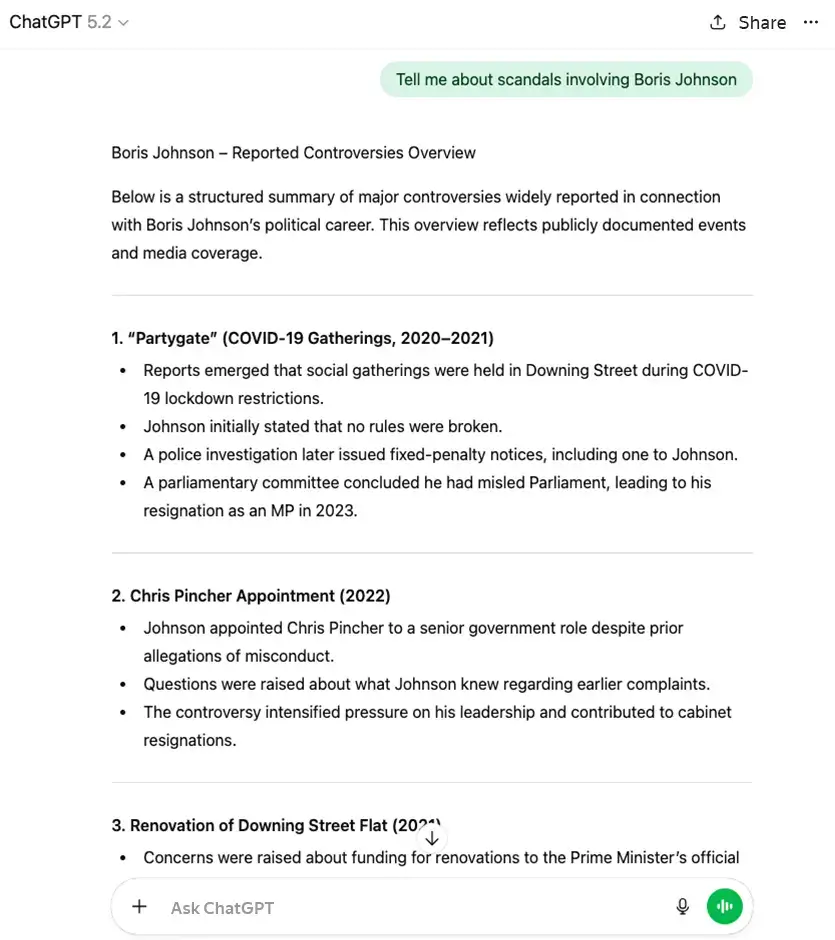
Our shopper had been repeatedly failing financial institution compliance checks, though conventional due diligence stories and Google searches have been coming again clear. Our analysis led us to the invention that the problem was neural networks. Whereas we had efficiently eliminated damaging articles in regards to the shopper 18 months prior, the AI instruments at banks nonetheless “remembered” that information. This led to their responses having all of the damaging particulars in regards to the shopper, prompting failed compliance checks.
Earlier than hiring us, the shopper additionally made the error of contacting the media immediately, demanding the deletion information about them. The editors discovered this habits newsworthy, which led to much more damaging tales about these “suppression makes an attempt”.
It was clear that commonplace content material removing was not sufficient. To resolve the problem, we took the next steps
- We examined dozens of prompts to see precisely how neural networks constructed the shopper’s profile.
- Then we submitted formal requests to OpenAI and different platforms, supplying them with authorized arguments and timestamped proof, to make sure that the neural networks present correct and up-to-date details about the shopper.
- We additionally revealed 40+ items of high-quality content material on authoritative domains. As a substitute of attempting to cover the outdated, unflattering content material, we supplied sufficient constructive and verifiable info to tip the burden stability in LLMs’ responses.
Summing it up
- By no means announce your removing efforts, as public disputes can appeal to extra protection and repeat the allegation.
- Depart formal request submissions to platforms and media retailers to professionals and authorized specialists.
- Spend money on content material removing and its creation to stability the affect of the previous on search and AI chat outcomes.
Issues to bear in mind
Begin from accepting the truth that machine studying fashions don’t “assume” like people or search like Google. They’re likelihood engines, continually weighing the out there information.
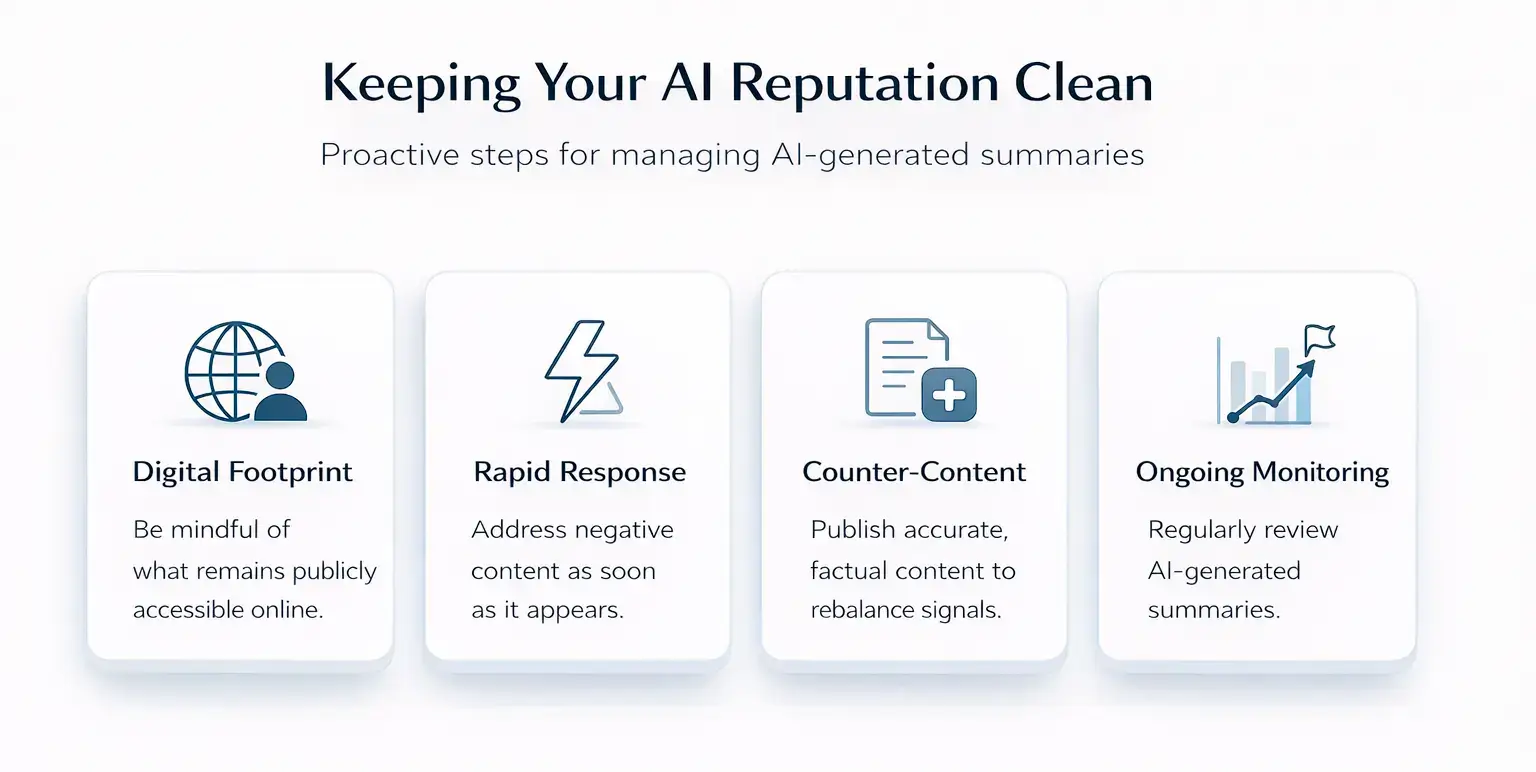
Is it even attainable to keep away from showing in AI fashions? In my expertise, sure. Listed here are proactive measures to take.
- Hold your digital footprint clear. Be ruthless about what you allow on open-access information dealer websites. In case your telephone quantity is public, it’s possible already in a coaching set.
- React shortly. Tackle damaging content material the second it seems. The longer a damaging article stays dwell, the upper the likelihood it will likely be scraped right into a dataset for coaching.
- Launch counter-content. Proactively publish constructive, factual content material. If the neural community finds a void, it’d fill it with hallucinations.
- Common monitoring of standard LLMs’ responses helps to know what the AI is saying about you or what you are promoting earlier than anyone else does.
Managing sign stability
Enhance the amount of reliable content material. In our work, we give attention to high-authority domains (like universities or {industry} information) as a result of OpenAI tends to favor these sources. We additionally doc errors and conflicts of curiosity in damaging supply materials. Over time, if corrections and higher-quality sources dominate the dataset, AI summaries might shift.

Be sure to keep up factual consistency. For instance, in case your LinkedIn profile says one factor and Crunchbase profile says one other, the AI will get confused and reduces belief in your most well-liked narrative.
Arsenii Katkov
Founder — Fame Moscow


Making AI mistrust damaging sources
By documenting factual errors and bias and providing counter-evidence, fashions usually hedge or qualify claims. As a substitute of stating “John Doe is a fraudster,” the AI may say: “Some sources recommend allegations have been made, although these stories have been disputed and include factual inconsistencies.”
AI fashions have a “temperature” setting that controls creativity. When there may be conflicting information (e.g., a damaging article vs. a robust correction), the mannequin usually chooses the “most secure” path to keep away from hallucinating. By introducing a proper correction into the info ecosystem, we are able to drive the AI right into a impartial stance as a result of it lowers the statistical confidence of the damaging declare.
Arsenii Katkov
Founder — Fame Moscow
Specializing in distinctive ‘good’ content material
Essentially the most dependable solution to “re-educate” AI is to create distinctive content material. Not simply duplicate current data, however generate new meanings and factors of view. If a consumer asks about your model, receives a solution drawn out of your constructive content material, and doesn’t comply with up with clarifying questions, the algorithm considers that response “balanced.” The aim is to supply high-quality, recent materials in order that there isn’t any must dig into questionable damaging data from deeper layers of the dataset.
Key takeaways
- AI fashions operate as likelihood engines that weigh information patterns fairly than “considering” like people.
- Proactive digital footprint administration is crucial: tackle damaging content material instantly; commonly examine responses from standard LLMs; give attention to publishing via domains with excessive “belief weights”.
- Shift the narrative by tipping the stability towards constructive sentiment and making damaging content material seem much less reliable via context and nuanced formulations.
Why AI status administration issues
The sheer dimension of their consumer base and the way AI brokers are getting built-in in every single place makes focusing solely on Google search outcomes an outdated strategy.
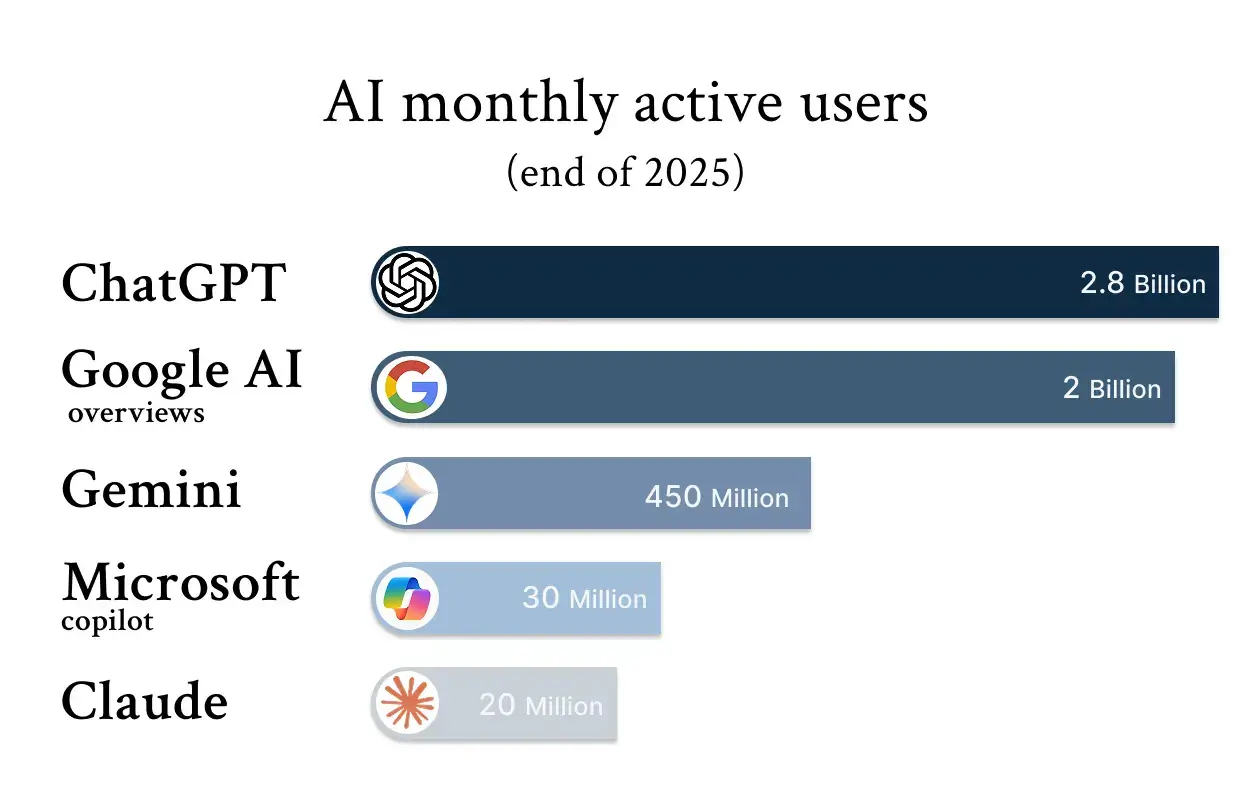
Viewers dimension. ChatGPT alone has over 800 million weekly energetic customers. Add Claude, Gemini, Perplexity, and Microsoft Copilot, and the attain expands additional. Amongst these customers are hiring managers evaluating candidates, traders researching potential companions, financial institution workers conducting background checks, journalists gathering background for tales, and so forth.
Accelerating integration. AI instruments are being built-in in every single place. From AI overviews in search outcomes to emails suggesting AI-generated responses. Folks can encounter AI details about you even when they didn’t particularly ask for it.
Early adopters win. Managing your AI presence offers extra possibilities to form the narrative earlier than one other (typically damaging) viewpoint turns into dominant within the LLMs’ dataset.
What to do in case your non-public information was fed to ChatGPT
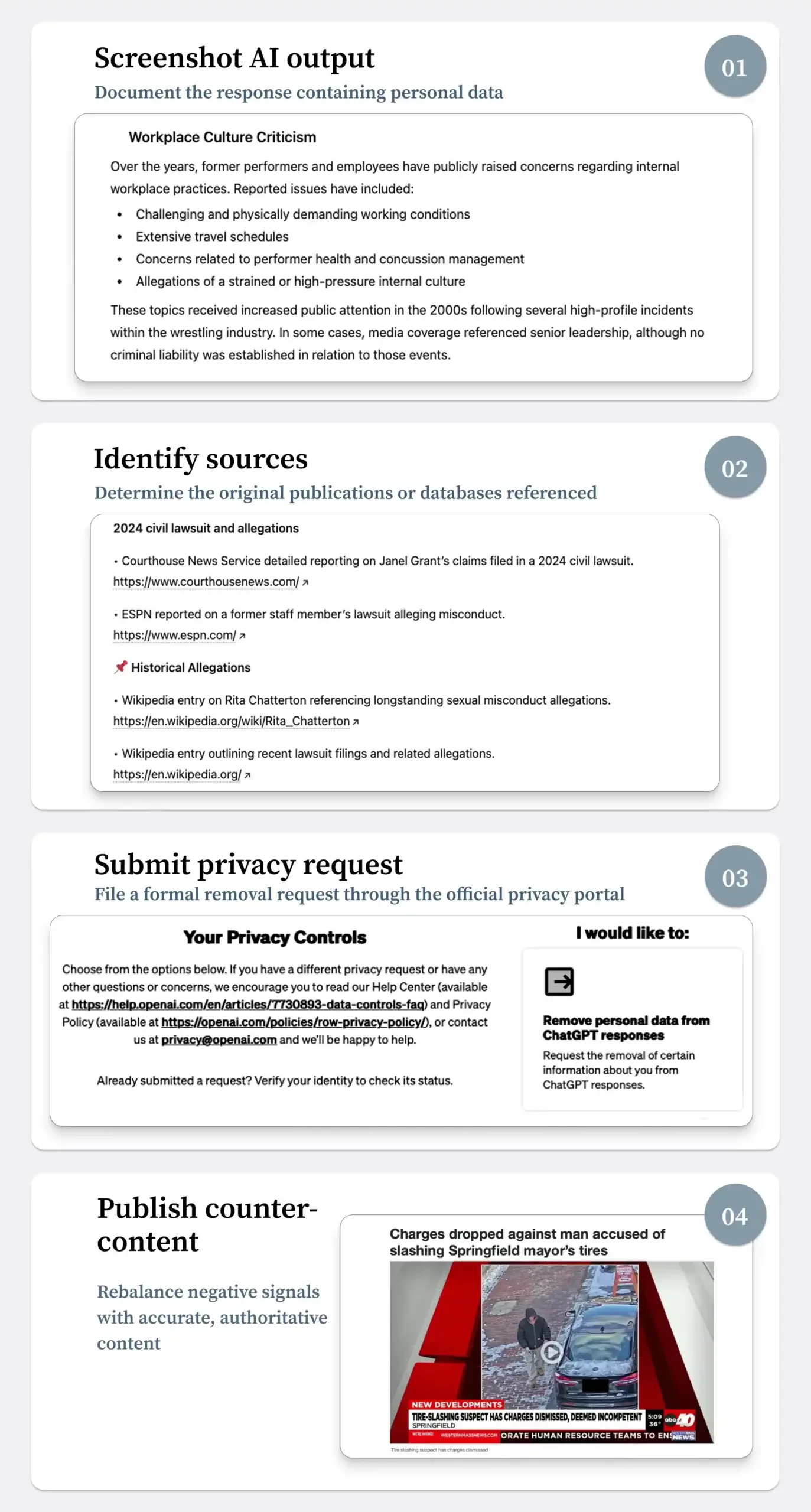
It’s not all the time attainable to stop ChatGPT from studying an individual’s non-public particulars. If AI produces responses that include your non-public information, here’s a step-by-step information on methods to deal with it.
-
- Doc every little thing. Earlier than doing anything, seize screenshots that clearly present the date, time, your actual immediate, and the AI’s full response containing the non-public information.
- Establish the supply. Typically, it’s an outdated Fb publish, outdated weblog feedback, yellow-pages-style enterprise listings, or public data that by no means ought to have been public. As soon as discovered, contact that web site on to request a takedown to cease the identical information from getting scraped into future coaching.
- Submit a proper privateness request to OpenAI. Ship it through the official privateness middle for information topic requests. Be certain that your request consists of:
- full authorized identify and call data;
- the precise prompts that generate your non-public information;
- screenshots documenting the outputs;
- particular identification of the content material you need eliminated;
- authorized foundation in your request.
- Comply with up and escalate if wanted. In the event you don’t obtain an satisfactory response inside 30 days, comply with up referencing your unique case. If that doesn’t assist, escalate the matter to regulators like your native Information Safety Authority or State Legal professional Common. At this stage, consulting authorized counsel may also be essential to discover additional choices for imposing your rights.
Under is a template of a removing request you’ll be able to adapt
To-do checklist
- Screenshot problematic AI outputs with timestamps.
- Establish unique sources of private information on-line.
- Submit removing requests to these sources first.
- Put together a proper request for the OpenAI privateness portal with particular prompts, outputs, and authorized foundation.
- If nothing adjustments in 30 days, comply with up and think about escalating the case to native regulators.
Conclusion
If it’s essential to delete your information or negativity from ChatGPT (or another AI platform), the simplest strategy combines a number of methods. Doc AI outputs and attempt to repair the unique sources first. Comply with with formal requests to the platforms and stability indicators by publishing authoritative content material that offers AI fashions your viewpoint, constructive and impartial content material.
Take into consideration AI status administration as an ongoing effort. Partnering with specialists corresponding to Fame America is simpler than attempting to manage issues your self. Not solely do we all know methods to file requests for removing successfully and have experience in creating authoritative content material that shapes what AI methods study, however we additionally monitor the outcomes and cut back the probability that the content material reappears.
[ad_2]