Abstract: Researchers have recognized a possible breakthrough for traumatic mind accidents (TBI) utilizing a freeze-dried blood product known as “Thrombosomes.” Initially designed for battlefield hemorrhage, this product has demonstrated a novel potential to stabilize broken blood vessels within the mind, lowering each fast bleeding and the damaging mind swelling (edema) that sometimes follows days later.
The examine means that these shelf-stable platelets outperform recent platelets in defending the “leaky” vessels related to TBI, offering a much-needed instrument for ambulances and distant clinics.
Key Info
- 5-Yr Shelf Life: In contrast to recent platelets, which expire after solely seven days and require refrigeration, Thrombosomes are freeze-dried with a sugar known as trehalose and may be saved at room temperature for as much as 5 years.
- Stabilizing the “Leak”: The product comprises excessive ranges of a selected protein that prompts receptors on blood vessel cells, reinforcing them in opposition to the “leakiness” that causes life-threatening cerebral edema.
- Superior to Contemporary Platelets: Whereas recent platelets are used for clotting, they haven’t been efficient in opposition to TBI. Thrombosomes seem to pay attention potent “components” that transcend easy clotting to actively cut back mind irritation.
- Quick-Observe Potential: As a result of Thrombosomes are already in Section II scientific trials for bleeding issues, their security in people is established, which may considerably speed up testing for TBI sufferers.
Supply: UCSF
A freeze-dried blood product that may very well be saved for years on ambulances or in distant emergency departments is exhibiting promise at treating traumatic mind accidents.
The information comes from a mouse examine carried out by researchers at UC San Francisco. If it pans out in folks, it may reply an enormous unmet want for therapies that deal with these accidents, that are the main explanation for dying in folks below 44 years outdated.

Along with the fast bleeding, traumatic mind harm (TBI) additionally causes harmful mind swelling days later, as blood vessels start to leak. Even when an individual is rushed to the hospital, medical doctors have few choices, except for surgical procedure, to cease the bleeding or the mind swelling.
“In some circumstances, surgeons will take away a part of the cranium to alleviate the stress — however there’s no drug that successfully treats swelling, or cerebral edema, instantly,” stated Shibani Pati, MD, PhD, director of the UCSF Heart for Analysis Transfusion Drugs and Cell Therapies and senior writer of the paper, which printed March 17 in Blood. “We have been excited to see how readily this product strengthened broken blood vessels within the mind.”
The product, known as “Thrombosomes,” was initially developed to manage bleeding in battlefield settings. It’s derived from platelets which have been freeze-dried with a sugar known as trehalose, which helps protect a few of their helpful contents. It has a shelf lifetime of as much as 5 years — far longer than the 7-day shelf lifetime of recent platelets from human blood donors.
Contemporary platelets, which should be saved in fridges, are used to deal with hemorrhage and a few most cancers sufferers and to stop bleeding throughout surgical procedure. However they haven’t been proven to be efficient in opposition to TBI.
Scientists have solely discovered the best way to protect platelets within the final 30 years, hoping to deal with an ongoing world scarcity of recent platelets, however no preserved platelet product has been permitted for human use, not to mention TBI.
The staff examined Thrombosomes on the blood vessel cells in petri dishes and in 3D organoid fashions of blood vessels. The product made each the cell layers and vessels resilient to break.
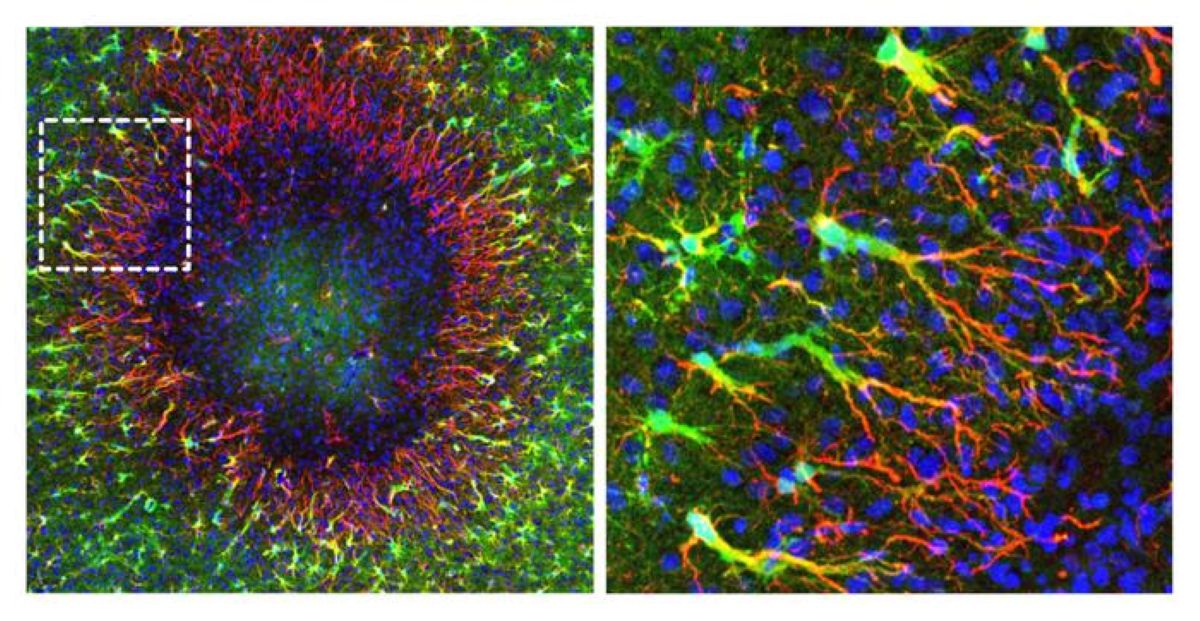
Mice that acquired the product both an hour or a day after a mind harm had much less hemorrhage and their blood vessels weren’t as leaky. In addition they had much less mind irritation, which may result in swelling.
The scientists discovered that the product contained excessive quantities of a protein that prompts a receptor on blood vessel cells, serving to to stabilize them. This will clarify how the product makes them much less leaky.
To date, that protein is the primary of what the researchers say may very well be a cocktail of helpful molecules.
“Platelets carry many potent components that transcend clotting,” Pati stated. “In our mouse mannequin of TBI, we noticed hints that this product concentrates these components, making it more practical than platelets themselves.”
The product is in Section II scientific trials for bleeding issues, which suggests it has already been proven to be secure for folks. This might hasten trials that take a look at it for TBI.
Authors: Different UCSF authors are Alpa Trivedi, PhD; Byron Miyazawa; Haoqian Zhang, PhD; Longhui Qiu, PhD; Daniel Potter; Austin Edwards; Lindsay Vivona; Maximillian Lin; Callie Keane; Huimin Geng, PhD; Simon J. Cleary, PhD; Alison Nair, MD; and Mark R. Looney, MD. For all authors, see the paper.
Funding: This work was supported by the Division of Protection (W81XWH‐19‐1‐0462 BA180248). For all funding see the paper.
Key Questions Answered:
A: Your cranium is a set, laborious container. When the mind swells (cerebral edema), there’s nowhere for the tissue to go, which may minimize off blood circulate and trigger everlasting injury. Presently, the primary “therapy” is a craniectomy, actually eradicating a part of the cranium. A drug that stops the swelling instantly could be a game-changer.
A: It’s about focus and sturdiness. The freeze-drying course of preserves and concentrates helpful molecules that recent platelets lose rapidly. Plus, the power to maintain them in an ambulance for years means therapy can begin the second a paramedic arrives, fairly than ready till the affected person reaches a significant trauma middle.
A: Whereas this examine targeted on TBI, the mechanism—stabilizing leaky blood vessels—is very related to hemorrhagic strokes. If the product can reinforce the “blood-brain barrier” elsewhere, its functions may increase to varied types of acute mind trauma.
Editorial Notes:
- This text was edited by a Neuroscience Information editor.
- Journal paper reviewed in full.
- Extra context added by our employees.
About this TBI and neurology analysis information
Creator: Levi Gadye
Supply: UCSF
Contact: Levi Gadye – UCSF
Picture: The picture is credited to Neuroscience Information
Authentic Analysis: Closed entry.
“A Dried Platelet-Derived Biologic for Blood-Mind Barrier Restore and Hemorrhage Management Following TBI in Mice” by Alpa Trivedi, Byron Y Miyazawa, Haoqian Zhang, Longhui Qiu, Daniel Potter, Austin William Edwards, Lindsay Vivona, Maximillian Lin, Callie Keane, Huimin Geng, Simon J Cleary, Alison Nair, Michael M Fitzpatrick, Mark R. Looney, Shibani Pati. Blood
DOI:10.1182/blood.2025031826
Summary
A Dried Platelet-Derived Biologic for Blood-Mind Barrier Restore and Hemorrhage Management Following TBI in Mice
Traumatic Mind Harm (TBI) is the main explanation for dying in kids and adults aged 18-44. Regardless of its excessive prevalence and devastating penalties, there are at the moment few efficient therapies that focus on the acute, life-threatening issues of TBI – significantly cerebral edema and intracranial hemorrhage (ICH).
The blood-brain barrier (BBB) and regulation of vascular stability following harm are rising as vital therapeutic targets. On this examine, we consider the therapeutic potential of a first-in-class, freeze-dried platelet-derived biologic (FDPlts) in a murine mannequin of TBI. FDPlt transfusion considerably reduces post-TBI ICH and restores cerebral vascular perfusion.
Moreover, FDPlts attenuate BBB permeability, suppress intravascular leukocytosis, and mitigate neuroinflammation evidenced by decreased microglial activation, astrocyte reactivity, and macrophage infiltration. Transcriptomic profiling of cortical and hippocampal tissues reveals that FDPlts downregulate gene networks related to irritation and fibrosis, suggesting a job for FDPlts within the modulation of post-injury restore.
Mechanistically, FDPlts are enriched in Angiopoietin-1, a key bioactive protein that indicators by way of the Tie2 receptor pathway, a central regulator of endothelial stability. Inhibition of Tie2 exacerbates BBB permeability after TBI, an impact attenuated by FDPlt administration; implicating Ang-1 as a key mediator of FDPlts mediated BBB safety in TBI.
The BBB performs a significant position in sustaining cerebral homeostasis, and its breakdown after TBI initiates dangerous cascades of edema, irritation, and neuronal harm.
Our findings exhibit, for the primary time, {that a} dried, platelet-derived biologic can promote vascular restore and neuroprotection in TBI.