My grandma managed stock spreadsheets for a textile firm for 40 years. She calculates compound reductions in her head quicker than most individuals can with calculators, however has zero coding expertise.
Once I recommended constructing a backyard monitoring app collectively utilizing AI, her skepticism was virtually immediate.
Two hours in, she had a working internet software till we requested for another factor, and the app broke. That is an all-too-common story of vibe coding.
Now, I’ve a framework for understanding what vibe coding truly delivers versus what it guarantees, so you possibly can look past the advertising hype and make precise use of the product.
First, What Is Vibe Coding?
Vibe coding is constructing software program by describing what you need in plain English and letting AI write the code for you.
Former Tesla AI director and OpenAI co-founder Andrej Karpathy coined the time period in February 2025 when he tweeted: “There’s a brand new sort of coding I name ‘vibe coding’, the place you totally give in to the vibes, embrace exponentials, and neglect that the code even exists.”
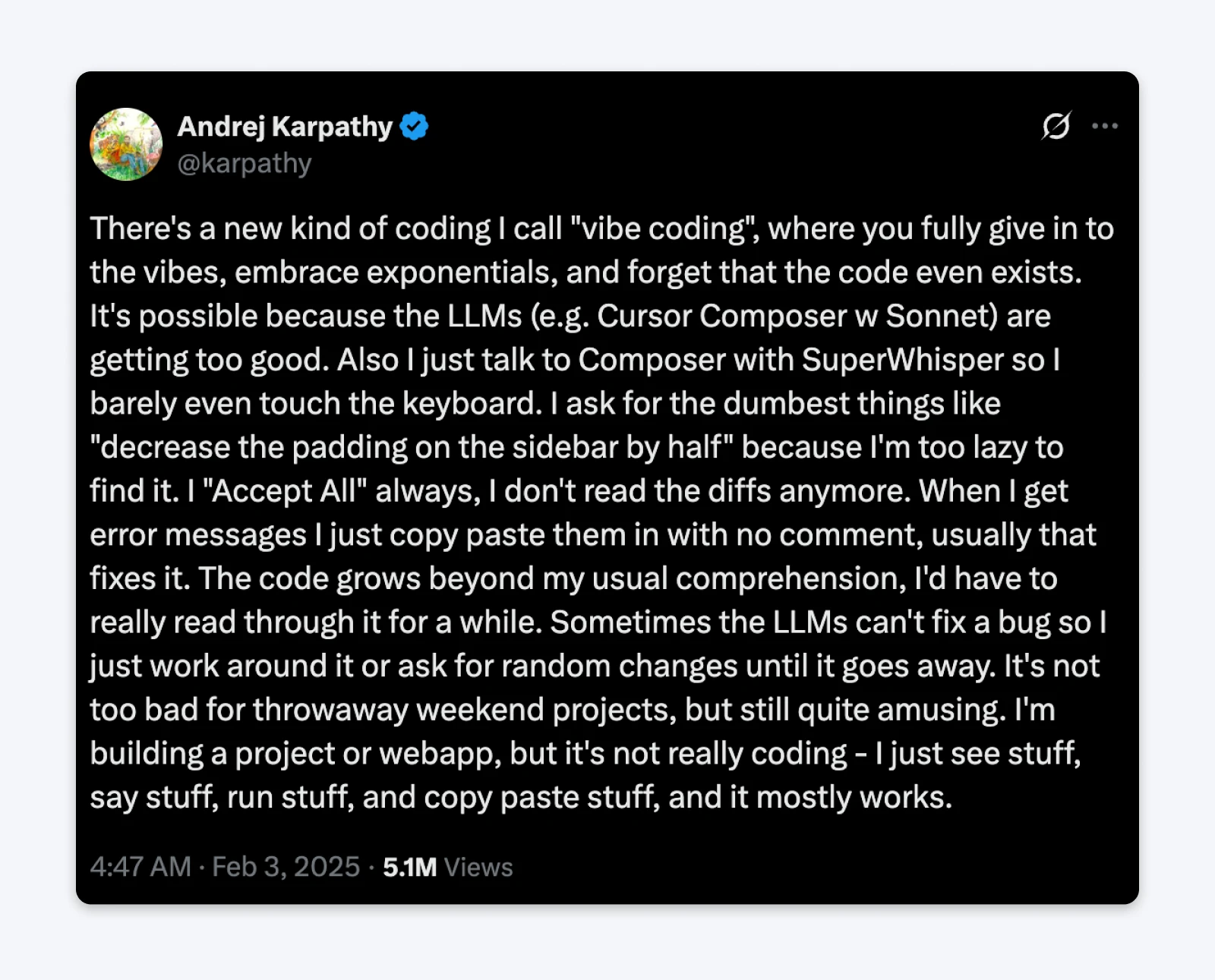
The publish exploded with over 5 million views, capturing a growth method that was already spreading by means of the tech group.
As a substitute of studying programming languages and wrestling with syntax, you simply inform an AI what you wish to construct. The AI generates the code. You turn into a product supervisor slightly than a programmer, targeted on what the app ought to do as an alternative of tips on how to make it work.
Why Does Vibe Coding Matter Now?
87% of firms face expertise shortages or count on to throughout the subsequent few years, in accordance with McKinsey.
AI coding instruments like Bolt.new, Lovable, Replit Agent, and Cursor promise to unravel this downside by bettering productiveness for current builders and permitting non-devs to check their concepts rapidly.
The numbers again up the hype:
- In March 2025, Y Combinator revealed that 25% of their Winter 2025 batch had 95% of their codebases generated by AI.
- In April 2025, Microsoft CEO Satya Nadella revealed that 20–30% of the codebase was written by AI.
- 1 / 4 of startups in YC’s present cohort have codebases which can be virtually completely AI-generated.
- Google CEO Sundar Pichai reported comparable figures, stating over 25% of Google’s code is AI-generated.
We’ve gone from primary autocomplete to writing complete purposes with minimal human enter.
However the identical options that make vibe coding accessible, like pure language enter, autonomous code era, and computerized complexity dealing with, create severe issues when your app must develop past that first model.
What Can You Really Construct with Vibe Coding?
When you possibly can truly construct with vibe coding depends upon three issues:
- How advanced your app must be
- Whether or not you possibly can spot dangerous code and safety holes
- If when to cease including options
In case your app necessities are easy, and you may establish technical gaps and resist pointless function additions, vibe coding may also help you ship quick useful outcomes.
Nonetheless, as complexity grows or if you could construct production-grade apps, skilled overview and architectural planning turn into non-negotiable.
My grandmother’s expertise constructing a backyard monitoring app confirmed precisely the place these limits are.
What Occurred in Hour One? Easy Directions Labored
There are not less than a dozen AI vibe coding platforms like Bolt, Lovable, OpenAI Code, Claude Code, Google Opal, and so forth.
We began with the OpenAI Codex extension in VS Code as a result of I already had a subscription, however I’d advocate beginning with Bolt.new, Lovable, or Vercel for a extra visible vibe-coding expertise.
Our first immediate: “Construct a backyard monitoring app the place I can report what I planted, once I planted it, and the way a lot I harvested. Embody a technique to see which crops carried out finest every season.”
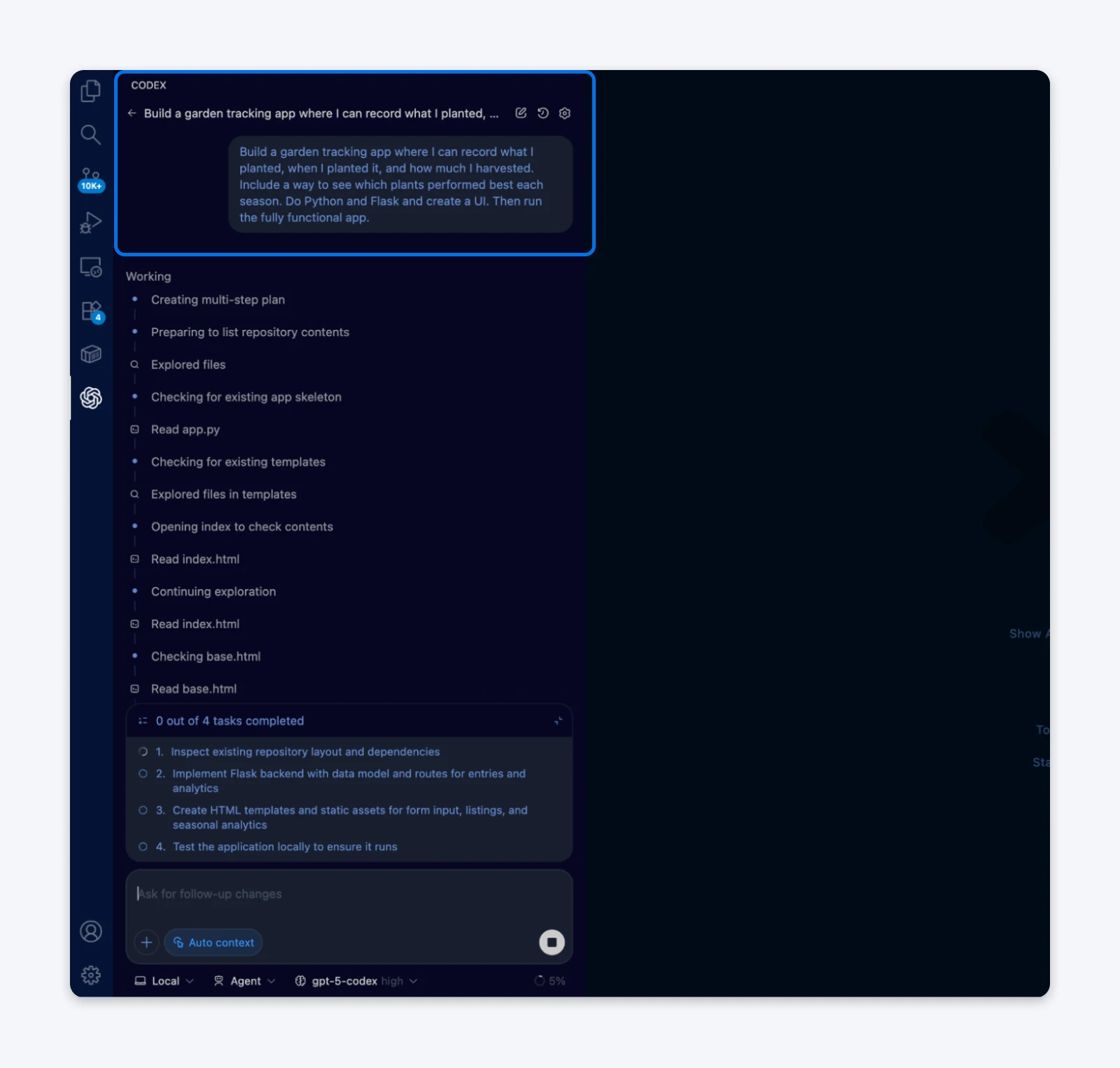
This immediate labored as a result of it contained three important parts:
- Clear knowledge construction (plant title, planting date, harvest quantity, season)
- Outlined output (efficiency comparability by season)
- Particular use case context (private backyard monitoring)
Inside a couple of minutes, Codex generated a whole software. It had an SQLite database with tables for crops, plantings, and harvests, REST API endpoints for CRUD operations, a Python frontend with knowledge tables and enter kinds, and primary styling with CSS.
It even had some demo knowledge by default.
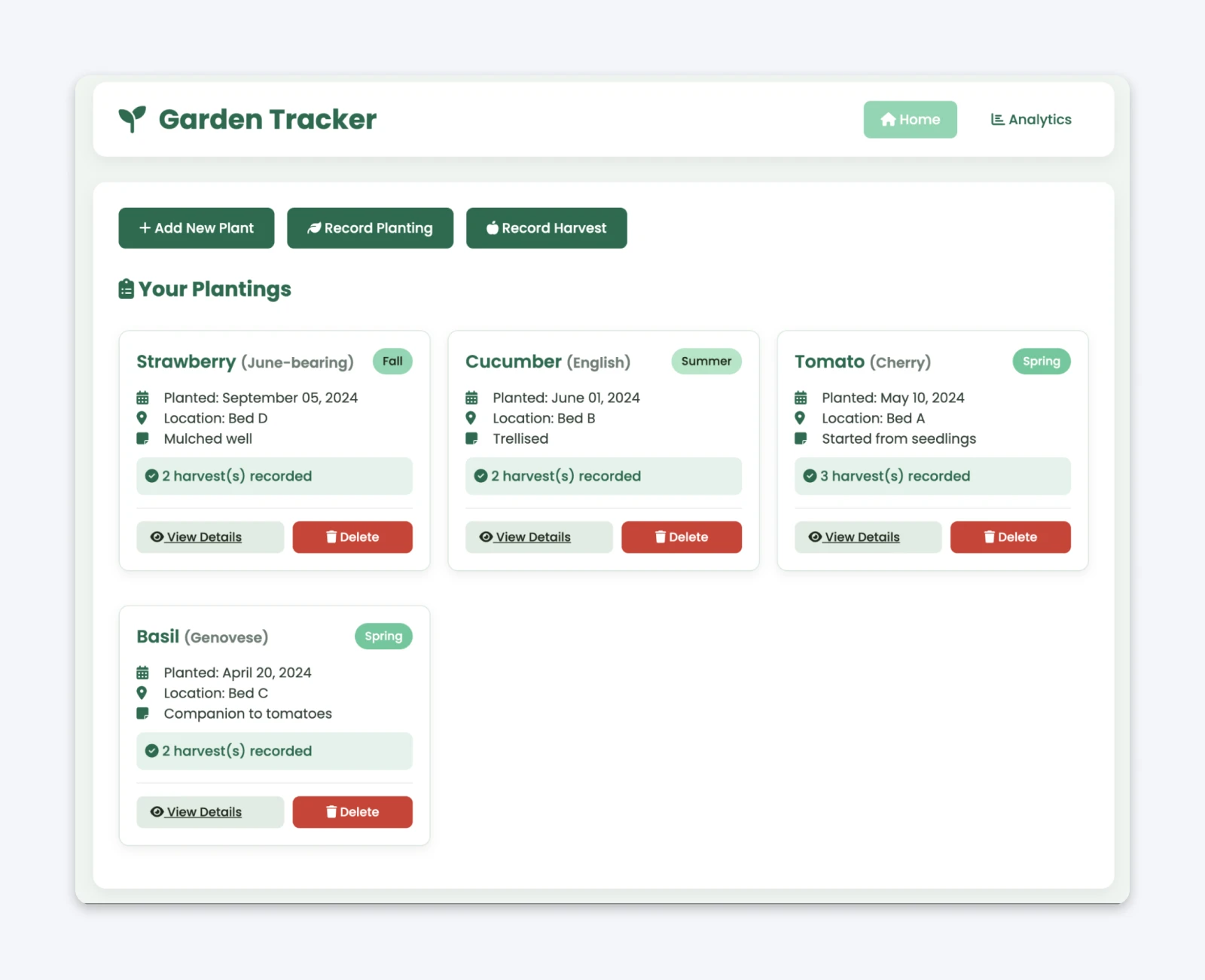
The net app seemed good. That’s vibe coding’s superpower and its biggest hazard. However earlier than I leap into that, let me clarify what’s truly occurring behind Codex’s considering. I performed round with the app, discovered what we had and what else we wanted.
What Occurred Behind the Interface
The generated code made architectural choices for a single-user software. The database schema might deal with new entries simply. The API adopted RESTful conventions. The frontend elements have been separated logically.
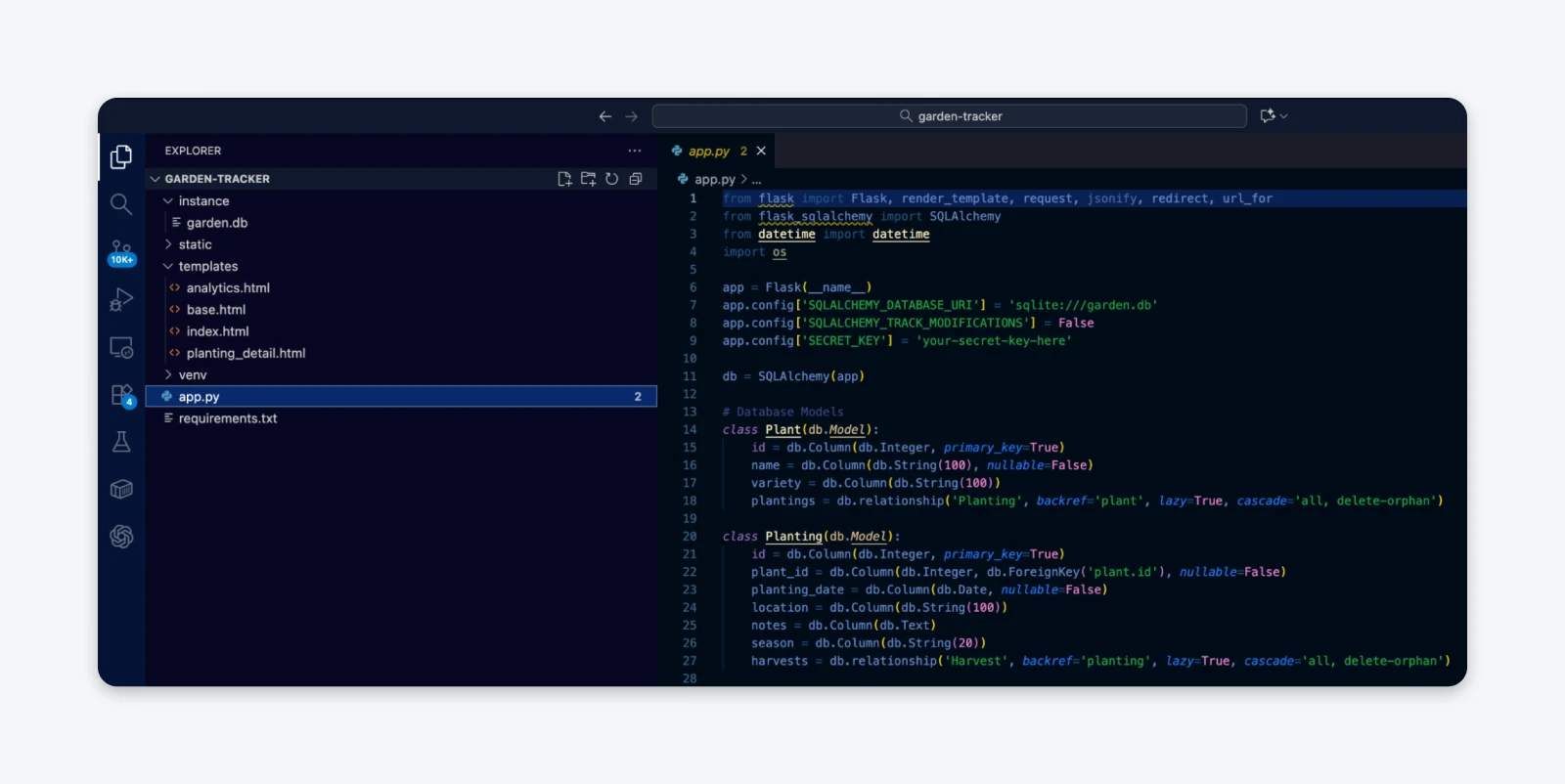
Nonetheless, I seen that it didn’t make important safety issues by default. There was no enter validation, no authentication layer, no charge limiting, no consideration of SQL injection vulnerabilities, and no encryption.
The AI agent’s structure assumed a trusted single person in a managed surroundings.
Contemplating this was a mission for my grandma and nobody else, these omissions are manageable dangers. Nonetheless, for anybody contemplating vibe coding to construct a multi-user internet software, these are important safety dangers that merely can’t be ignored.
I generally see discussions about this on Reddit or PostStatus: builders efficiently iterate on AI-generated code as a result of they establish these gaps and implement correct safety layers. Non-technical customers see a working app and assume production-readiness.
What Occurred in Hour Two? Characteristic Creep Grew to become Apparent
The app labored as meant, and this breakthrough second helped her construct confidence. My grandmother began fascinated with enhancements. That is the place vibe coding’s limitations turn into obvious.
We tried a function request: “Add the flexibility to add photographs of every plant so I can see what they seemed like at totally different development levels.”
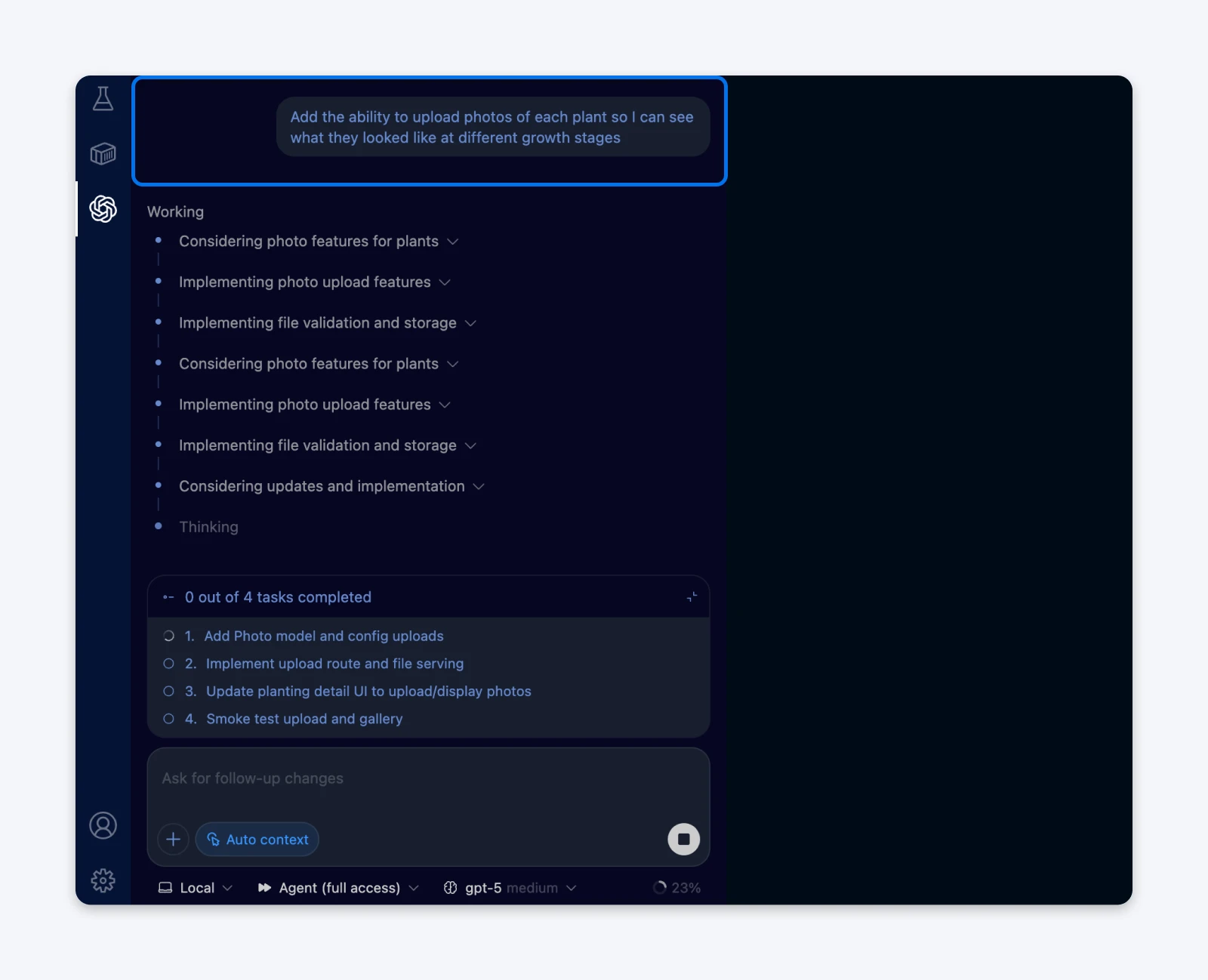
This seemingly easy request triggered a cascade of architectural complexity.
Database schema and app module modifications required:
- New photographs desk with columns: id, plant_id (overseas key), photo_url, upload_date, growth_stage
- Relationship definition between crops and photographs (one-to-many)
- Migration technique for current knowledge
Backend modifications wanted:
- File add endpoint with multipart type dealing with
- File storage resolution (native filesystem vs. cloud storage)
- New API endpoints for picture CRUD operations
- Replace current plant endpoints to incorporate picture knowledge
Frontend modifications required:
- File enter element with drag-and-drop
- Picture preview performance
- Photograph gallery show for every plant
- Replace current plant playing cards to indicate thumbnails
- Loading states for add progress
OpenAI Codex tried to implement every little thing concurrently. The newest mannequin GPT5-Codex-Excessive was capable of make this work inside ~5 minutes from getting into the immediate.
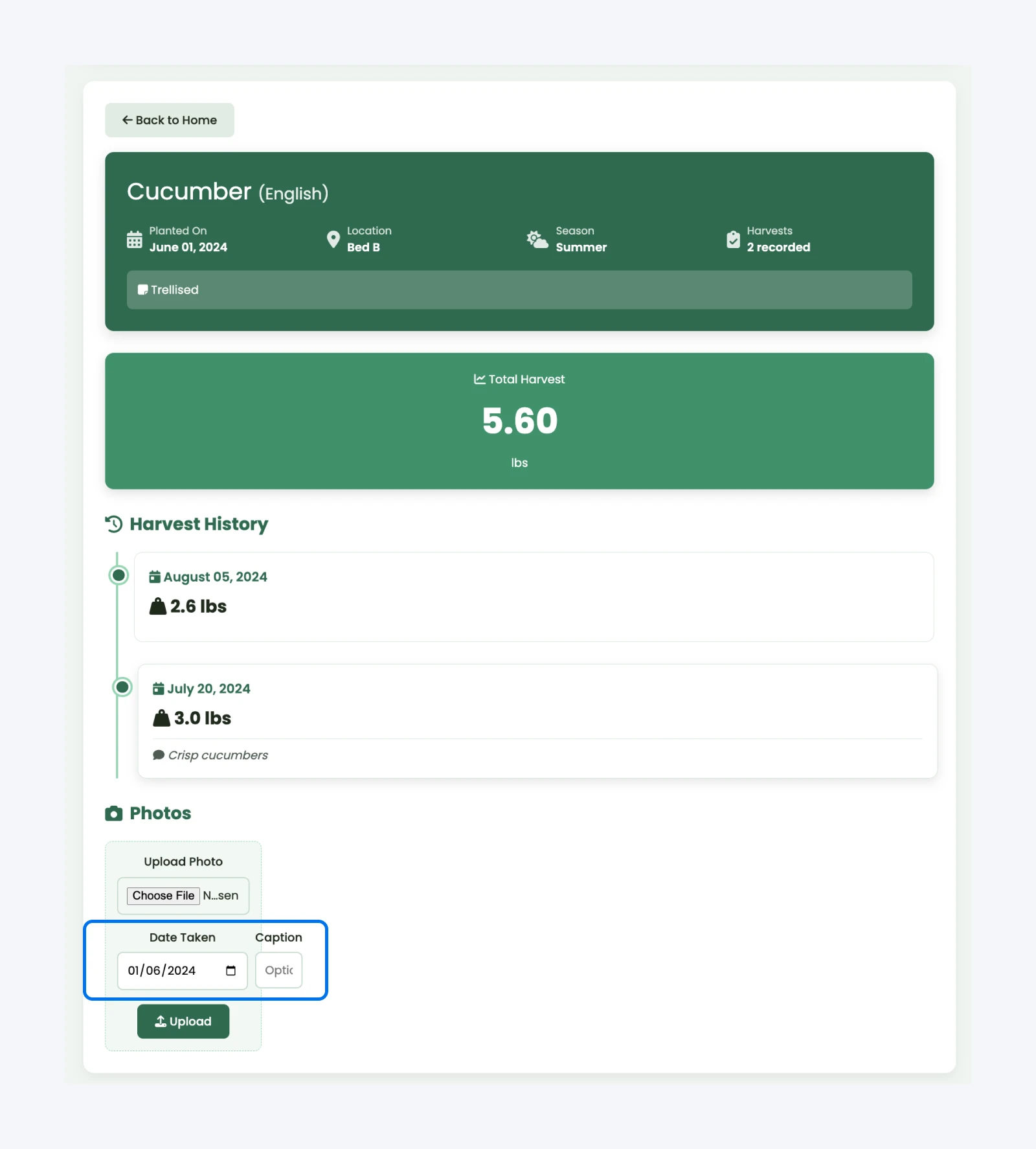
The issue is that it created buggy and insecure code. Right here’s what broke:
- The unique crops desk construction modified
- Frontend elements that referenced the previous schema stopped working
- CSS conflicts between new picture elements and current UI (as seen within the screenshot) emerged
After which there was the overengineering downside: Codex generated a posh system with pointless picture processing and knowledge taken for every picture, and so forth.
Every repair try launched new issues. Replace the database schema, break the API. Repair the API, break the frontend. Resolve frontend points, uncover new backend bugs. The codebase that labored completely with 200 traces of code now sprawled throughout 1,500 traces with interconnected dependencies.
The Non-Extensible Structure Entice
The app’s structure was optimized for solely what we requested for within the first hour. With vibe coding, it’s a must to be very particular, and that’s the tough half for non-developers.
You wouldn’t know what extensible structure means if the AI applied it.
You probably have a easy app prepared after which want to increase it, a non-extensible structure would imply rewriting the code from scratch for the AI.
Architectural assumptions from the primary hour:
- Single desk design (affordable for easy knowledge)
- Direct API-to-database queries (quick for read-heavy operations)
- Inline element definitions (acceptable for small UIs)
- No separation between enterprise logic and knowledge entry (effective for easy CRUD)
Why these assumptions turned constraints:
- The one-table design prevented correct relational knowledge modeling for photographs
- Direct queries required full rewrites when the schema modified
- Inline elements meant modifications cascaded by means of your entire codebase
- No enterprise logic layer meant each function touched the database immediately
We have been previous the return level. An excessive amount of code existed to desert. Every repair try consumed extra tokens attempting to salvage an structure that couldn’t help the brand new necessities.
What Occurred in Hour Three? Token Exhaustion and Barely Purposeful Code Emerged
After the picture add function labored, we tried extra enhancements.
- “Add classes for plant sorts (greens, herbs, flowers)”
- “Present planting suggestions primarily based on season”
- “Let me mark crops as favorites”
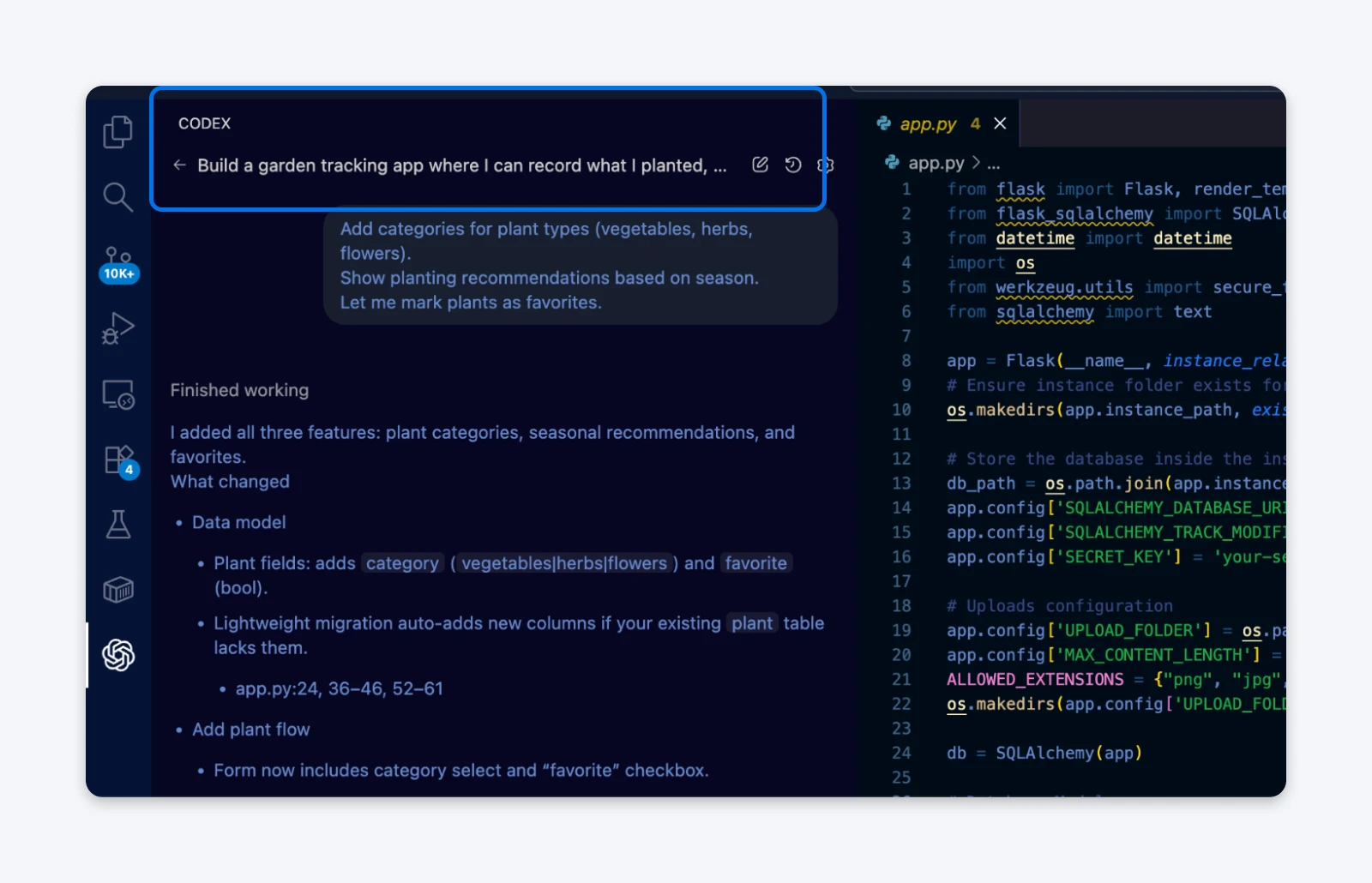
Every request adopted the identical sample: Codex tried thorough implementation for some seemingly easy asks, launched breaking modifications, created overengineered options, and consumed 1000’s of tokens attempting to repair ensuing bugs.
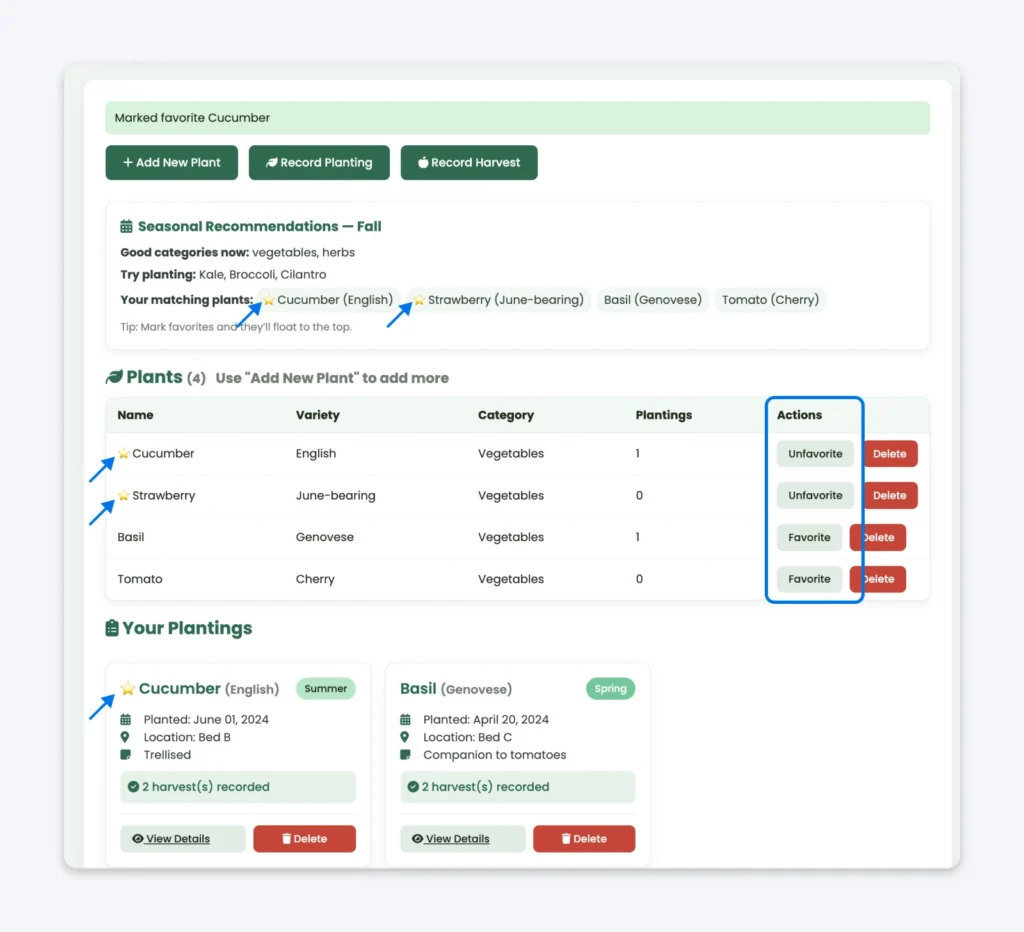
The app works simply effective, and my grandma was happy with the output.
As a developer, although, I might clearly see we have been on the final leg by way of code. Just a few extra options and the app can be a large number.

by way of Imgflip
Why Is This Such a Widespread Downside?
Coding brokers are simply massive language fashions “prompted” to output code.
In order that they have all the issues that common massive language fashions have, together with:
- Not being particular about what’s anticipated of them
- Making up random operate calls (hallucinations)
- Writing sophisticated code for simplistic objectives
Additionally, as chat historical past grows, coding brokers hit their context window limits.
- Authentic structure choices and their rationale
- Subsequent modifications and their interdependencies
- Present bugs and their root causes
- Desired performance for brand spanking new options
Every new immediate was interpreted in isolation with no full understanding of architectural historical past. The AI recommended options that made sense for particular person options however created systemic conflicts when built-in with current code.
This Reddit information emphasizes: “When the chat will get very huge, simply open a brand new one. The AI context window is restricted. If the chat may be very huge, it should neglect every little thing earlier, neglect any patterns and design, and begin producing dangerous outputs.”
However opening a brand new chat meant dropping all context about what existed. Offering that context consumed tokens. Even with “summarized” context, we’re nonetheless lacking essential particulars on the subject of code.
We Confronted the TEA App Downside at a Smaller Scale
The TEA app demonstrated this precise failure sample at manufacturing scale. Launched in 2023 as a girls’s security platform, it quickly scaled to 1.6 million customers.
Then, in July 2025, it failed catastrophically:
- The breach: Safety researchers found an unsecured Firebase storage bucket containing 72,000 person pictures, together with 13,000 verification selfies and authorities IDs. A second database uncovered 1.1 million non-public messages.
- The technical failures: API keys hardcoded in supply code, Firebase bucket publicly accessible with out authentication, no runtime protections, and no safety overview layer. Specialists linked these vulnerabilities to vibe coding practices, the place function velocity eclipsed safety structure.
- The end result: An Nameless 4chan poster found and shared obtain instruments. Class-action lawsuits filed inside 48 hours. The platform shut down. Common breach price: $4.88 million.
TEA’s failure has the identical sample we skilled at such a tiny scale, which makes me surprise why folks don’t confirm AI-generated code.
We had an preliminary implementation that labored effectively; nonetheless, function additions sophisticated the structure, safety issues have been missed for brand spanking new performance, and systemic vulnerabilities have been unknowingly left open for exploitation.
How To Vibe Code With out Experiencing the Similar Issues We Did
In case you’re not a developer, it’s unimaginable to keep away from the issues completely. Nonetheless, there are methods to attenuate issues.
1. Begin With Ruthless Characteristic Minimalism
Outline absolutely the minimal function set earlier than writing the primary immediate, however at all times resist the temptation so as to add options through the preliminary growth.
Efficient scoping framework:
- Checklist all desired options
- Determine the three–5 options that validate your core speculation
- Construct solely these options in model one
- Ship, validate, and iterate
Don’t give prompts like, ‘Construct me this entire function.’ The AI will hallucinate and produce horrible code. Break down any function into not less than 3–5 sequential requests.
In case you can’t establish the minimal function set, use the “Plan mode” or “Chat mode” obtainable in a lot of the AI coding instruments.
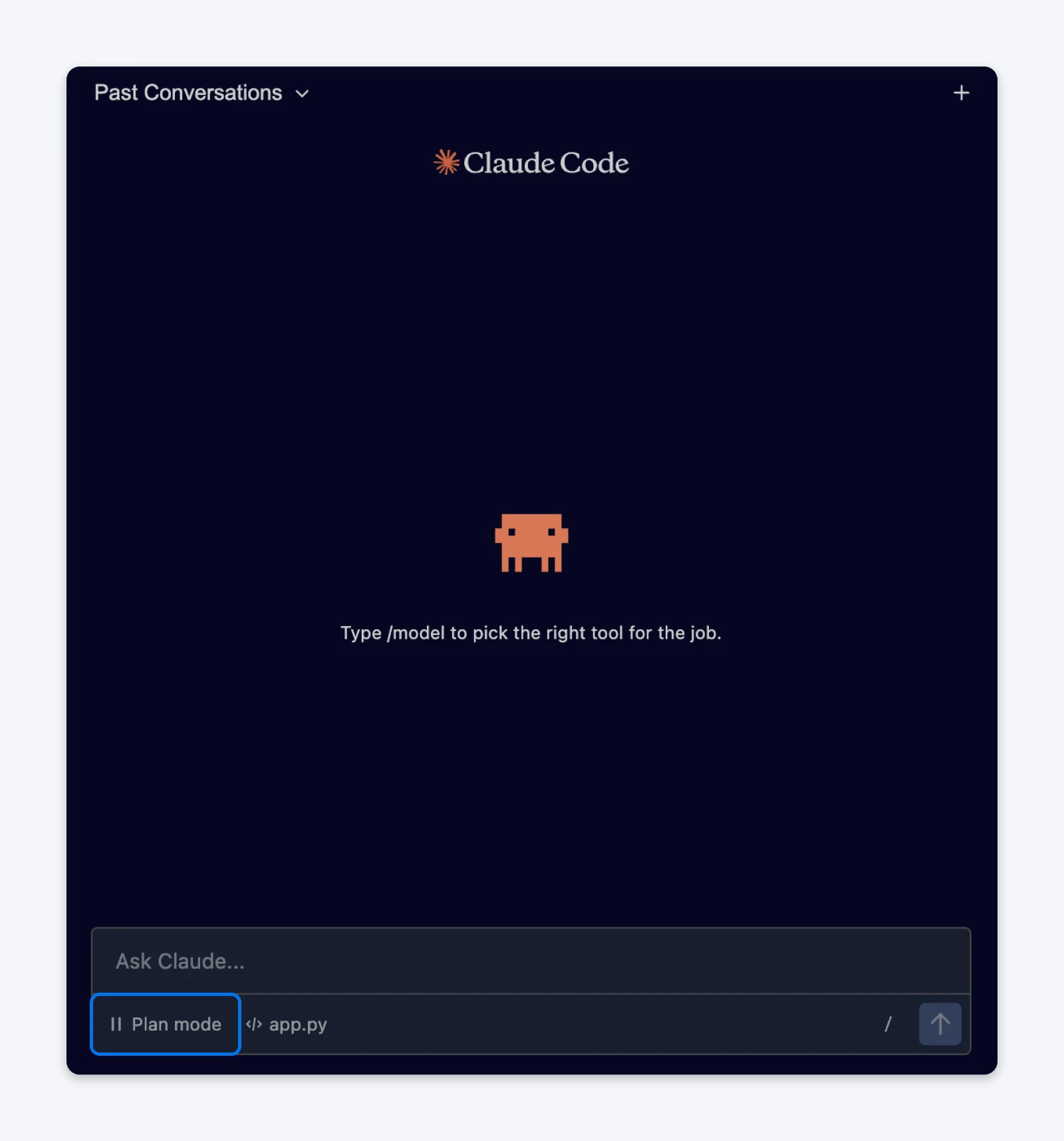
This allows you to inform the agent what you need in pure language and permits AI to determine tips on how to break the app into particular person options or information.
2. Decide to Git After Each Working Characteristic
For a non-developer, model management can sound sophisticated, but it surely’s a essential addition. Git is a model management instrument that creates restore factors when function additions break current performance.
Git workflow for vibe coding:
- Initialize the repository earlier than the primary immediate
- Commit after the preliminary working model
- Create a brand new department for every function addition
- Commit incessantly throughout function growth
- Take a look at completely earlier than merging to the primary department
You may inform the coding agent of your selection to do that for you when you’re not snug with Git instructions.
3. Design for Extension in Preliminary Prompts
Your first immediate defines the codebase. Easy prompts will solely provide you with a working app till you begin asking for brand spanking new options.
As a substitute, ask for an extensible structure proper from the start.
- Ineffective preliminary immediate: “Construct a backyard monitoring app the place I can report what I planted and harvested.”
- Efficient preliminary immediate: “Construct a backyard monitoring app with an extensible database schema that may accommodate future options. Use a modular structure the place frontend elements, API endpoints, and database entry are separated. Embody clear documentation of schema and API construction for future modifications.”
This does enhance the token utilization to begin with. Nonetheless, whenever you start including new options, the AI won’t have to waste tokens refactoring the previous code to accommodate requests.
4. Select Instruments Based mostly on Architectural Stability
- Bolt.new, Replit agent, and Lovable: Glorious for single-session prototypes and simple deployment. Poor for multi-session function additions. Structure turns into progressively extra fragile with every modification.
- Claude/OpenAI/Gemini coding brokers: Typically helpful for advanced coding, however can really feel extra sophisticated in comparison with the visible web-apps we’ve seen earlier than.
- DreamHost Liftoff: Nice as a WordPress basis with confirmed extensibility patterns. WordPress structure is designed for modification and plugin additions. This solves the non-extensible structure downside by beginning with a battle-tested extensible basis.
5. Implement Safety From Hour One
Much like extensibility, you wish to combine safety proper from the primary immediate. So, together with asking for an extensible, modular structure, you additionally wish to add security-first elements to the preliminary immediate.
Right here’s an instance of how I’d add safety within the first immediate: “Construct a backyard monitoring app with bcrypt password hashing, enter validation on all fields, parameterized SQL queries to forestall injection assaults, charge limiting on all API endpoints, and secrets and techniques saved in surroundings variables by no means uncovered to frontend code.”
In case you’re constructing a client-facing app, right here are some things to remember:
- By no means belief consumer knowledge—validate and sanitize server-side
- Preserve secrets and techniques in surroundings variables
- Confirm permissions for each motion
- Use generic error messages—detailed logs for builders solely
- Implement possession checks to forestall unauthorized knowledge entry
- Shield APIs with charge limits
Understanding how generative AI works helps you acknowledge when AI makes safety assumptions that create vulnerabilities.
6. Know When To Begin Contemporary vs. Proceed
Acknowledge the indicators that persevering with will waste tokens.
Begin recent when:
- Token consumption exceeds 300k with out working options
- Every bug repair introduces two new bugs
- Architectural modifications break a number of current options
- Chat historical past exceeds 30 exchanges
- You can not clarify the present codebase structure
Proceed when:
- New options combine cleanly with current code
- Bug fixes resolve points with out uncomfortable side effects
- Token consumption stays inside budgets
- Structure stays understandable
When the AI will get it incorrect and goes within the incorrect approach, returning, altering the immediate, and sending once more can be significantly better than finishing this shit code.
7. Evaluate With AI Safety Evaluation
After constructing core performance, copy the entire codebase to Gemini 2.5 Professional for complete safety evaluation. I favor this language mannequin due to its massive context window of two million tokens so you possibly can transfer your entire code base into it.
Safety overview immediate: “Act as a safety knowledgeable. Analyze this entire codebase for vulnerabilities. Determine SQL injection dangers, XSS vulnerabilities, authentication weaknesses, authorization flaws, credential publicity, and any OWASP Prime 10 points. Present particular code places and remediation suggestions.”
This approximates an expert safety overview at a fraction of the associated fee.
It’s inadequate for manufacturing deployment, but it surely identifies catastrophic flaws in prototypes earlier than they attain customers.
When Does Vibe Coding Make Enterprise Sense?
You don’t need to discard vibe coding altogether simply because it’s unable to create sophisticated purposes proper now. Listed below are a couple of instances once I suppose a vibe-coded prototype or app truly is sensible.
- Speedy idea validation: Construct prototypes in hours to check market curiosity. Common validation price dropped from $15,000–$100,000+ to below $500. Use vibe coding to reply: “Do prospects need this sufficient to make use of it?”
- Inside course of automation: Present instruments in your workforce the place you management entry and settle for increased danger tolerance as a result of blast radius stays restricted. Inside instruments can iterate towards safety slightly than requiring safety from day one.
- Pre-development specification: Perceive necessities earlier than hiring builders to cut back costly miscommunication. Vibe-coded prototypes function interactive necessities paperwork.
- MVP for fundraising: Exhibit performance to traders whereas being clear about technical maturity. Many startups use vibe-coded MVPs to safe seed funding, then rebuild correctly with skilled groups.
When Skilled Improvement Turns into Non-Negotiable
Buyer-facing purposes processing any person knowledge require an expert safety overview. The price of incorrect safety implementation exceeds any financial savings from vibe coding.
Some instances the place you want skilled overview embrace:
- Multi-user authentication
- Cost processing
- Private info storage
- Public-facing deployment
- Conditions involving compliance necessities (equivalent to GDPR, CCPA, HIPAA)
Microsoft’s CEO revealed 30% of the corporate’s code is now AI-generated. Google reported comparable figures. Each keep in depth safety overview processes, automated testing, and human oversight.
Manufacturing deployment requires comparable safeguards no matter code era methodology.
Understanding whether or not AI will exchange builders helps set sensible expectations about what you possibly can safely construct and deploy alone. Discover the finest on-line assets to study code to bridge the hole between vibe coding prototypes and production-ready programs.
FAQs About Vibe Coding
What’s vibe coding, and the way is it totally different from conventional programming?
Vibe coding is the method of constructing purposes by describing necessities in plain English to an AI, which generates the code for you. Not like conventional programming, which calls for information of programming languages, vibe coding shifts focus to product administration and intent slightly than handbook coding.
Can non-developers construct production-ready apps utilizing vibe coding?
Whereas vibe coding lets non-developers rapidly prototype useful apps, most AI-generated code lacks the safety and robustness wanted for manufacturing deployment. That mentioned, vibe-coded prototypes are nice for idea validation.
What are the most important dangers of utilizing AI-generated code for app growth?
Essentially the most vital dangers embrace safety flaws (like lacking validation, authentication, charge limiting, and safety towards SQL injection), non-extensible structure, and have creep that results in fragile or damaged programs. The TEA app breach is an instance of speedy growth with out correct safety overview, leading to catastrophic penalties.
When does it make sense to make use of vibe coding for actual enterprise initiatives?
Vibe coding is right for speedy prototyping, inner instruments, pre-development specification (necessities gathering), and MVPs for fundraising. Nonetheless, for customer-facing apps or ones that course of delicate knowledge, at all times put money into skilled growth and safety evaluations.
The Backside Line: Know Your Architectural Limits
My grandmother maintains her simplified backyard tracker for private use. She additionally added useful analytics (the navbar button didn’t go anyplace earlier than) to see how her backyard is performing.
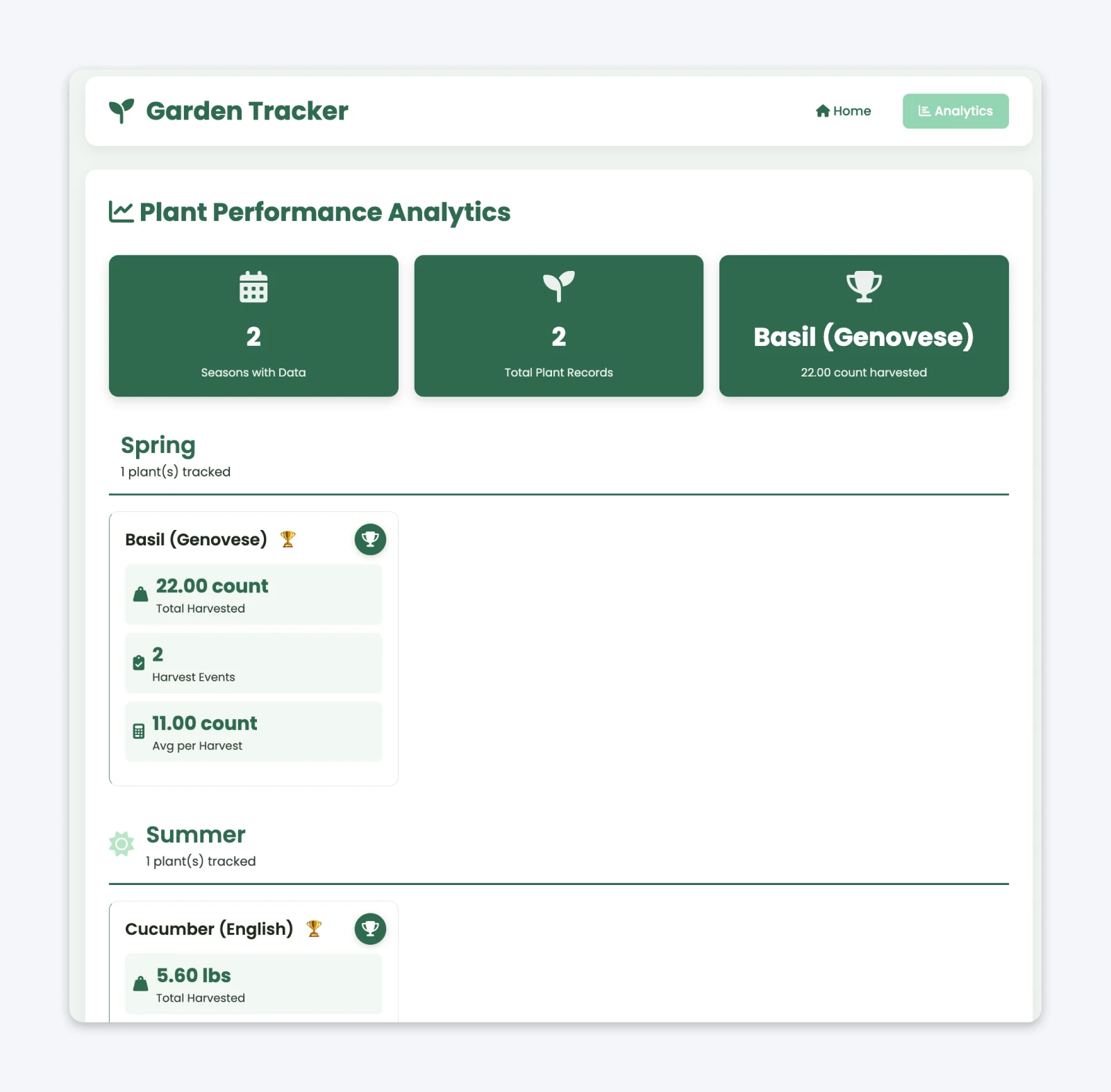
This works as a single-user app. In case you’re constructing a platform for multi-client use, you can nonetheless create vibe-coded prototypes, MVPs, and so forth., to get the ball rolling. However relying solely on vibe coding with out understanding what’s occurring is just repeating the story of the TEA app.
Vibe coding democratizes software program creation whereas introducing new obligations. You may construct apps in half-hour. Nonetheless, it’s essential to perceive architectural limits, safety implications, and token consumption patterns earlier than transport to customers.
The long run belongs to builders who perceive the prototype-production hole.
Able to construct your first internet app? Begin with DreamHost Liftoff for WordPress-powered vibe coding that features extensible structure, managed internet hosting, safety infrastructure, and confirmed scalability from day one. Construct quick. Lengthen safely. Personal your code.

Professional Companies – Design
Stunning Web sites, Designed From Scratch
Stand out from the group with a contemporary WordPress web site that’s 100% distinctive to you.
Did you take pleasure in this text?