

Abstract: A multinational medical trial demonstrated {that a} novel antibody, NG101, efficiently preserves present nerve tissue and accelerates the regression of spinal wire lesions following acute harm.
The antibody operates by neutralizing Nogo-A, a naturally occurring protein that structurally blocks the regeneration of broken nerve fibers. By combining superior magnetic resonance imaging (MRI) with medical information, researchers have objectively visualized the therapeutic mechanics early in remedy, establishing an important blueprint for restoring useful brain-to-muscle sign pathways.
Key Information
- Eradicating the Therapeutic Barrier: NG101 targets and neutralizes Nogo-A, an unhelpful protein discovered within the sheaths of nerve fibers throughout the mind and spinal wire that actively blocks broken fibers from therapeutic after an acute trauma.
- Accelerated Lesion Regression: Superior imaging strategies confirmed for the primary time that the antibody remedy accelerates the therapeutic of spinal wire lesions, permitting nerve fibers to regenerate within the tissue surrounding the influence website.
- Tissue Loss Interception: The remedy significantly slows down the lack of present nerve tissue and offsets structural degradation by stimulating the regrowth of solely new nerve fibers.
- Useful Reconnection: The newly fashioned and surviving nerve fibers efficiently navigate throughout or across the harm website, re-establishing very important connections with the spinal wire facilities that management the peripheral nerves of the fingers, arms, and legs.
Supply: College of Zurich
Spinal wire accidents – usually brought on by sports activities or visitors accidents – can lead to tetraplegia or paraplegia and severely restrict independence.
In late 2024, a global analysis group led by the College of Zurich (UZH) and Balgrist College Hospital accomplished a multinational medical trial by which sufferers with acute spinal wire accidents had been efficiently handled with the novel antibody NG101.

The outcomes confirmed that NG101 accelerates the regression of spinal wire lesions and preserves present nerve tissue.
Antibody neutralizes unhelpful protein
Found at UZH roughly 30 years in the past, NG101 targets the protein Nogo-A, which is discovered within the sheaths of nerve fibers within the spinal wire and mind. This protein blocks the therapeutic of broken nerve fibers within the spinal wire following acute harm.
By neutralizing Nogo-A, NG101 removes this barrier to progress and therapeutic, thereby boosting nerve fiber regeneration and supporting the useful regeneration of spinal wire tissue.
Seen leads to the spinal wire
The analysis group’s newest research has revealed one other important piece of the puzzle. “In our new research, we had been in a position to make use of superior imaging strategies to point out for the primary time how this antibody remedy works immediately within the spinal wire,” says Patrick Freund, UZH professor and head of the Spinal Twine Damage Heart at Balgrist College Hospital.
The magnetic resonance imaging information revealed two necessary results. First, spinal wire accidents healed extra rapidly within the presence of NG101, which means that nerve fibers had been capable of regenerate within the tissue surrounding the harm. Second, the lack of nerve tissue slowed down significantly and was offset by the regrowth of latest nerve fibers. Earlier animal experiments performed by the researchers had already established how important this stage is.
This is because of newly fashioned nerve fibers needing to discover a solution to navigate throughout or across the harm website as a way to restore the pathways linking the mind and the spinal wire.
New connections to peripheral nerves
The group’s newest findings recommend that it’s exactly this course of that’s supported by NG101.
“This enables surviving and newly regenerated nerve fibers to re-establish connections with the spinal wire facilities that management the hand, arm and leg nerves,” says Freund, who led the research.
“These connections are important for relaying alerts from the mind to the muscle groups.” For some sufferers, this implies a better probability of recovering arm and hand perform.
NG101 not solely improves the perform of the spinal wire however has additionally been proven to change its construction, which helps the regeneration of nerve tissue. This marks an necessary step towards new, efficient therapies for spinal wire accidents.
“We are actually capable of visualize the impact of the remedy early on and in an goal manner,” says Freund. “This opens up the potential of utilizing future therapies extra strategically and conducting a extra dependable analysis of their outcomes.”
Key Questions Answered:
A: Whereas it’s too early to ensure full mobility for each affected person, the medical trial proved that NG101 helps surviving and newly grown nerve fibers reconnect with the spinal wire facilities controlling the arms, fingers, and legs. For sufferers with acute accidents, this considerably will increase the mathematical likelihood of recovering essential hand and arm features.
A: The central nervous system accommodates a literal molecular brake pad. A selected protein known as Nogo-A resides within the protecting sheaths of your nerve fibers. Following a sudden trauma, this protein actively stops broken nerve fibers from rising or repairing themselves. NG101 acts as a defend that shuts down Nogo-A so pure regeneration can take over.
A: Researchers used high-resolution MRI information to trace the remedy on a mobile and structural stage. The imaging objectively confirmed two clear visible markers: the bodily holes (lesions) within the spinal wire shrank a lot quicker, and the speedy degradation of delicate nerve tissue was changed by the seen structure of freshly sprouting nerve fibers.
Editorial Notes:
- This text was edited by a Neuroscience Information editor.
- Journal paper reviewed in full.
- Extra context added by our employees.
About this spinal wire harm and neurology analysis information
Creator: Kurt Bodenmueller
Supply: College of Zurich
Contact: Kurt Bodenmueller – College of Zurich
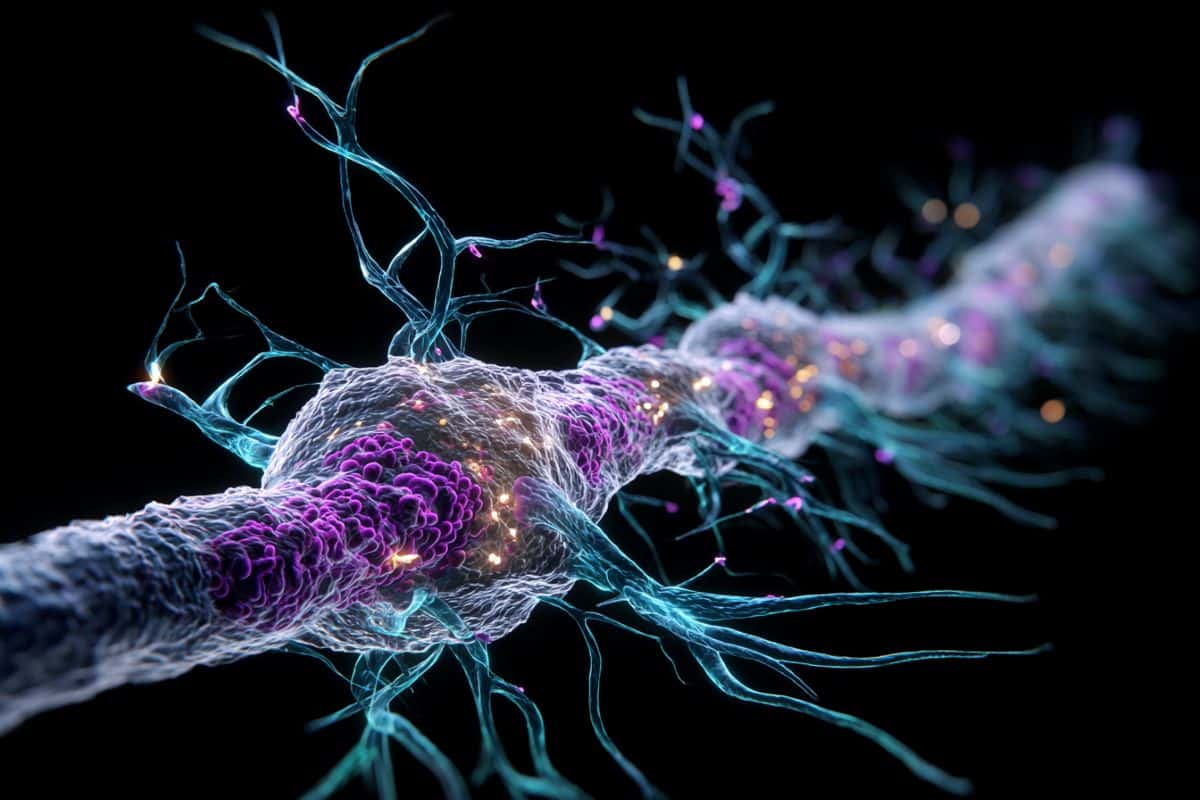
Picture: The picture is credited to Neuroscience Information
Unique Analysis: Open entry.
“Anti-Nogo-A NG101 remedy induces adjustments in spinal wire micro- and macrostructure following spinal wire harm: A multicenter MRI research” by Lynn Farner, Paulina S. Scheuren, Kiomars Sharifi, Tim M. Emmenegger, Maryam Seif, Michèle Hubli, Martin Schubert, Marc Bolliger, Rüdiger Rupp, Norbert Weidner, Rainer Abel, Doris Maier, Klaus Röhl, Michael Baumberger, Margret Hund-Georgiadis, Marion Saur, Jesús Benito, Kerstin Rehahn, Mirko Aach, Andreas Badke, Jiri Kriz, Tim Killeen, Alan J. Thompson, Nikolaus Weiskopf, Martin E. Schwab, Armin Curt, Patrick Freund & the Nogo Inhibition in Spinal Twine Damage (NISCI) Research Group. Nature Communications
DOI:10.1038/s41467-026-71412-0
Summary
Anti-Nogo-A NG101 remedy induces adjustments in spinal wire micro- and macrostructure following spinal wire harm: A multicenter MRI research
NG101 is a recombinant antibody that neutralizes the nerve progress inhibitor Nogo-A, selling neural restore and bettering higher extremity motor perform in spinal wire harm (SCI).
This research evaluated spinal wire MRI biomarkers to detect treatment-related structural adjustments and improve affected person stratification utilizing information from 106 contributors with acute cervical SCI within the part 2b NISCI trial.
We assessed lesion quantity, tissue bridges, and distant adjustments in cross-sectional wire space (CSA), and tract-specific myelin-sensitive magnetization switch saturation (MTsat) over six months.
In comparison with placebo, NG101-treated contributors exhibited quicker lesion quantity discount and a slower decline of CSA and MTsat within the corticospinal tracts and dorsal columns.
Crucially, multimodal stratification incorporating MRI and electrophysiological measures considerably enhanced the detection of medical remedy results. These findings recommend NG101 slows trauma-induced progressive macro- and microstructural degeneration or promotes fiber sprouting.
Combining MRI with electrophysiology permits delicate detection of remedy results and environment friendly trial designs. ClinicalTrials.gov identifier: NCT03935321.



