

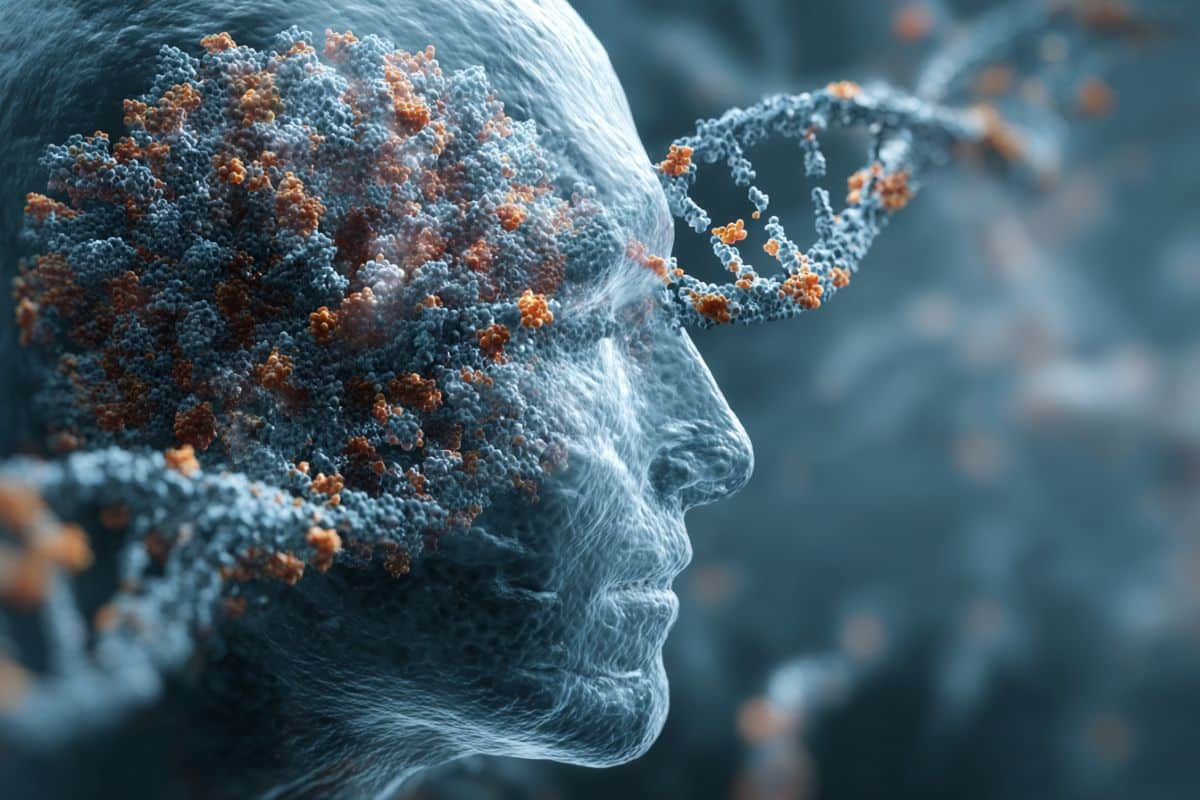
Abstract: Researchers developed a customized DNA most cancers vaccine that has proven promising leads to an early-stage medical trial for glioblastoma.
The research demonstrates that the vaccine, GNOS-PV01, is protected and elicits a broad immune response that seems to extend survival charges in sufferers with notably aggressive, “unmethylated” types of this incurable mind most cancers.
Key Analysis Findings
- The DNA Platform Benefit: Not like earlier vaccines, this DNA-based platform permits for the concentrating on of as much as 40 distinctive most cancers proteins (neoantigens) per affected person—double the capability of any earlier most cancers vaccine.
- Reworking “Chilly” to “Sizzling”: Glioblastoma is usually a “chilly” tumor, that means it hides from the immune system. This vaccine transforms the tumor surroundings right into a “scorching” one, making it inclined to immune-mediated assault.
- Broad Goal Protection: By concentrating on a variety of neoantigens throughout completely different areas of the tumor, the vaccine prevents the most cancers from “escaping” the immune system even when the tumor evolves to lose particular targets.
- Survival Milestones:
- One 12 months: Two-thirds of individuals survived one 12 months, in comparison with the historic common of 40%.
- Two Years: One-third of individuals have been nonetheless alive on the two-year mark, doubling historic survival charges.
- Lengthy-Time period: One affected person stays recurrence-free almost 5 years after her preliminary prognosis.
- Protected Integration: The vaccine induced no critical unwanted effects and was administered alongside standard-of-care radiation and post-operative restoration.
Supply: WUSTL
A customized vaccine to deal with glioblastoma, a fast-growing and incurable mind most cancers that impacts 4 in 100,000 folks within the U.S., is protected and elicits sturdy and broad immune responses that seems to extend recurrence-free survival in a subset of sufferers after surgical procedure, in line with an early-stage medical trial co-led by researchers at Washington College Faculty of Drugs in St. Louis.
In sufferers with an particularly aggressive type of glioblastoma, the vaccine induced no critical unwanted effects and extended sufferers’ general survival in comparison with historic outcomes after standard-of-care surgical procedure and chemo-radiotherapy. One long-term survivor stays recurrence-free almost 5 years later.
The outcomes of the section 1 trial, performed at Siteman Most cancers Middle, primarily based at Barnes-Jewish Hospital and WashU Drugs, have been revealed Might 12 in Nature Most cancers. The research was led collectively by Mass Basic Brigham and Geneos Therapeutics, a Philadelphia-based biotechnology firm.
“We’re extraordinarily inspired by these outcomes,” mentioned Tanner M. Johanns, MD, PhD, lead creator of the research and an assistant professor within the Division of Oncology within the John T. Milliken Division of Drugs at WashU Drugs.
“This type of vaccine is a primary for glioblastoma, and it’s thrilling to suppose how we are able to leverage this individualized therapeutic DNA most cancers vaccine platform to make a constructive affect on the lives of sufferers who’re preventing this illness. Moreover, mixture therapies leveraging this personalised platform are at present being investigated at WashU to check if outcomes could also be improved additional.”
The novel therapy makes use of engineered DNA molecules designed to stimulate the affected person’s immune system towards the most cancers. Every affected person’s tumor has distinctive proteins particular to that tumor, and this vaccine prompts the affected person’s immune system to acknowledge these proteins and remove the tumor cells.
Johanns mentioned that though some immunotherapies concentrating on glioblastoma have proven promise in earlier research, they finally are ineffective in considerably delaying or stopping recurrence. That’s probably as a result of glioblastoma can evolve and escape immune assault, however Johanns’ vaccine was designed to assist the immune system acknowledge many alternative targets on most cancers cells. So even when the tumor loses a number of of those targets, the vaccine remains to be capable of generate responses to many others.
Moreover, glioblastoma is termed a “chilly” tumor, that means that the tumor surroundings is ready to conceal from the immune system. The most cancers vaccine that was used on this trial, developed by Geneos Therapeutics, transforms chilly tumors into “scorching” tumors which can be then inclined to immune-mediated eradication.
The vaccine is thus capable of enhance the affected person’s immune response by concentrating on proteins on the most cancers cell and by making the surroundings throughout the tumor extra favorable to immune activation.
“We selected a DNA-based platform as a result of it might permit us a chance to focus on extra most cancers proteins than any vaccine had focused earlier than,” mentioned Johanns, who treats sufferers at Siteman and is a analysis member there.
“Our pondering was that if we might generate a broader vary of immune responses towards these proteins then it might result in a stronger vaccine in comparison with different vaccine platforms with extra restricted protein targets.”
This DNA-based vaccine platform was capable of activate every affected person’s immune system to hunt out as many as 40 most cancers proteins particular to every affected person’s tumor — twice as many as had been focused by any most cancers vaccine remedy so far.
Extra targets, extra probabilities for fulfillment
The vaccine within the research, referred to as GNOS-PV01, targets so-called neoantigens — proteins distinctive to a person affected person’s most cancers cells that their immune cells can acknowledge. The neoantigens have been recognized and chosen utilizing an algorithm developed at WashU Drugs by computational biologists and co-authors Obi Griffith, PhD, a professor of medication, and Malachi Griffith, PhD, an affiliate professor of medication, each within the Division of Oncology and analysis members at Siteman.
Johanns and his colleagues chosen neoantigens from completely different areas of a affected person’s tumor, a way they included to additional improve the variety of most cancers cell proteins focused by the vaccine.
A vaccine platform utilizing a distinct DNA-based know-how developed for breast most cancers by co-author William Gillanders, MD, the Mary Culver Distinguished Professor of Surgical procedure at WashU Drugs who treats sufferers at Siteman, impressed the thought to deliver Geneos’ GNOS-PV01 vaccine to WashU Drugs to be used towards glioblastoma, Johanns mentioned.
The trial enrolled 9 grownup sufferers who had been not too long ago identified with glioblastoma. All sufferers have been handled at Siteman Most cancers Middle. The crew ready an artificial DNA molecule encoding the distinctive data for every affected person’s tumor neoantigens.
The vaccine was manufactured on the Biologic Remedy Core Facility at Siteman in the course of the affected person’s post-operative restoration and subsequent radiation therapy.
The vaccine injections began, on common, 10 weeks after the affected person’s surgical procedure and have been administered each three weeks for a nine-week interval, after which each 9 weeks thereafter so long as sufferers have been capable of take part. All individuals, besides one who was taking an immune-suppressing steroid, confirmed a rise in immune-cell exercise indicating a response to the vaccine intervention.
Two-thirds of the sufferers had no development of their most cancers six months out from their surgical procedures, and two-thirds survived one 12 months. Usually, round 40% of glioblastoma sufferers attain both milestone.
One-third of the individuals have been nonetheless alive after two years, which is twice the historic survival price for this affected person inhabitants. One participant remains to be alive and recurrence-free at present, virtually 5 years after her preliminary prognosis.
An funding sooner or later
Kim Garland is a retired college nurse who lives in Kirkwood, Missouri, with Scott, her husband of 31 years. In June 2021, at age 62, Kim was volunteering at a youth camp in Ironton, Missouri, when her daughter-in-law, additionally volunteering on the identical camp, observed that Kim was battling confusion and forgetfulness, in addition to complications that will come and go all through the day.
“I used to be forgetting issues, issues that ought to have been very apparent,” mentioned Kim.
A scan at a neighborhood hospital’s emergency room again in St. Louis revealed a 6.5-centimeter mass in Kim’s mind — concerning the measurement of a small avocado. Inside the week, Albert Kim, MD, PhD, the August A. Busch, Jr. Professor of Neurological Surgical procedure at WashU Drugs, director of the Mind Tumor Middle at Siteman, and co-author of the research, carried out the preliminary surgical procedure to take away her tumor. The grim prognosis of grade 4 glioblastoma got here after the tumor was eliminated.
When supplied the chance to take part in a medical trial, Kim Garland agreed in hopes that her participation would enhance future remedies. After receiving this prognosis, each Kim and Scott didn’t count on that she can be alive with no recurrence almost 5 years after her preliminary prognosis.
“We all know we’re lucky to have the type of care that Kim has been capable of obtain, only a 30-minute drive from our house,” Scott mentioned. “We see many different sufferers who’re touring lengthy distances for his or her remedies. Having this degree of care and therapy so near house has been an enormous blessing.”
With the help of their crew, the couple have gained the arrogance to make longer-term plans, together with a long-delayed trip this summer time and spending high quality time with their kids and 15 grandchildren — an enormous change from the week-by-week life they have been dwelling within the aftermath of Kim’s preliminary prognosis.
“Most cancers vaccines have a protracted historical past, and the event of personalised neoantigen-targeting therapeutic vaccines now represents a extremely compelling strategy in glioblastoma and in different cancers,” mentioned co-senior creator Gavin Dunn, MD, PhD, a neurosurgical oncologist at Mass Basic Brigham Most cancers Institute.
“These packages require a excessive diploma of built-in teamwork, and we’re lucky to have collaborated with many devoted crew members on this effort.”
Kim Garland’s most cancers, together with these of the opposite sufferers within the trial, was an unmethylated MGMT subtype of glioblastoma, which is especially onerous to deal with as a result of it isn’t aware of obtainable therapy choices akin to chemotherapy.
Johanns mentioned the following step is to evaluate the vaccine’s efficacy in a bigger group of sufferers, and to broaden the therapy to all varieties of glioblastomas. The aim of Johanns and his crew is to enhance the vaccine response to make sure that extra sufferers can expertise advantages like these skilled by Kim Garland.
The data that their participation within the trial has probably superior care is a consolation to the Garlands, who nonetheless must metal themselves earlier than every follow-up appointment, out of concern that Kim’s tumor might but return.
“What we’re longing for is that by analysis like this, sometime, when one other particular person hears the phrases ‘you could have glioblastoma’ as their prognosis, it won’t trigger as a lot anxiousness,” mentioned Scott.
“Possibly, they are going to be informed ‘that is the most cancers you could have, however it is rather treatable.’ We’re lucky and blessed to be on the proper place and on the proper time, to be a part of this medical trial and have a small half within the battle towards this horrible illness.”
Funding: Funding for this research got here from the Mark Basis for Most cancers Analysis Momentum Fellowship, Nationwide Institutes of Well being (NIH) Nationwide Institute of Neurological Issues and Stroke (NINDS) grants R01NS117149 and R01 NS107833, the Nationwide Basis Pediatric Innovation Fund, NIH K12CA167540 and The Alvin J. Siteman Most cancers Middle Funding Program together with The Basis for Barnes-Jewish Hospital, NIH NINDS R01NS112712 and The Schnuck Household Fund and The Knight and Christopher Davidson Household Fund. Extra research help for improvement, manufacture, and administration of the therapy and monitoring of the immune responses was supplied by Geneos Therapeutics. The content material is solely the duty of the authors and doesn’t essentially signify the official views of the NIH.
R.P.L., J.Y., N.C., A.P.P., S.R., J.P., and N.Y.S are both present or earlier Geneos Therapeutics staff.
Key Questions Answered:
A: Scientists sequence the affected person’s particular tumor to establish distinctive proteins referred to as neoantigens. Utilizing a computational algorithm, they choose as much as 40 of those targets and engineer an artificial DNA molecule that teaches the affected person’s immune cells to acknowledge and remove these particular most cancers cells.
A: It’s extremely evasive and “chilly,” that means it creates an surroundings that suppresses immune exercise. It additionally evolves quickly; if a therapy targets just one or two proteins, the most cancers can merely “cease” producing these proteins to outlive. This vaccine’s broad concentrating on makes that a lot more durable.
A: This particular trial centered on unmethylated MGMT glioblastoma, which is the toughest to deal with as a result of it doesn’t reply to straightforward chemotherapy. The following section of analysis goals to check the vaccine in a bigger, extra numerous group of sufferers throughout all glioblastoma varieties.
Editorial Notes:
- This text was edited by a Neuroscience Information editor.
- Journal paper reviewed in full.
- Extra context added by our workers.
About this mind most cancers analysis information
Creator: Mark Reynolds
Supply: WUSTL
Contact: Mark Reynolds – WUSTL
Picture: The picture is credited to Neuroscience Information
Unique Analysis: Open entry.
“Adjuvant personalised multivalent neoantigen DNA vaccination induces tumor-specific immune responses in newly identified glioblastoma sufferers” by Garfinkle EAR, Perales-Linares R, Gimple RC, Livingstone AJ, Kaleigh F. Roberts KF, Butt OH, Goedegebuure. SP, McLellan MD, Chang GS, Hundal J, Yan J, Navarro JB, Paxton SA, Chattopadhyay S, Cooch N, Perales-Puchalt A, Stavroulaki Ok, Rochestie S, Peters J, Junker B, Campian JL, Chheda MG, Chicoine MR, Kim AH, Willie JT, Zipfel GJ, Dowling JL, Miller CA, Griffith OL, Griffith M, Gillanders WE, Miller, KE, Mardis ER, Sardesai NY, Dunn GP, Johanns TM. Nature Most cancers
DOI:10.1038/s43018-026-01163-w
Summary
Adjuvant personalised multivalent neoantigen DNA vaccination induces tumor-specific immune responses in newly identified glioblastoma sufferers
Glioblastoma is a deadly illness with a median prognosis of 12–18 months. Latest research have proven encouraging outcomes utilizing neoantigen-based vaccines to stimulate glioblastoma-directed immune responses, however general immunogenicity has been low.
Right here, we report the outcomes of an open-label, single-arm, section 1 medical trial (GT-20) to guage the protection and feasibility (main endpoints) in addition to immunogenicity and preliminary medical exercise (secondary endpoints) of GNOS-PV01 monotherapy, a DNA-based personalised therapeutic most cancers vaccine administered following surgical resection and radiation for sufferers with MGMT unmethylated glioblastoma.
The GT-20 research vaccinated 9 sufferers, utilizing as much as 40 neoantigens per affected person (vary, 17–40) with out inflicting any critical antagonistic occasions, surprising toxicities or dose-limiting toxicities.
The vaccine induced activation and growth of circulating peripheral T cells in all evaluated sufferers, besides one who was being handled with dexamethasone. The secondary endpoint was to guage 6 month progression-free survival and 12 month general survival; every noticed in 66.7% of sufferers.
Median progression-free survival was 8.5 months, median general survival was 16.3 months and survival at 24 months was 33%, together with one long-term survivor nonetheless alive 4 years from the time of preliminary surgical procedure.
This research met the pre-specified endpoints and helps using GNOS-PV01 as a probably impactful part of glioblastoma immunotherapy. ClinicalTrials.gov: NCT04015700.



