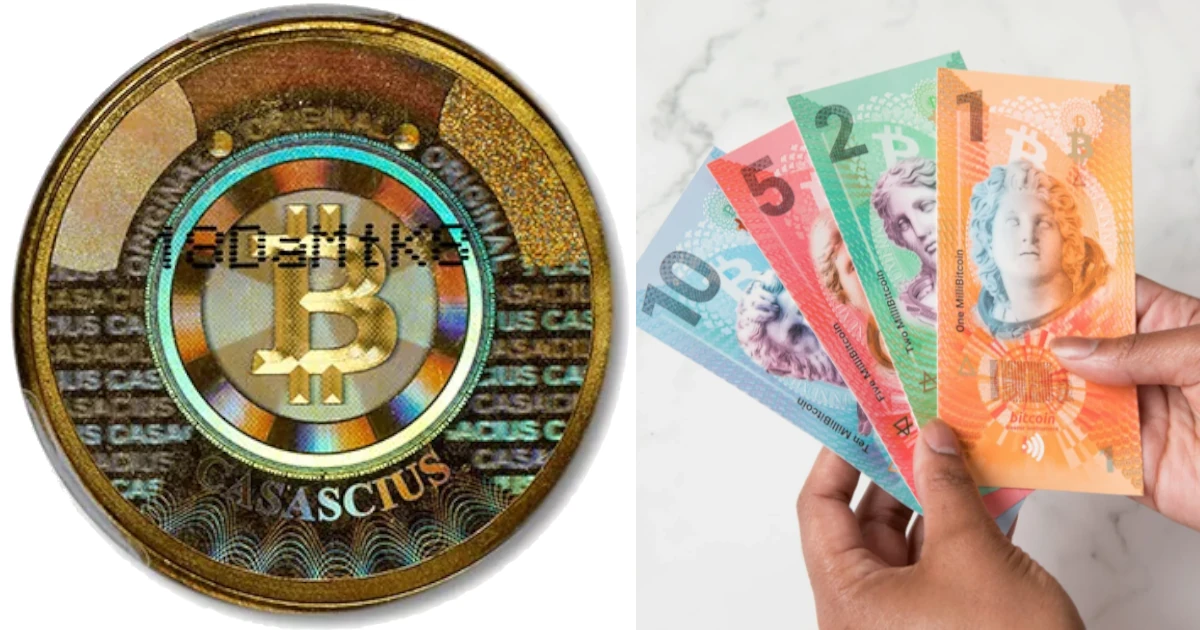
Bitcoin’s digital nature is the supply of most of its benefits. Since it’s programmable, it unlocks self-custody practices that may make theft and confiscation very troublesome. Since it’s digital, it may possibly transfer on the velocity of sunshine, permitting motion of worth and settlement throughout the globe in minutes.
Nonetheless, Bitcoin has at occasions been criticized for being arduous to understand, actually. Bitcoin, in its pure state, cannot be touched, cannot be bodily held; it may possibly solely be imagined and understood. To many individuals, that’s a big barrier and one which has impressed fairly a couple of makes an attempt to deliver the coin into meat house, however it’s not straightforward.
Entrepreneurs and artists alike, for nicely over a decade, have taken on the problem of creating Bitcoin bodily in a method that retains its Most worthy cash-like properties, and whereas no one has totally solved the issue, vital progress has been made, leaving an exquisite path of artifacts alongside the best way.
Casascius Cash
(Picture by Stacks Bowers Galleries)
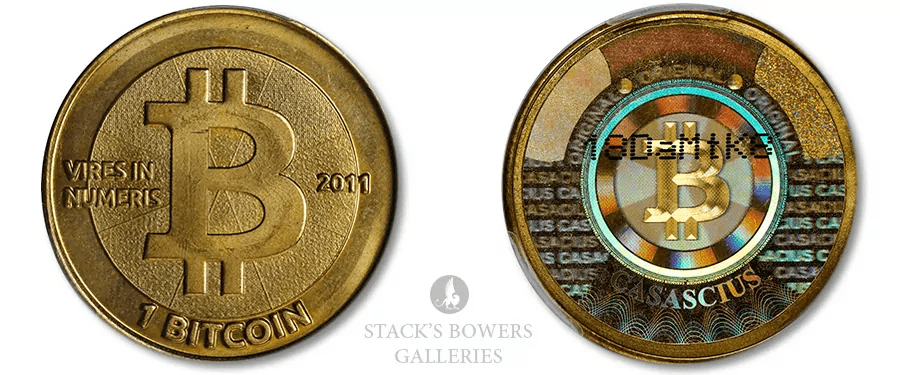
Minted as early as September sixth, 2011, at a bitcoin worth of barely $8 {dollars}, Casascius cash are definitely essentially the most iconic bodily Bitcoin artifacts in historical past, with many copycats since. Named after Mike Caldwell’s Bitcointalk discussion board nym, which seems to be an idiom for “name a spade a spade”, the Casascius cash developed most of the practices that different makes an attempt at bodily Bitcoin would innovate on through the years.
One drawback with making Bitcoin bodily is the dealing with of personal key materials. Since Bitcoin is digitally native, it may possibly solely dwell in a cryptographic private-public key pair, a secret that’s used to generate a public key, with Bitcoin-compatible cryptography. Within the case of the Casascius coin, Caldwell generated the non-public keys in an airgapped machine and printed them, gluing them to the long-lasting treasured steel cash after which presumably destroyed the copy that would have been saved on his laptop. He described the safety precautions taken on his web site for potential consumers to overview.
The printed non-public key was then coated by specialised tamper-proof stickers, which, if eliminated, depart an apparent mark in a “honeycomb sample”. Consumers of the cash may thus inform if the non-public keys in a Casascius coin had been uncovered earlier than buy from a third-party vendor.
This key administration challenge is the most important hazard within the creation of bodily bitcoin, and one which, within the case of Caldwell, was handled by trusting him to not cheat. He was additionally very clear and cautious by the requirements of the time. To today, his repute is powerful if not legendary, in order that belief was nicely positioned by consumers who profited tremendously from the collector’s worth of the objects, which to today mark a premium on high of the bitcoin and treasured steel values of the piece.
Casascius cash have been discontinued in November 2013 after the Monetary Crimes Enforcement Community (FinCEN), a department of the Treasury Division, knowledgeable developer Mike Caldwell that minting bodily bitcoins certified him as a cash transmitter enterprise with heavy compliance necessities. The belief concerned in producing the non-public keys could have been a centralizing factor that put a goal on his again.
RavenBit Cash

A 12 months after Casascius cash shut down, RavenBit launched, with an try at decentralizing the trusted minting drawback of bodily bitcoins. The RavenBit cash, very comparable in type issue to Casascius, didn’t include pre-generated keys; as a substitute, they got here with the tamper-proof sticker unpealed, such that the person may generate their very own keypair, paste it to the coin and slap the tamper-proof sticker on high.
This, in a way, decentralized the mint and, in idea, that could be a breakthrough, however in follow, it simply created a thousand trusted mints, with out manufacturers, with out reputations, utilizing workplace printers that most likely had malware on them. For those who received a RavenBit coin from somebody, how may you recognize that the one that purchased it and generated the non-public key in there didn’t make a copy or take correct precautions?
So far, the RavenBit venture has been deserted, however it most likely taught the trade an attention-grabbing lesson. To make Bitcoin bodily, we have to go greater tech.
Opendimes
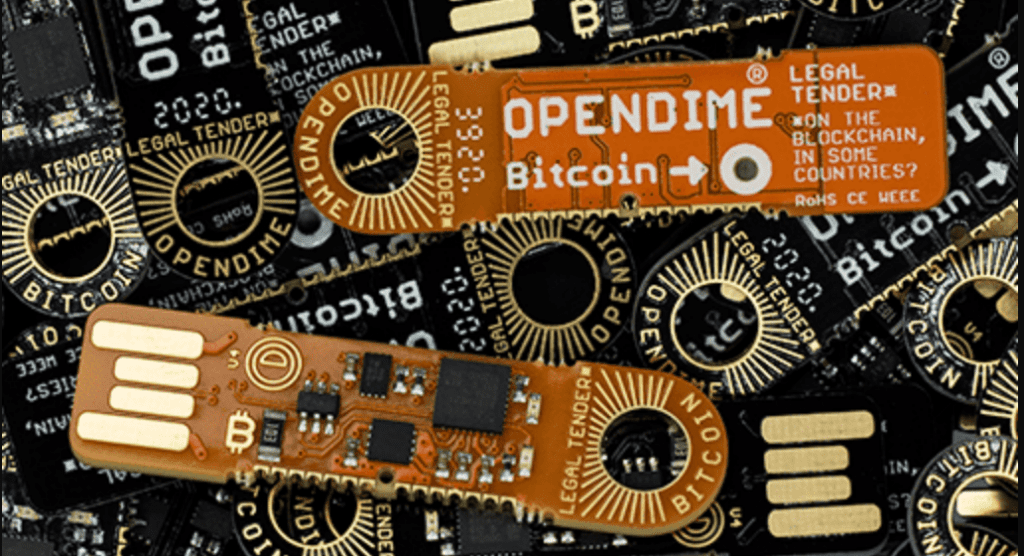
To route across the trusted mint drawback — each on the middle and on the edges – of bodily bitcoins, Coinkite, the {hardware} pockets maker, designed the Opendime, a tiny laptop purpose-built to be a Bitcoin bearer asset. Trying again on what motivated him, NVK, co-founder of CoinKite, advised Bitcoin Journal that, “Bitcoin is digital cash. All we are able to do is an analog backup. Possibly somebody cracks doing secp256k1 by hand sooner or later.” That means that at present, you all the time want some sort of laptop to generate legitimate Bitcoin keys; that laptop is the mint.
Opendimes have been designed round this elementary reality. They’ve a pc chip that may generate a private-public key pair and retailer the non-public key securely, behind a silicon tamper-proof mechanism.
Customers need to feed it a file or some sort of enter for entropy throughout setup, which the chip makes use of partially to generate the Bitcoin pockets, this grants additional assurance that the random technology logic, which is open supply, has a good higher entropy enter within the technology of these bitcoin keys.
The general public key of the generated Opendime pockets can all the time be seen by connecting the system to a pc, as you’ll a standard USB stick; its steadiness is seen on a block explorer.
Customers can then ship bitcoin to the opendime, but when they wish to withdraw BTC from it? They need to bodily puncture the system, which unlocks a circuit to entry the non-public key, however renders the system visibly unsealed.
Opendimes signify a significant breakthrough in bearer asset know-how and go for about $20 {dollars} every as we speak, rising in worth barely with inflation from a low of about $13 every in 2016. Because of this, they’ve additionally achieved iconic standing, with artists embedding them in premium Bitcoin artwork and making them into Bitcoin meme tradition.
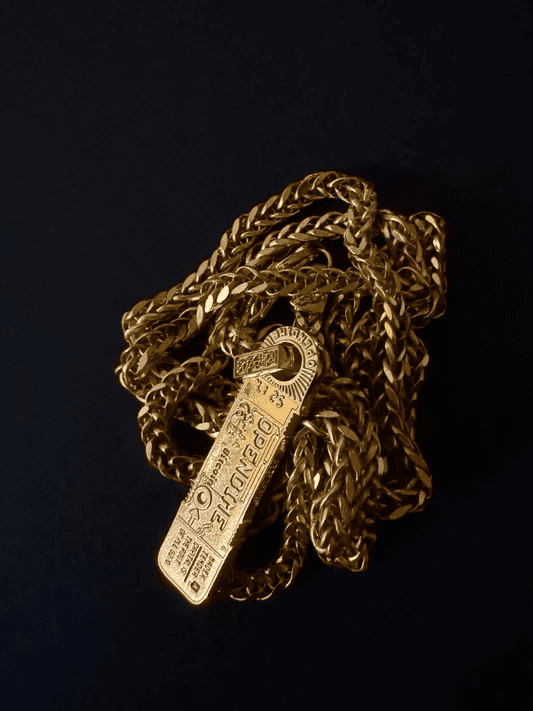
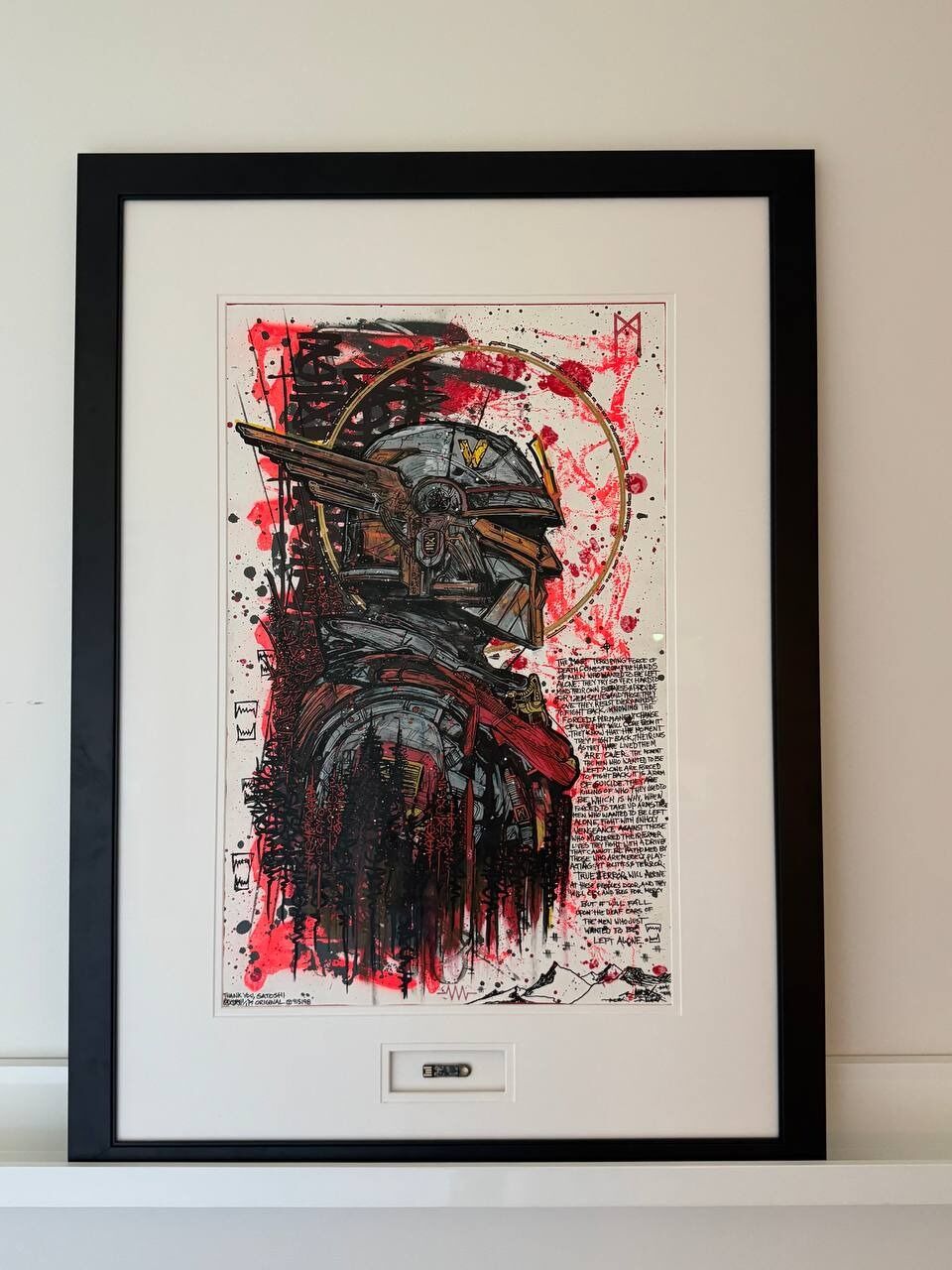
Whereas $13 to $20 {dollars} could be very low cost for {hardware} wallets, and the trusted mint challenge is successfully solved by letting customers fill the system with their very own cash, the worth and type issue are nonetheless distant from money. On a worth foundation alone, $20 {dollars} is an enormous ask. If Casascius charged about 20% markup for his cash, then Opendimes ought to maintain at the very least $100 value of Bitcoin inside to be definitely worth the {hardware}, and to be used as a forex, which costs out most daily purchases.
Lastly, the badass cypherpunk USB stick type issue, whereas epic, doesn’t visibly inform the person a lot about its contents, making every system successfully non-fungible with different Opendimes and thus not cash-like. A less expensive and possibly extra fungible various is required.
The Satodime
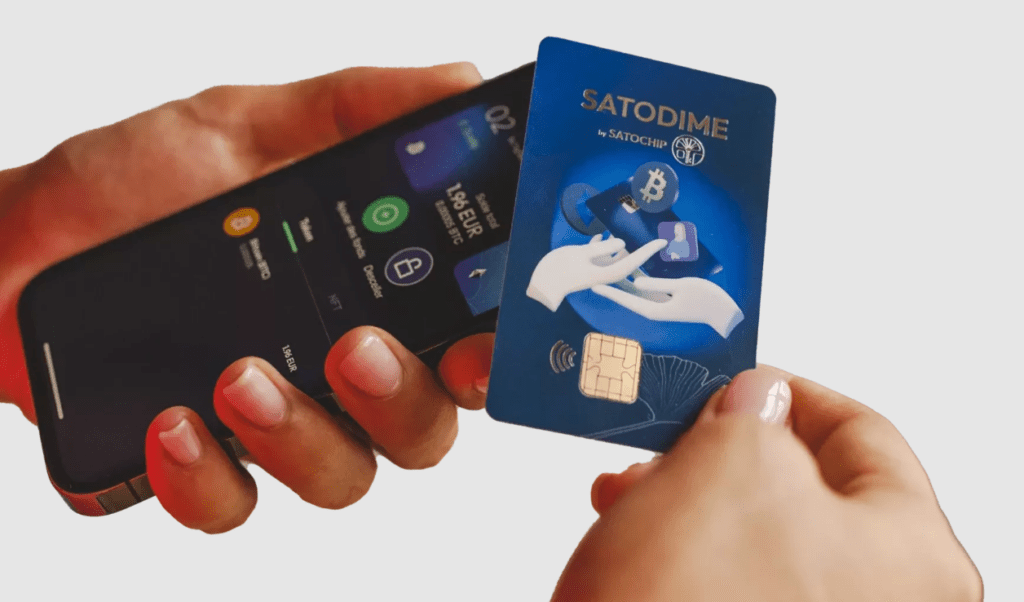
Taking the Opendime idea to a extra pleasant type issue, the Belgian {hardware} pockets producer Satochip created an open supply credit score card-like Bitcoin pockets, which has very comparable qualities to the Opendime. It might generate Bitcoin private-public key pairs, and relying on the model, may even signal transactions. Customers can work together with it through cellphone apps that discuss to the cardboard through NFC. Different type components can be found as nicely, like rings and cash that comprise the identical chip and capabilities.
The fee for Satochip {hardware} will be as little as 13 Euros, relying on the majority purchases, which is cheaper than an Opendime, which will get us nearer to on a regular basis money purchases, however not by that a lot. The Satochip playing cards are meant to be high-security {hardware} pockets gadgets anyway, not daily-use money containers. And these highly effective and small laptop chips usually are not low cost, therefore the worth flooring above $10 that appears so arduous to interrupt via, for now.
Too Costly? The Basic Limits
So, how low cost does bodily Bitcoin {hardware} should be to make enterprise sense, if it may possibly make sense in any respect?
In keeping with the Federal Reserve, it prices anyplace from 4.1 cents to 11.3 cents to provide U.S. {dollars}. The smaller the worth, the dearer it’s, with $1 payments incurring a 4.1% loss in manufacturing prices.
That implies that to justify a 20,000 Satoshis invoice — roughly $16 {dollars} at as we speak’s costs — the {hardware} must price nicely underneath a greenback. Most laptop chips highly effective sufficient to do Bitcoin cryptography are above that worth goal, however there’s one chip that demonstrates what is feasible, the NXP’s NTAG X DNA chip.
Obtainable in sticker antenna type issue, a few millimeters skinny, this NXP chip can deal with quite a lot of cryptographic primitives, reminiscent of ECDSA and ECC. It might create secrets and techniques, signal them and even encrypt a message. Nonetheless, whereas highly effective, it doesn’t embrace the Bitcoin cryptography curve, secp256k1, which suggests it may possibly’t do Bitcoin issues natively.
Nonetheless, this 2025 technology NTAG will be bought for roughly $3, if yow will discover any provide, demonstrating how low the worth can go on a chip able to performing cryptographic features.
Sadly, the cash-like type issue a lot of the world is used to, with versatile payments that individuals can fold into their pocket, will be very damaging to laptop chips, a incontrovertible fact that NVK says he discovered from expertise, as they experimented with Bitcoin bearer belongings {hardware}.
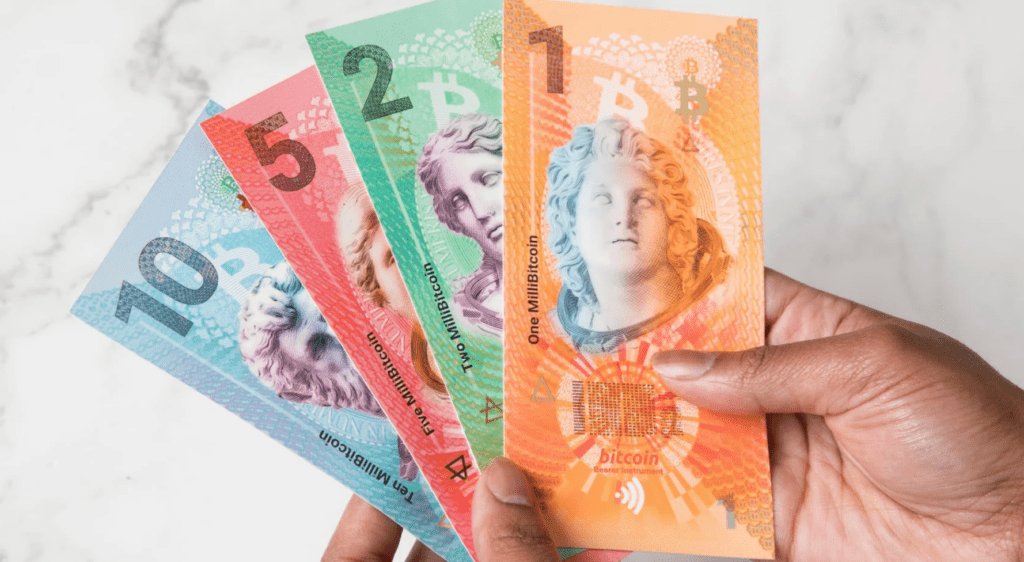
The closest anybody could have come to the cash-like format is the OfflineCash firm, with a gorgeous, collection-worthy set of Bitcoin-denominated payments which have an NTAG-style NFC chip, which shops a user-generated key, whereas the corporate generates a second key on their servers, to create a 2 of two multisignature pockets. The Server secret’s on a time lock, degrading the multisig handle to a 1 of 1 pockets, from which the person can ultimately withdraw the bitcoin. This tries to get across the trusted mint challenge, however finally ends up simply replicating the numerous mints drawback. Although their cash-like type issue is undeniably beautiful.
The prices of manufacturing a Bitcoin native NTAG can simply hit a couple of million {dollars}, and implementing Bitcoin’s cryptography on this method will be fraught with errors if producers usually are not consultants on the subject. It could additionally should be totally open supply to ensure that there are not any backdoors.
There’s another elementary drawback with bodily Bitcoin bearer belongings. Even if you happen to may get an inexpensive sufficient chip in a cash-like format, you’ll all the time want on-line entry to confirm its authenticity —that the money is loaded with actual bitcoin— because the asset is unavoidably digital. The issue could possibly be solved by merely trusting an issuing mint of Bitcoin-denominated money devices, and believing within the face worth of a redeemable invoice, however that may miss the best of self-custodied, trusted money. Although it most likely would work in a pleasant jurisdiction.
So, whereas it could be cool to have bodily Bitcoin payments like these created by OfflineCash Firm with a bearer asset safe chip and never trusted mint danger, we’re nonetheless a methods away. And it would really be overkill as we speak, since nobody would have bitcoin-denominated change anyway, so that you’d find yourself getting fiat money again, however possibly in the future, post-hyperbitcoinization. NVK does imagine there’s a superior resolution to the money format, at the very least for the foreseeable future, which is why Coinkite created the Tapsigner.
The Tapsigner
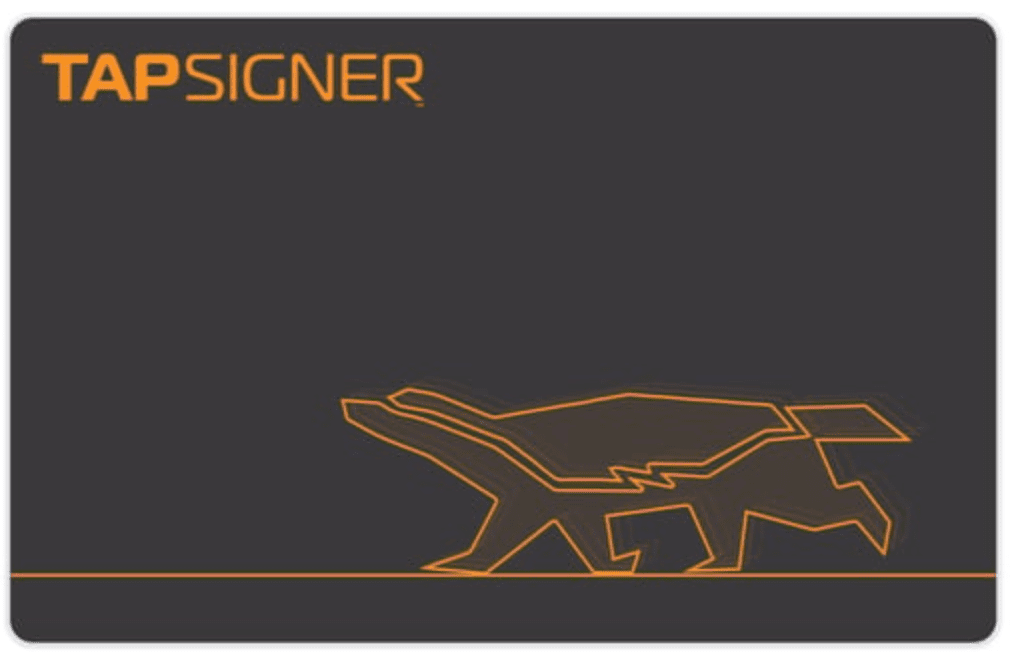
Constructed on the Coinkite Bitcoin NFC chip, a know-how much like the X DNA NTAG by NXP, although maybe extra highly effective and thus dearer, the Tapsigner comes within the acquainted debit card type issue, with a safe factor chip, NFC faucet to pay and funky designs to select from. Contained in the chip, although, is a totally succesful Bitcoin pockets, with scep256k1 cryptographic capabilities, letting it create Bitcoin keys, retailer the key securely sufficient and signal transactions internally, to be broadcast by an accompanying cellphone, which serves as a essential visible support for the person to confirm transactions.
The Tapsigner can operate as a bearer asset, however maybe even higher as a refillable {hardware} pockets that may spend particular quantities of bitcoin, like all bank card, resolving the difficulty of change, and enabling faucet to pay to wallets that assist the already common function.
With playing cards just like the Tapsigner, which price about $20 bucks, the issue of bitcoin-denominated funds returns to good old style retail adoption, and integration with main enterprise accounting and funds software program, which Cashapp and Sq. are blowing huge open.